Sunday, April 28, 2019

Come Follow Me - John 7-10

Come Follow Me - John 7-10

Much of the events in these chapters happen in Jerusalem during or immediately after the festival Sukkot, also known as the Festival of Tabernacles or the In-Gathering. It was a festival celebrating the Harvest, when crops were gathered in. It also celebrated the gathering of Israel under Moses into the Promised Land. For many Jews, it was also a celebration to look forward to the day when God would send the Messiah, gathering in all of Israel and rescuing them from their enemies.

Image result for light of the world

At the beginning of the festival, a water libation was brought from the Pool of Siloam and poured out at the temple, as a sacrifice. During the procession of the water, the people would cry, "Save now, I pray, O LORD; O LORD, I pray, send now prosperity."

Four towering menorah (candelabras) were lit at night. Each was 75 feet tall, and each candle had 4 ladders going to it, so the Levites could ensure each was filled with oil continually. So bright were these menorah that they lit up the entire city of Jerusalem. Temple priests would stand on the temple walls giving a light and dance show with torches for all those below to view, while the Levites would play instruments.

It is believed that this festival will continue into the Messiah’s reign during the Millennium, with people gathering to the temple to celebrate the In-gathering harvest of souls, as well as the return of the Messiah in power. Many Jews believe the coming of the Messiah will be during Sukkot.

A portion of the festival period is Rosh Hoshana, or the Festival of the Trumpets. This is a festival that celebrates the coming of the Messiah in glory to rescue Israel. In it, trumpets are sounded to announce the harvest period. It is believed that Israel will be gathered during these high holidays.

Interestingly, Joseph Smith received the gold plates from Moroni on Rosh Hoshanah. For LDS, this was a key symbol of the latter day in-gathering of both spiritual and physical Israel.

So, Jesus entered into Jerusalem during the high holy days of Israel to celebrate the festivals prepared anciently to prepare for his Messiah-ship.

 Anytime Jesus taught in Jerusalem (and he only went there for the festivals), he came in direct contact and conflict with the Pharisees and Sadducees, as well as the temple priests. His Messianic claims would anger them more and more.

esus arrived in the middle of the feast, after everyone else had built their booths. He taught at the temple, probably in the outer court. The Jews were amazed that an unschooled man from Nazareth could know so much about the scriptures.


“16 Jesus answered them, and said, My doctrine is not mine, but his that sent me.
“17 If any man will do his will, he shall know of the doctrine, whether it be of God, or whether I speak of myself.
“18 He that speaketh of himself seeketh his own glory: but he that seeketh his glory that sent him, the same is true, and no unrighteousness is in him.
“19 Did not Moses give you the law, and yet none of you keepeth the law? Why go ye about to kill me?
“20 The people answered and said, Thou hast a devil: who goeth about to kill thee?
“21 Jesus answered and said unto them, I have done one work, and ye all marvel” (John 7).

The people thought Jesus must be crazy or paranoid to think there were people out to kill him. Jesus then explained that because he was known to have healed people on the Sabbath, some wanted to kill him. For Moses, it was okay to circumcise babies on the Sabbath, but Jesus was being plotted against for healing on the Sabbath.

The people listening then realized that the leaders sought to kill Jesus. Some asked, “But, lo, he speaketh boldly, and they say nothing unto him. Do the rulers know indeed that this is the very Christ?” (v21). They claimed they knew where he was from (Nazareth), but the prophesy of the Messiah was that none would know where he was from. Given that Jesus was born in Bethlehem, a fact his audience did not know, this prophesy the people quoted was fulfilled.

In verse 28, we read, “Then cried Jesus in the temple as he taught....” Often, we think of Jesus as a stoic, quiet speaker. Yet he cried, most likely meaning he shouted out in a strained voice against those speaking against him.

“28...Ye both know me, and ye know whence I am: and I am not come of myself, but he that sent me is true, whom ye know not.
“29 But I know him: for I am from him, and he hath sent me.
“30 Then they sought to take him: but no man laid hands on him, because his hour was not yet come.
“31 And many of the people believed on him, and said, When Christ cometh, will he do more miracles than these which this man hath done?”

Jesus proclaimed himself as the Messiah. He established that his enemies, those who ran the temple, did not know God. Because they rejected Jesus, and sought to kill the Christ, they did not know God. While many wanted him dead, they did not lay hands on him at that point, probably because many believed on him and they did not wish to grab him in public, turning him into a martyr during the festival.

The Living Waters

On the last day of the festival, Jesus encouraged all to come to him, for he was the living waters. Part of Sukkot was the pouring of the waters from the pool of Siloam as a holy libation and sacrifice. Jesus compared himself to this water:

"37 In the last day, that great day of the feast, Jesus stood and cried, saying, If any man thirst, let him come unto me, and drink.
"38 He that believeth on me, as the scripture hath said, out of his belly shall flow rivers of living water.
" 39 (But this spake he of the Spirit, which they that believe on him should receive: for the Holy Ghost was not yet given; because that Jesus was not yet glorified.)
"40 Many of the people therefore, when they heard this saying, said, Of a truth this is the Prophet.
" 41 Others said, This is the Christ. But some said, Shall Christ come out of Galilee?”

Some thought he was the prophet Elias, who would prepare the way for the Messiah. Others did think he was the Messiah himself. However, contention arose as people argued over the location where the Messiah should come from. Even officers sent by the Pharisees to arrest Jesus were confused and returned to the court without him.

In this council, the Pharisees and other leaders argued concerning Jesus. When Nicodemus attempted to establish that Jesus had not been found guilty of anything, they turned on him asking if he was a confederate. For no prophets ever came out of Galilee!

Returning to the Temple
John 8


Jesus rested at the Mount of Olives. On the mount, at the place called Gethsemane is a cave where an olive oil press was located. Often during periods when the harvest season was over and the festivals were going, travellers would stay in such locations overnight. During the festivals, no work was allowed, so the olive press would not have been working during this time frame.

Returning to the temple on the following day, he again taught the people. The scribes and Pharisees brought forth a woman caught in adultery to him. The law of Moses demanded the woman be stoned to death. Had Jesus agreed and called upon them to stone her, they could have said he was not compassionate as the Messiah was supposed to be. Yet, in showing compassion, he would have ignored the Law of Moses.

Ignoring them briefly as he scribbled in the dirt, he finally arose and said, “He that is without sin among you, let him first cast a stone at her” (vs 7). Then he began scribbling in the dirt again. Soon, the accusers left. The Savior finally looked up and seeing no one around them, he asked the woman,

“Woman, where are those thine accusers? hath no man condemned thee?
“She said, No man, Lord. And Jesus said unto her, Neither do I condemn thee: go, and sin no more” (vs 10-11).

Missing in this event is the man who committed adultery with the woman. How could she have been caught in adultery, if there were also no man caught? Each of the accusers was convicted by his own conscience, and quietly left the temple grounds, because they knew that they had each been involved in similar sins. They were not clean. They should not have been in the temple. Even more, they were not willing to admit to their own actions, which would have lead to their being stoned also.

The Light of the World

The Festivals were over, yet many of the exciting events lingered in the minds of those still worshiping in the temple. The priests had given giant light shows that lasted the entire night. These shows included giant menorah lit and viewable from all parts of the city. The priests danced on the walls at night, holding torches, to entertain the people during the festival.

It was in this context that Jesus then proclaimed, “I am the light of the world: he that followeth me shall not walk in darkness, but shall have the light of life” (John 8:12).

The Jewish leaders instantly questioned him. A man who proclaimed something by himself was obviously speaking falsely. Yet Jesus could show he had witnesses.

First, his actions compared to those actions of the Jewish leaders. They had wrongly judged the woman (after the flesh), where he had not judged anyone. He knew his true roots, but they did not.

And God the Father bore witness of Christ. However, when Jesus stated that his Father bore witness of him, the Jews first thought it was an earthly parent, not a celestial one. As they then understood that Jesus spoke concerning God, they again wanted to kill him, but did not dare lay hands on him.
While his teachings confused those with hardened hearts, yet many still believed on his words.

“"31 Then said Jesus to those Jews which believed on him, If ye continue in my word, then are ye my disciples indeed;
"32 And ye shall know the truth, and the truth shall make you free."

The Great I Am

But those who rejected him would die in their sins. They thought themselves to be the children of Abraham, and so free. But Jesus explained that they were servants of sin, and as servants, under eternal bondage except they repent and exercise faith in the Messiah.

A discussion ensues on who is the real Father of the Jews. First they claimed Abraham. But Jesus said they should follow God. Then they claimed God as their Father. Again Jesus told them that in their sins, they were the children of the devil. Had they been God’s true children, they would have accepted and embraced Jesus as their Savior. Instead, they were filled with hatred and murderous intentions - the same as the devil has always had.

Jesus told them that if they believed on him, they would never taste of death, but live forever. Amazed, they asked if he were greater than Abraham, who had died.
“56 Your father Abraham rejoiced to see my day: and he saw it, and was glad.
“57 Then said the Jews unto him, Thou art not yet fifty years old, and hast thou seen Abraham?
“58 Jesus said unto them, Verily, verily, I say unto you, Before Abraham was, I am.
“59 Then took they up stones to cast at him: but Jesus hid himself, and went out of the temple, going through the midst of them, and so passed by.”

Abraham saw in revelation that Jesus would come to save all mankind. He rejoiced in the day. Abraham knew the great king of Salem, Melchizedek. He paid tithes to the king. Melchizedek literally means “King of Righteousness.” That Melchizedek was a symbol of the future priest/king Messiah was clear. When the Jews asked how Abraham could have known about Jesus, the Savior explained that he was the Messiah.

If we change the comma around, we could read verse 58 as saying, “Before Abraham, was I AM.” “I AM” is the literal translation of the name-title Jehovah/Yahweh. He is the Being that Exists. It was I AM that sought out Abraham to begin the nation of Israel, striking a covenant with him that promised him seed as massive as the stars in the heavens.

Jesus was proclaiming that not only was he the Messiah, but that he was also Yahweh, the God of Israel under his Father Elohim.

There no longer was any fence sitting. Either people must accept Jesus as the Lord God and Messiah, or reject him for blasphemy. In this, the Jews sought to kill him, but Jesus was able to slip out among the crowd to safety.

Today we each must determine whether we give God lip service, as did the Pharisees and Sadduccees, or not. Will we put up a pretence, changing the laws of God to where they fit our own standard, or not? Are we ready to proclaim Jesus as the Messiah, the Lord Jehovah over all the earth? And are we willing to repent of our sins: our false accusations, or our accusing others while we retain the greater sin, our outward signs of religion while inwardly we rot from sin? Will we pick up stones to kill the Lord and his prophets when they speak things that are not easy to hear? Will we care enough to pick a side?

Or will we embrace him?

John 9

Not long after the Feast of Tabernacles and probably before the Feast of Dedication, Jesus walked in Jerusalem with his disciples. As they walked, they noticed a man begging in the streets who had been blind from birth. His disciples asked whose fault it was that the man was blind: the man or his parents. Jewish tradition suggested that those born with defects were obviously cursed of God for some reason.

For Latter-day Saints, this suggests an understanding of the premortal existence. How else could the man have sinned at or before birth to merit such condemnation from God? And if it was the parents’ sins that caused the curse, why did it fall upon the child and not on them?

Jesus explained that many are born with disabilities so that God’s work and power could be shown forth. In this instance, Jesus was able to heal the man, showing God’s mercy and power, as well as demonstrating that Jesus had the power of his Father. In other instances, such physical challenges allow individuals to rise above them and do marvelous things in their lives. While not born with disabilities, Helen Keller became blind and deaf at the age of 19 months of either scarlet fever or meningitis. For most children in her situation they normally were put away where no one would see them. But through the hard work of Anne Sullivan and Helen’s own efforts, she learned sign language and to speak. She was the first blind-deaf person to receive a college degree. She became an author and a sought-after speaker.

Neither the man nor his parents had sinned. Such things happen so that great miracles may occur to help people believe in God. Jesus used a pagan magic healing method to heal the man. Using clay and spittle to create a paste, he placed it on his eyes. He then sent the man to the pool of Siloam to wash his eyes, whereupon he received his eyesight. The pool of Siloam is where the priests obtained water for use as a holy libation or sacrifice during the Feast of Tabernacles, which ended just days before. The water was considered sacred and blessed. Jesus compared himself to the living waters during the feast. Symbolically, the man was healed by the living waters of Christ, who is the true water libation.

As he healed the man, Jesus explained:

“4 I must work the works of him that sent me, while it is day: the night cometh, when no man can work.
“5 As long as I am in the world, I am the light of the world.”

Again, Jesus referred back to the events of the Feast of Tabernacles, where giant menorah were placed on the temple walls, seen throughout the city.  In the darkness of night, the torches, the menorah, and Jesus shone for all in Jerusalem to see. But did they comprehend that light? (see John 1:4-5 for the answer).

The man went about praising his healer. The Pharisees brought him in for questioning. How dare he praise Jesus for healing him! They brought in his parents to verify the event. Terrified that they would be excommunicated (literally cast out or exiled from Jerusalem), they answered that it was their son, but that he was old enough to answer for himself. The Pharisees explained that Jesus was a devil and healed by that evil power, especially since it was done on the Sabbath. However, the man insisted that Jesus was a prophet of God:

“32 [the man said] Since the world began was it not heard that any man opened the eyes of one that was born blind.
“33 If this man were not of God, he could do nothing.
“34 They answered and said unto him, Thou wast altogether born in sins, and dost thou teach us? And they cast him out.”

So the traditions of the Pharisees won out. No one was allowed to heal on the Sabbath unless it was by the power of the devil. People born blind were born in sin, and therefore were liars. They insisted on their theological ties to Moses were greater than the miracles Jesus performed. The man was cast out. Later, upon meeting Jesus, the man would learn that Jesus is the Christ, the Messiah, and would worship him.

“39 And Jesus said, For judgment I am come into this world, that they which see not might see; and that they which see might be made blind.
“40 And some of the Pharisees which were with him heard these words, and said unto him, Are we blind also?
“41 Jesus said unto them, If ye were blind, ye should have no sin: but now ye say, We see; therefore your sin remaineth.”

The Pharisees did not realize they were showing themselves as the darkness, represented by blindness and ignorance. However, they were neither blind nor ignorant, but chose the darkness purposely. They chose the torches of the dancing priests over him whose temple and festival truly belonged.

The Good Shepherd
John 10


In John 9:39-41, Jesus gave a segue into his next discussion. There are those who are shepherds, and those who are hirelings. Anciently, shepherds took their flocks out by day and pastured them together in a corral at night. One shepherd would watch over the sheep fold or corral, while the others slept. In the morning, the shepherds would come again to the corral and call out. Their sheep would recognize the voice of their particular shepherd, who showed fondness and kindness to the flock. They would willingly follow him anywhere.

However, some of the religious leaders of the Jews were more like hirelings. They did the job as long as it paid well, and there were no major obstacles. If a bear or lion came to attack the flock, while a shepherd would defend the sheep with his life, the hireling would run off and leave the defenseless sheep to fend for themselves. Many Jewish leaders were glad to lead the people, and collect their alms and offerings, until it was no longer convenient, or worth the money and risk. They spent their time focusing on protecting the Jews from good works on the Sabbath, rather than protect them from the enemies of God or pointing them to the living waters, the refreshing meadows, the true light, the Living Christ.

Other religious leaders were like those who sought access to the corral at night, but not by the main entrance. The corral was guarded, and only true shepherds were given access to the sheep from the entrance. Others would have to climb the back side of the fence to steal away sheep. Some tried to gain converts to their version of the Jewish faith by force, such as what happened to the blind man in John 9. If he wouldn’t quickly agree with the Pharisees, they would threaten him and his parents with excommunication and other dangers.

But the True Shepherd is heard by his flock when he calls them in the morning to take them to the meadows of grass for grazing. He calls and they come. They recognize his voice. They will not follow other shepherds or anyone else. Those who truly embrace Jesus are his sheep. Some sheep are totally dedicated to his voice and will follow him wherever he will lead them. Other sheep are not as dedicated, and will occasionally follow the voice of another shepherd. These are believers that should follow Jesus completely, but instead waver and are not dedicated to the true shepherd. Some find that they are instead following a Pharisee or Satan, disguised as a shepherd. But if they will listen to the voice, they can and will recognize Him.

Jesus explains that he will lay down his life for his sheep. He foresaw his destiny. His sheep needed rescue from death and hell, and only the true shepherd could do so. In the atonement and resurrection, Jesus broke the chains of death and hell for those who will listen to the shepherd’s voice, repent of their sins, and follow him.

Jesus, the Son of God

Around the winter equinox, the Jews celebrated the Feast of Dedication. This celebrated the rededication of the temple in the times of the Maccabees (165 BC), who rescued Israel and the temple from desecration by Antiochus Epiphanius. This gentile ruler sought to destroy the Jewish religion, burning pigs on the temple altars, and setting up a statue of Zeus inside the temple. To reconsecrate and cleanse the temple became an important festival.

Jesus again stood in the temple and was asked about his sermon concerning the sheep, and whether he truly was the Messiah. He told them they had seen signs enough and were told enough that they should believe. Yet they did not. They were angered when he explained, “I and my Father are one” (John 10:30), meaning that they were united in all things. This also meant that Jesus placed himself on the same level as God. The Jews began again to grab stones to throw at him, but he quickly explained scripture to them:

“34 Jesus answered them, Is it not written in your law, I said, Ye are gods?
“35 If he called them gods, unto whom the word of God came, and the scripture cannot be broken;
“36 Say ye of him, whom the Father hath sanctified, and sent into the world, Thou blasphemest; because I said, I am the Son of God?
“37 If I do not the works of my Father, believe me not.
“38 But if I do, though ye believe not me, believe the works: that ye may know, and believe, that the Father is in me, and I in him.
“39 Therefore they sought again to take him: but he escaped out of their hand,”

He explained that the Jews were the children of God and were heirs of God. They were supposed to become gods under Heavenly Father. This was a difficult concept for Jews who had changed the rites of Solomon’s temple, rejecting the concepts of ministering angels, the Tree of Life, and other liturgy believed before the days of King Josiah.

But Jesus’ miracles and teachings testified that he truly was the Messiah, the son of God. He sought to guide his sheep to become what they were truly meant to be: Christ-like and the true children of God. Sadly, many of the sheep were led astray by those teaching other doctrines that lower mankind’s prospects on the marvelous things God has in store for us, if we just listen to the Shepherd’s voice. 


Links:


Feast of Tabernacles:
http://en.wikipedia.org/wiki/Sukkot
http://www.hebrew4christians.com/Holidays/Fall_Holidays/Sukkot/sukkot.html
http://www.newadvent.org/cathen/14425a.htm


Rosh Hashanah, Moroni and Joseph Smith: http://lds.org/ensign/2000/01/the-golden-plates-and-the-feast-of-trumpets?lang=eng

The Covenant between Abraham and Yahweh/Jehovah:
http://joelsmonastery.blogspot.com/2010/02/lesson-7-abrahamic-covenant.html

Helen Keller - http://en.wikipedia.org/wiki/Helen_Keller

Feast of Tabernacles in Lesson 15 - water libation, menorah and torches: http://joelsmonastery.blogspot.com/2011/04/new-testament-gospel-doctrine-lesson-15.html

Commentary on John 10: http://bible.org/seriespage/exegetical-commentary-john-9

Feast of Dedication: http://en.wikipedia.org/wiki/Dedication#Feast_of_Dedication

Josiah’s Reforms to the Temple:
http://joelsmonastery.blogspot.com/2010/08/ot-gospel-doctrine-lesson-30-come-to.html

http://joelsmonastery.blogspot.com/2010/04/lesson-17-beware-lest-thou-forget.html

Saturday, April 27, 2019

Come Follow Me - Matthew 18; Luke 10

Come Follow Me - Matthew 18; Luke 10

Greatest in the Kingdom of Heaven
Matthew 18:1-6


The disciples of Jesus were very competitive. Many sought to be the greatest. One mother would ask the Lord to place her sons, one on each side of him in heaven (Matthew 20:21). The answer was a surprise to them all. They had to be like a little child.

Tradition tells us that the small child that Jesus picked out of the crowd and blessed was Ignatius, who would later be one of the great early Christian Fathers and martyrs of the Church. Ignatius would grow up to be a disciple of the apostle John, and later become bishop of Antioch. Roman Catholics believe him to be one of the successors of Peter as Pope of the Christian Church. He sought his entire life to emulate Christ. He wrote several letters to the Christians, encouraging them to be faithful in their testimonies. Several of these were written as he traveled in chains to Rome, where he was slain by lions in the Coliseum.

Such is the testimony of a small child that continues in the testimony of Christ his entire life. He eagerly seeks to emulate his Master, and to encourage others to do the same. He is not ashamed of the gospel of Christ, but will preach it in the face of death. When things get difficult, he does not seek a way out, but seeks the way up to God.

And as the disciples of Christ learn to be child-like, they also become as little ones, worthy of the special blessings and considerations of the Savior.

If thy hand offend thee
Matthew 18:7-14


As a continuation of the discussion on the little ones above, the Lord warns us not to offend. It is better for us to remove the thing that offends the child of God, than to allow it to remain. Offenses often drive people away from Christ, and it is a matter for which the Lord will some day ask us how we treated those around us. So important is it to refrain from offending that the Lord stated it would be better to pluck out the offending eye or cut off the offending arm (both important body parts that we can live without), than to drive ourselves and those around us to hell.

In discussing the lost sheep that we must go out to find, we learn that we must not only avoid offending, but also seek out those who have been offended in the past and recover them.

The early Church Historian Eusebius of Caesarea gives an account concerning the apostle John that had been passed down to his day. In his travels to establish churches, John found a wonderful youth who converted to the gospel and eagerly followed the teachings of the apostle. As John prepared to leave to other cities, he directed the bishop of the city to care for the youth. The bishop accepted his charge.


“8. But the presbyter taking home the youth committed to him, reared, kept, cherished, and finally baptized him. After this he relaxed his stricter care and watchfulness, with the idea that in putting upon him the seal of the Lord he had given him a perfect protection.
“9. But some youths of his own age, idle and dissolute, and accustomed to evil practices, corrupted him when he was thus prematurely freed from restraint. At first they enticed him by costly entertainments; then, when they went forth at night for robbery, they took him with them, and finally they demanded that he should unite with them in some greater crime.
“10. He gradually became accustomed to such practices, and on account of the positiveness of his character, leaving the right path, and taking the bit in his teeth like a hard-mouthed and powerful horse, he rushed the more violently down into the depths.
“11. And finally despairing of salvation in God, he no longer meditated what was insignificant, but having committed some great crime, since he was now lost once for all, he expected to suffer a like fate with the rest. Taking them, therefore, and forming a band of robbers, he became a bold bandit-chief, the most violent, most bloody, most cruel of them all” (Eusebius, book 3, chapter 23).

Here, due to neglect and then sin, the young man became offended. The bishop assumed he only had to do some quick preparations and then baptize the boy, and then everything else would work out just fine. Instead, the child went from being among the faithful to being one of the most feared crime bosses in the area. He led a gang of youth in the worst of crimes, thinking there was no longer any salvation for him and that no one cared about him anymore.

After making rounds throughout the area, the aged apostle John finally returned to the town. Upon meeting with the bishop, John’s first words were:

“12...'Come, O bishop, restore us the deposit which both I and Christ committed to you, the church, over which you preside, being witness.'
“13. But the bishop was at first confounded, thinking that he was falsely charged in regard to money which he had not received, and he could neither believe the accusation respecting what he had not, nor could he disbelieve John. But when he said, 'I demand the young man and the soul of the brother,' the old man, groaning deeply and at the same time bursting into tears, said, 'He is dead.' 'How and what kind of death?' 'He is dead to God,' he said; 'for he turned wicked and abandoned, and at last a robber. And now, instead of the church, he haunts the mountain with a band like himself.'
“14. But the Apostle rent his clothes, and beating his head with great lamentation, he said, 'A fine guard I left for a brother's soul! But let a horse be brought me, and let some one show me the way.' He rode away from the church just as he was, and coming to the place, he was taken prisoner by the robbers' outpost.
“15. He, however, neither fled nor made entreaty, but cried out, 'For this did I come; lead me to your captain.'
“16. The latter, meanwhile, was waiting, armed as he was. But when he recognized John approaching, he turned in shame to flee.
“17. But John, forgetting his age, pursued him with all his might, crying out, 'Why, my son, do you flee from me, your own father, unarmed, aged? Pity me, my son; fear not; you have still hope of life. I will give account to Christ for you. If need be, I will willingly endure your death as the Lord suffered death for us. For you will I give up my life. Stand, believe; Christ has sent me.'
“18. And he, when he heard, first stopped and looked down; then he threw away his arms, and then trembled and wept bitterly. And when the old man approached, he embraced him, making confession with lamentations as he was able, baptizing himself a second time with tears, and concealing only his right hand.
“19. But John, pledging himself, and assuring him on oath that he would find forgiveness with the Saviour, besought him, fell upon his knees, kissed his right hand itself as if now purified by repentance, and led him back to the church. And making intercession for him with copious prayers, and struggling together with him in continual fastings, and subduing his mind by various utterances, he did not depart, as they say, until he had restored him to the church, furnishing a great example of true repentance and a great proof of regeneration, a trophy of a visible resurrection” (Ibid).

Who among us would, at any age, ride into harm’s way and pursue the lost until we brought them back? Or would we be as this bishop, chocking it up to bad fortune, and counting the child forever lost? Even with his many violent crimes, John was able to promise the child forgiveness, peace, and joy in the atonement of Christ.

Tuesday, April 16, 2019

Come Follow Me - Easter

This lesson covers the entire Holy Week leading to the death and resurrection of Christ. It includes Matthew 21-28, and the manual includes a suggested daily reading of those events that occur on each day. What a wonderful way to worship through the entire week.

The Return of the King
Matthew 21

Image result for jesus triumphant entry into jerusalem

With the exception of important festivals, Jesus spent most of his 3 year mission teaching away from Jerusalem, mostly in small towns and villages. While annoying and frustrating to the Sadducees, Pharisees and scribes, they did not move against him while his movement, like that of the Essenes (Dead Sea Scrolls) stayed primarily in the outskirts of Judea. However, Jesus moves closer to the capitol city as Passover approaches. Preaching and serving in the area, he raised Lazarus from the dead just a few days prior to entering Jerusalem for the Passover.  This miracle was greater than any other Jesus had previously performed. It was believed that the spirit of the dead remained near the body for 3 days, after which the spirit was gone forever. Here, Jesus called forth Lazarus on the fourth day, showing he even had power over the grave, something even Moses and other great prophets never performed The news spread quickly, and the Jewish leaders began to plan the murder of Lazarus and Jesus..

During Jesus' mission, he gained followers throughout Israel over the preceding three years, but he also gained many enemies. His critique of the Sadducees and Pharisees increased with each visit to Jerusalem, especially at the previous year's Festivals of Tabernacles and Dedication,
where he called himself the Light of the World, and performed many miracles.

It is Springtime, and the animals are birthing in the fields. It is the time of Passover, when Israel solemnly remembers the Ten Miracles of Moses in Egypt, culminating in the sacrifice of the unblemished lamb, sprinkling its blood on the doorposts so that the Destroyer will pass over that household, and eating its flesh as a symbol of salvation.

And now the Messiah enters triumphantly into the city of David. He rides while his followers wave palm fronds and lay their cloaks out for him to ride upon. The laying out of cloaks was a sign of submission, while the palm fronds represented victory. First century Jewish coins had a palm leaf symbol with the phrase “redemption of Zion” on them, signifying that the Jews sought a Messiah who would save them from Rome’s oppression. Jesus’ riding on the ass’ foal fulfilled a prophecy of Zechariah (Zech 9:9). Jesus chose a donkey to ride upon. Horses were used for war. Donkeys were a symbol of peace. The colt especially was a harmless and peaceful animal, just as Christ was come to be the Prince of Peace and not the violent warrior many Jews wished for.


New Testament scholar N.T. Wright (recently quoted in General Conference by Elder Jeffrey R. Holland), noted that whenever a triumphant king came back to his city after battle, the people would come out to him, cheering and praising him. Here, we see the people accepting Jesus as their king and Messiah/Savior. Wright notes that at the Second Coming, the righteous will be translated up to the sky, to meet the triumphant, resurrected and glorified Lord, as he returns to reign during the Millennium.

The people shouted out, “Hosanna to the Son of David: Blessed is he that cometh in the name of the Lord; Hosanna in the highest” (Matt 21:9). Hosanna means “save now” or “save us”. So the people were asking Christ to save them. As Son of David, they recognized him as their king. King David successfully defeated the enemies of Israel, and they expected Jesus to do the same.

The shout comes from Psalms 118:


10 All nations compassed me about: but in the name of the Lord will I destroy them.
11They compassed me about; yea, they compassed me about: but in the name of the Lord I will destroy them.
12 They compassed me about like bees; they are quenched as the fire of thorns: for in the name of the Lord I will destroy them.
13 Thou hast thrust sore at me that I might fall: but the Lord helped me.
14 The Lord is my strength and song, and is become my salvation.
15 The voice of rejoicing and salvation is in the tabernacles of the righteous: the right hand of the Lord doeth valiantly.
16 The right hand of the Lord is exalted: the right hand of the Lord doeth valiantly.
17 I shall not die, but live, and declare the works of the Lord.
18 The Lord hath chastened me sore: but he hath not given me over unto death.
19 Open to me the gates of righteousness: I will go into them, and I will praise the Lord:
20 This gate of the Lord, into which the righteous shall enter.
21 I will praise thee: for thou hast heard me, and art become my salvation.
22 The stone which the builders refused is become the head stone of the corner.
23 This is the Lord’s doing; it is marvellous in our eyes.
24 This is the day which the Lord hath made; we will rejoice and be glad in it.
25 Save now, I beseech thee, O Lord: O Lord, I beseech thee, send now prosperity.
26 Blessed be he that cometh in the name of the Lord: we have blessed you out of the house of the Lord.
27 God is the Lord, which hath shewed us light: bind the sacrifice with cords, even unto the horns of the altar.
28 Thou art my God, and I will praise thee: thou art my God, I will exalt thee.
29 O give thanks unto the Lord; for he is good: for his mercy endureth for ever.

We will see that Jesus will quote a portion of this later to the Jewish leaders, telling them he is the stone which the builders (they) had rejected. For now, the people are begging him to “Save now” (Hosanna) and to send prosperity (in the highest). Yet the people do not fully understand the Messianic meaning of the Psalm. For them, the sacrifice would be the destruction of Rome. However, Jesus knows, even as he enters triumphantly into the City of David, he is the sacrifice bound with cords to the altar of the temple.

This triumphant entrance into Jerusalem on Palm Sunday will be very different than his exit out the gate on Friday. Instead of riding, he will be carrying his own cross. Instead of shouting “Hosanna!”, the people will shout “crucify him!” Instead of being Son of David and King of Israel, he will be a traitor, blasphemer and a criminal worthy of the worst death imaginable. Instead of being surrounded by believers, he will have thieves to each side. Instead of reviving the dead Lazarus on the Saturday before, he will die.
Crucifixion and Resurrection

Standing before the crowds, Pilate offered them a choice. Every Passover, as a sign of support for the Jewish faith, one criminal's death sentence would be pardoned. Barabbas, or Bar Abbas (Son of Father) stood next to Jesus. Barabbas was a Zealot Messiah, one who truly did seek to overthrow the Roman captivity. While Jesus raised Lazarus from the dead, Barabbas murdered his Roman enemies. While Barabbas' name claimed him to be the son of God and the Messiah, Jesus' name in Hebrew was Yeshua/Yehoshua/Joshua, meaning "God is Salvation." The prophet Zechariah foresaw a Joshua who would be Messiah.  The name "Christ" means "Messiah" and probably wasn't a last name for Jesus in his day, but a descriptive term: Jesus the Christ/Messiah.

The people chose Barabbas, suggesting where their hearts lay. In 70 AD and in 135 AD, Jerusalem would be destroyed by the Romans because the people followed Zealot messiahs attempting to overthrow Rome's control. Such pride is in great contrast to the humility that Jesus displayed as he was tried, found guilty, whipped, and crucified.

The Pharisees and Sadducees succeeded in turning Jesus from the Returning King, to a treasonous and blasphemous criminal.

The Pharisees and scribes constantly demanded a "sign from heaven." Healing the sick was good, but to ensure that Jesus was truly Messiah and prophet, he would have to do better than that for them. Raising Lazarus from the dead was such a sign, but drove the hypocrites from anger to murderous intent. Even while upon the cross, many still demanded a sign from Jesus: have God rescue him from death. Imagine hearing those surrounding the crucified Christ, "he could heal others, but cannot save himself!"  But he would save himself, and all the rest of us as well. Death and Hell no longer held any power over him, or over us, if we but turn to him.

Finally, there are no greater words ever spoken than these:

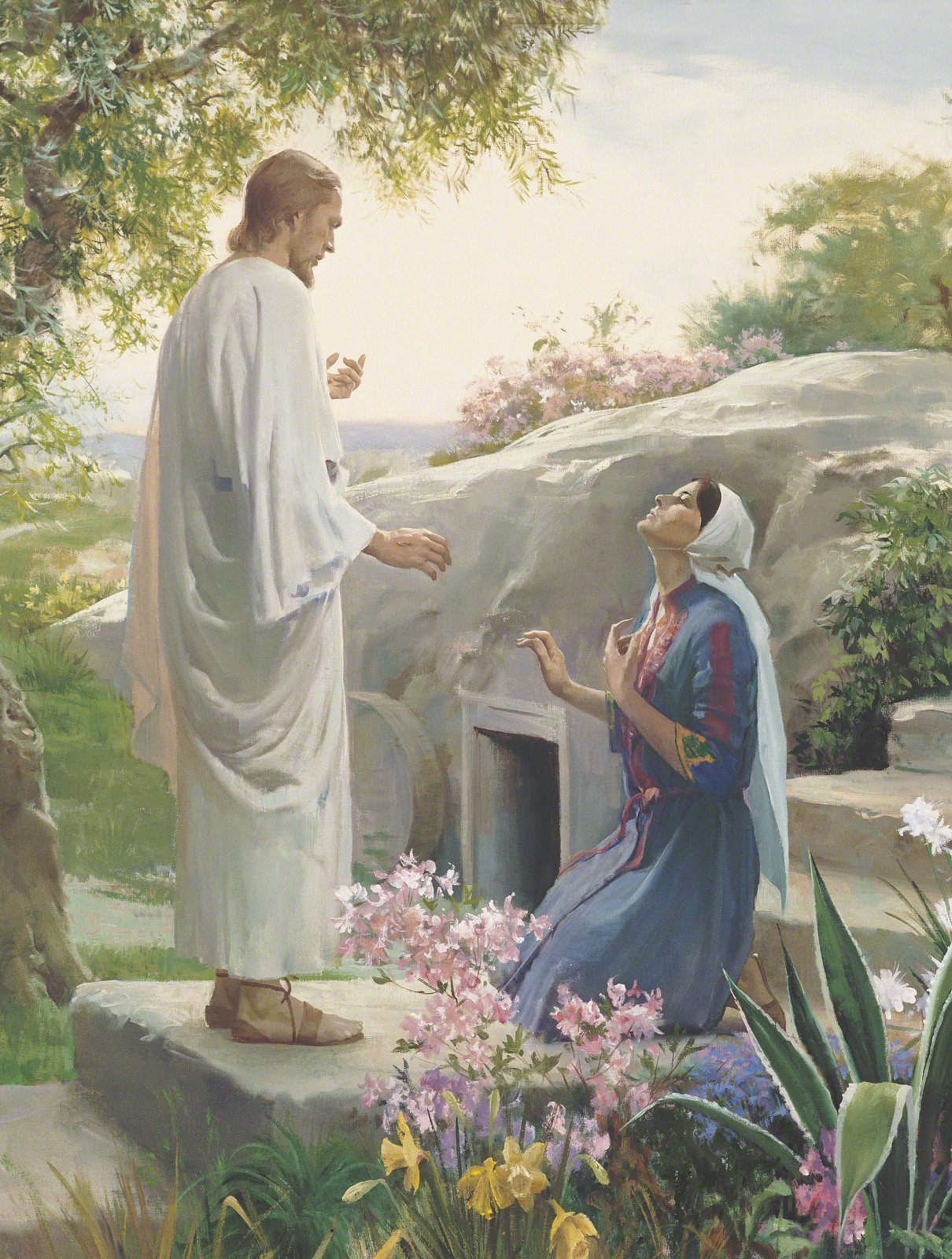
He is Risen

Image result for jesus mary magdalene lds


Previous blog posts on this lesson

Matthew 21-23 - Triumphant Entry and Teaching in the Temple
https://joelsmonastery.blogspot.com/2011/05/new-testament-gospel-doctrine-lesson-20.html

Matthew 24 - Jesus' Teaching on the Last Days
https://joelsmonastery.blogspot.com/2011/05/new-testament-gospel-doctrine-lesson-21.html 

Matthew 25 - Teaching in the Temple
https://joelsmonastery.blogspot.com/2011/05/new-testament-gospel-doctrine-lesson-22.html

Matthew 26 - Gethsemane
https://joelsmonastery.blogspot.com/2011/06/new-testament-gospel-doctrine-lesson-25.html

Matthew 28 - He is not here. He is Risen!
http://joelsmonastery.blogspot.com/2011/06/new-testament-gospel-doctrine-lesson-27.html

Festival of Tabernacles in Jesus' Day
https://joelsmonastery.blogspot.com/2011/04/new-testament-gospel-doctrine-lesson-15.html

Jesus and the Passover/Last Supper
https://joelsmonastery.blogspot.com/2011/06/lesson-23-love-one-another-as-i-have.html

N.T. Wright, "How God Became King"
https://www.amazon.com/How-God-Became-King-Forgotten/dp/0061730602/ref=sr_1_1?keywords=n.t.+wright+how+god+became+king&qid=1555430840&s=gateway&sr=8-1

Elder Holland quotes N.T. Wright
https://www.lds.org/general-conference/2008/04/my-words-never-cease?lang=eng

Sunday, April 07, 2019

Come Follow Me - Matthew 16–17; Mark 8–9; Luke 9

Come Follow Me - Matthew 16–17; Mark 8–9; Luke 9

Previous blog post on this lesson found here: https://joelsmonastery.blogspot.com/2011/03/new-testament-gospel-doctrine-lesson-13.html

Image result for mount of transfiguration

The Signs of the Times

On the last day of the Feast of Tabernacles, the smoke from the temple fires would be observed as it rose in the sky. It would be a predictor of how much rain would fall in the following year. Much rain was a blessing to the poor, but not for the rich (who feared their crops and fruit trees would be washed out by too much flooding). The Jews were constantly looking for the signs regarding planting and harvest.

Jesus obviously was a threat to the two major factions of Judaism: Pharisees and Sadducees, because they came together as a group to test Jesus. These two groups were fierce competitors, having a constant balance of power between themselves. They differed on many important doctrines: resurrection, the temple, oral vs written teachings, how strictly to observe the teachings in scripture, etc.

Here, they ask Jesus for a sign. Why? Had he not performed one sign after another for the previous year or so? The Pharisees and Sadducees had been present for many of his miracles. Yet, like those of the 5000 he fed (previous lesson), who then asked for a sign, they would not be satisfied with anything Jesus would do. Had he provided a miracle, they would only have said it was from Satan (as they previously had done).

In desiring a "sign from heaven" they were looking for a very big miracle, that could not be caused by faked. While Jesus had performed earth bound miracles, he had not shown power over the heavens (Joshua stopping the sun, Elijah calling fire from heaven, Moses darkening the sun for a day). Even in Elijah's day, many saw the fire, but did not remain committed to the worship of Jehovah. Israel saw Moses' great miracles, but still disbelieved. Only a conversion of the Spirit can make a lasting difference.

In saying there would be no more signs, except the sign of Jonah (Jonas), Jesus was explaining in a cryptic form that he would resurrect.  The Benson commentary tells us:

A wicked and adulterous generation — As if he had said, Ye would seek no further sign, did not your wickedness, and your love of the world, which is spiritual adultery, blind your understanding. There shall no sign be given, but — of the Prophet Jonas — Or the miracle of Christ’s own resurrection, a sign greater than any of those showed by the ancient prophets and messengers of God, and consequently a sign which proved Jesus to be superior unto them all.  https://biblehub.com/commentaries/matthew/16-4.htm

Thou Art the Christ

Matthew notes, "Thou art the Christ, the Son of the Living God," while in Mark, Peter simply says, "Thou art the Christ." Finally, Luke has Peter profess, "the Christ/Messiah of God." While each makes a slightly different statement, they all verify that Peter knew that Jesus was the Messiah. Matthew's statement, however, adds an additional note of understanding--the Messiah was not just an angel prophesied by Daniel, but was the actual son of Heavenly Father!  Establishing a literal sonship relationship with God, was something that Jews of Jesus' day were not ready to understand. Scholar Margaret Barker, in her book, "The Great Angel, A Study of Israel's Second God" http://www.margaretbarker.com/Publications/GreatAngel.htm  we learn that ancient Israel did understand that God (Elohim or El Elyon) was anthropomorphic (man-like) and he did have a divine son (Yahweh). In declaring Jesus as the Christ, the Son of the Living God, Peter was establishing Jesus' true role as Israel's second God, the literal son of Heavenly Father - restoring an ancient belief that was long lost by Israel as they combined Judaism with Hellenistic (Greek) and other beliefs.

In restoring this understanding of God and Christ, we could only then understand our relationship with God, as taught by Jesus. We call him "Our Father in Heaven" because He IS our father! As with Jews and traditional Christians today, the concept of God being a physical being that understands and loves us and truly made us in His image, has been lost. Again, a restoration of this important teaching had to occur, this time through the prophet Joseph Smith.

For most Bible believers today, God is a nebulous spirit that neither feels nor is moved. For many Christians, God has already chosen his elect, not because of their righteousness, but because God simply chose them. God, for many of them, is not a loving Father, but a monarch who chooses on a whim who will be saved and who will burn in hell. He is Aristotle's Unmoved Mover for much of Christianity. He can act,  but not be influenced by any of his creation. He is also believed to be of a different substance than his creation, meaning his creation can never be like him.

However, with Peter's confession, we see a different view of God. What is more perfect and correct: God as a Spirit that is disconnected to man; or Christ who has a physical body, who weeps with those who suffer, and is impacted by his creation?

Jesus is the "Son of the Living God!" God has offspring!  Jesus only does those things he sees God do, and so in Jesus loving and caring and weeping for mankind, we know that God is not the Unmoved Mover, but the Most Moved Mover. As Jesus has a body and spirit, so too does God. As Jesus has invited us to be the children of God, even as he is, so it is.  These truths were restored in Jesus' mortality and in our day through the Restoration. Without such understanding, our relationship with God could not truly be understood. And as Jesus explained, Peter's witness did not come through the philosophy of the times, but through revelation from God.

Mount of Transfiguration

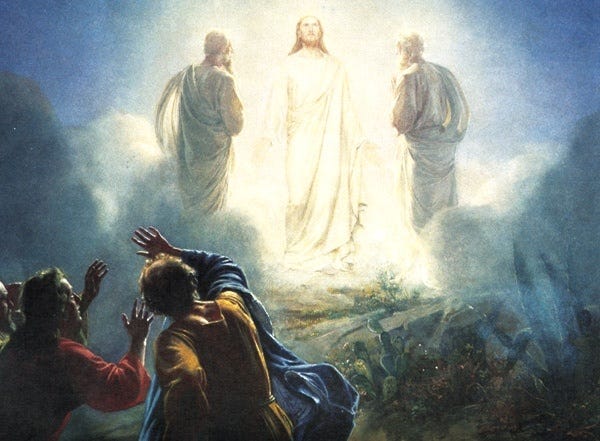
Jesus promised Peter to give him the keys of the priesthood/kingdom. With this power, he would be able to seal and loose things on earth and in heaven. This bestowal of power would soon come, as Matthew 17 tells us concerning the Mount of Transfiguration.

As Jesus, Moses and Elias/Elijah appeared to Joseph Smith in the Kirtland Temple to give him the keys of the priesthood (D&C 110), so these appeared before Peter, James and John on the Mount of Transfiguration.

In chapter 16, the Pharisees and Sadducees insisted upon a "sign from heaven," but received no such sign. However, Peter, James and John did receive such a sign from heaven. Jesus was transfigured. Moses and Elijah appeared from heaven, and in a cloud they heard the voice of God proclaiming that Jesus is his Beloved Son. Signs follow those who believe.


Monday, March 25, 2019

Come Follow Me - Matthew 14–15; Mark 6–7; John 5–6

Come Follow Me - Matthew 14–15; Mark 6–7; John 5–6

Image result for come unto christ

I've discussed some of the events previously on my blog, here: http://joelsmonastery.blogspot.com/2011/03/new-testament-gospel-doctrine-lesson-12.html
and here: http://joelsmonastery.blogspot.com/2011/03/new-testament-gospel-doctrine-lesson-13.html

For this lesson, I wish to focus on a couple other events.

Feeding the 5000

People were flocking to Jesus, causing him to have to teach in the wilderness, where there was space and less pressure from the Pharisees and Sadducees in the cities. Thousands flocked to him to be healed. Later, he fed them from a few fish and loaves of bread. Jesus showed that he was able to provide for the needs of the people. He could feed them, even as God fed the people of Moses with manna. He could heal them, even as some of the greatest prophets, like Elijah, had done. This is the beginning of Christ showing forth his grace, by showing he is able to provide the necessary things to his people. 

Jesus Walks on Water and Grace

Jesus sent his disciples off by boat to other other shore of the Sea of Galilee. Only later, would he go to join them. When Jesus walked on water during a tempest, he displayed several important aspects of his power. First, he has power over the elements. The boats were stalled due to the storm, but were quickly able to make it to shore once he climbed aboard.

John adds an event that the synoptic gospels do not contain. In this story, Peter asks Jesus to let him climb out and walk with him on the water. Jesus permits it, and Peter is able to miraculously walk on the water towards Jesus. However, as Peter loses his focus, and sees the tempest brewing around him, his faith waivers and he begins to sink. "Master, save me!" is his plea. Jesus mildly chides him for losing his faith, but reaches down and lifts him up, taking him back to the boat.

In this event, we find one of the best descriptions of the Grace of Jesus Christ, how it applies in our lives, and our role in receiving the grace. Jesus calls out to us to "Come unto me." In doing so, he provides the power for us to do so. We have only a couple things to do: have sufficient faith and step out from the safety of the boat.

Jesus can heal and provide bread and water. He can cause us to walk on water and provide true safety. But we first must have the faith to come to him and move in his direction. No works of our own can save us. Even though it feels safe, the boat can sink in the storms. In this case, the disciples were unable to make it to shore because of head winds causing a strong current against the boat. Without Christ, all their efforts to make it to shore were in vain. So it is with us. Our efforts, without Christ's grace, are in vain.

As with Peter, only when we focus our minds and hearts fully on Christ, can his grace be activated in our lives. We must be moving toward Jesus. Just standing still and seeing the fearful waves of life crashing around us will not bring forth his power in our lives. In our daily lives, we must increase our faith, repent, and walk towards Jesus steadily. In doing so,, his grace is sufficient. 2 Nephi 25:23, Nephi tells us, "it is by grace we are saved after all we can do." The question then is, what is "all we can do?"  In this case, the story of Jesus walking on water illustrates the answer: we can have faith, we can repent, and we can come unto Christ.

We cannot walk on water, get our own boat to the safety of the shore, or even move forward against the storm. The power to overcome the tempests of life, to save and rescue, to give power to walk above the storms, and to bring us safely to shore, all come through the Grace of Christ.

Rejecting Christ

Those whom Jesus had fed, crossed the sea and flocked to see him. Did they seek to adore him? No. They only wanted free food. When Jesus told them about the Bread of Life, they asked for fish and bread. When he told them to believe him as Messiah, they asked for signs. Yet, they had seen healings and the miracle of the bread and fishes just the day before. When he told them that God provided manna through Moses as a temporal blessing, but he offered eternal life, they weren't interested. They did not understand his parable of partaking of his flesh and blood, thinking he was asking them to be cannibals. They left him, because he would no longer satisfy their fleshly desires.

So it is today. Many people stay with Jesus while the blessings are coming. However, when Jesus calls us to come unto Him on His terms, we often begrudge him and turn away. In doing so, we may be able to temporarily satisfy our own flesh, but the spirit dies from hunger. Only in coming to Christ and continuing in Christ, can we receive his Grace.

Sunday, March 17, 2019

Come Follow Me - Matthew 13; Luke 8; 13

Come Follow Me - Matthew 13; Luke 8; 13

My previous blogging on this lesson is here: https://joelsmonastery.blogspot.com/2011/03/new-testament-gospel-doctrine-lesson-11.html

Parables


In this lesson, Jesus gives many of his parables. The word "parable" comes from the Greek, "parabole" which means a comparison of parallel things. In this context, Jesus' parables take every day events and compares them with the Kingdom of Heaven - the promise that heaven would come to earth for the Millennium. Unlike fables, which often give animals human characteristics and include magic, parables are ordinary and mundane normal events that have a spiritual meaning. The Hebrew form of the word, "mashal"also suggests something hidden, as in a riddle.

Here we have several parables, some long, others short. Each with a particular lesson. The parables were designed to have a hidden spiritual meaning, which only the true followers would understand. For the Pharisees, the parable of the sower would only seem like a story of someone planting a garden. For the believer, it would have far more important connotations, telling them what kind of people accept the gospel and retain that faith in their hearts.

In the same sense that these parables were hidden to the nonbelievers, so it was with the kingdom Jesus was building. The kingdom was hidden, initially being found only in the person of Christ. Only later would it expand to engulf much of the world through Christianity. In this instance, as with the good seed of the sower, some Christian faith would yield 30, some 60 and some a fullness (hundredfold - the full Restoration of the Gospel).

Framing the Parables
 
In chapter 12 of Matthew, Jesus encountered opposition by the Pharisees. They insisted he was healing by the power of Beelzebub (Lord of the Flies). Jesus countered that a house divided cannot stand, and so Satan could not heal and remain Satan. They then asked to see a sign, of which he only gave them the sign of Jonah (3 days in the fish/ground), calling them vipers, snakes that lie in wait to strike and poison.

It is in this context that Jesus begins speaking in parables. Even though the Pharisees had seen miracles, they still demanded a sign. When he did show miracles, they insisted it was from Satan. While miracles are sacred, Jesus' teachings were even more sacred. He was not about to throw his pearls before the swine. Instead, he taught openly through hidden means, parables. In this way, true disciples would understand through the Holy Ghost, while unbelievers would remain clueless.

Finishing his parables, Jesus is rejected by those he was teaching. They were amazed at his authoritative teachings and miracles, but in a bad way, "And they were offended in him" (Matthew 13:57).

Even speaking in hidden forms, the people were offended and rejected Christ. Mormon had similar results from the Nephites, in writing to his son Moroni, he noted:

"Behold, I am laboring with them continually; and when I speak the word of God with sharpness they tremble and anger against me; and when I use no sharpness they harden their hearts against it; wherefore, I fear lest the Spirit of the Lord hath ceased striving with them." (Moroni 9:4)
 Now, think of those who proclaim to follow the Savior today, but who reject the teachings of living prophets. Even among the membership of the Church of Jesus Christ of Latter-day Saints, there are many who reject the apostolic warnings against modern sins and worldliness. When the prophets speak in parables, or quietly and kindly, they are ignored. When they speak with strong words, they are condemned for being the white male patriarchy.

Christ explained the Kingdom of Heaven here on earth in parables. For us, with all the commentaries and books on the New Testament, we are able to see many hidden teachings without pondering on the things of the Spirit. Yet, that knowledge doesn't help us anymore than the Pharisees and people seeing the miracles Jesus performed, and then rejecting him.

As in the parables, we must seek Him diligently as did the widow seek her coin, the man sought to obtain the pearl of great price, or in leavening our own spiritual bread. As the seed in the story of the sower, we can let it land in a good heart, or allow our hearts to be hardened as rock.


Previous blog post on this lesson: https://joelsmonastery.blogspot.com/2011/03/new-testament-gospel-doctrine-lesson-11.html


Sunday, March 10, 2019

Come Follow Me - Matthew 10-12; Mark 2; Luke 7; 11

Come Follow Me - Matthew 10-12; Mark 2; Luke 7; 11

The Twelve are Ordained
 
In discussing Matthew 10, 19th century Bible scholar Matthew Henry noted:

This chapter is an ordination sermon, which our Lord Jesus preached, when he advanced his twelve disciples to the degree and dignity of apostles. In the close of the foregoing chapter, he had stirred up them and others to pray that God would send forth labourers, and here we have an immediate answer to that prayer: while they are yet speaking he hears and performs. What we pray for, according to Christ’s direction, shall be given,

 In chapter 9, Jesus implored them to pray for laborers/missionaries to share the gospel. Immediately, the Lord now is preparing the way by setting apart his 12 apostles. They have been told to follow Jesus, and would be "fishers of men," and now will have the authority to do so. Jesus teaches them their role as apostle: preaching the gospel, healing the sick, and preparing a people for the coming of Christ.

Previously, there was no established process to develop an organization of prophets. The Old Testament mentions a school of prophets, but rarely do we see how a prophet is called, especially to replace the previous one (Moses-Joshua and Elijah-Elisha are the main examples). Usually, we just see that a prophet is called of God, and he proclaims himself as such. Now, Jesus is establishing an organization that will plant the seed for his message to go throughout the world, and not just stay in Israel. Without a quorum of 12 apostles, there would have been no mission to the Gentiles, and the mission of Jesus would soon have failed after his crucifixion, as there would have been no witnesses to tell the tale of Christ's triumphant mission and resurrection.

Is It Easier to Heal or Forgive?

In the story of the palsied man who is let down through the roof to Jesus, we find an interesting teaching moment by Jesus. Instead of just healing the man, he first states that he forgives the palsied man of his sins. When the Pharisees murmur about blasphemy (for who can forgive sins, except God?), Jesus then responds with a question.  Which is easier: forgiving or healing?

Our first thought, and that probably of the Pharisees, was that forgiveness was easier. And in some ways it probably is easier. Forgiveness only requires an emotional effort towards empathy. Healing requires faith and the power of God. However, in today's world, we find that mankind can now do an amazing amount of healing through technology and nutrition. Yet, it becomes harder and harder for us to forgive those around us, those who offend us (intentionally or not). We are eager to condemn others and hold onto grudges for decades, instead of seeking to forgive, as Jesus so freely offers to all of us.

Would it be more important to us to be healed of a long term illness, or to receive forgiveness of God and those around us? Yet, we will jump at medical miracles to heal us of aches, pains, and rejuvenate our skin through plastic surgery. Meanwhile, we move much slower in forgiving others, even though Jesus proclaimed in teaching the Lord's prayer that we must forgive others, so that God will forgive us our trespasses.

Healing is a miracle. Forgiveness from God is an even greater miracle.

The Disciples of John the Baptist

John is imprisoned. His disciples understand that he may not have long to live. John sends them to Jesus with a question to ask, not for himself, but for his disciples to hear: Art thou the Messiah?  They needed to be weaned off John and onto Jesus, who was the Promised Savior. They did not need to look any further for a Messiah. Jesus' answer was clear, he was doing the works that were foretold the Messiah would do: healing the sick and afflicted, and proclaiming the gospel.

Humans tend to connect to their leaders, seeing them as saviors. This can include modern politicians, philosophers, singers, actors, and even modern day prophets. Listening to and considering what they have to offer is a good thing. But when it comes to true discipleship, we must ensure we are not following John the Baptist, while Jesus is available. We do not want to love a dead prophet so much, that when the Lord speaks something new through his living prophet, we stick with the old discipleship of dead prophet worship. Whether John the Baptist lived or died, discipleship to his being a prophet should have been overshadowed by discipleship to the Messiah.  John understood this, which is why he frequently sent his disciples to join Jesus.  Because of John's devotion to leading people to Christ, Jesus could not say enough good things about him. He was definitely among the greatest of prophets, who allowed himself to diminish so that Christ's role as Messiah could increase in the faith and lives of all Israel.


Bibliography

Matthew Henry: https://www.biblestudytools.com/commentaries/matthew-henry-complete/matthew/10.html


Sunday, March 03, 2019

Come Follow Me - Matthew 8-9; Mark 2-5

Come Follow Me - Matthew 8-9; Mark 2-5

Image result for jesus healing lds

Matthew and the Miracles
Many scholars believe that most of the events in Matthew 8-9 probably occurred prior to the Sermon on the Mount. However, Matthew combined them. As the 3 chapters on the Sermon on the Mount focus on the spiritual teachings of Jesus, these two chapters focus on the miracles Jesus performed.

Each of these miracles suggest a particular power that Jesus possesses. The first miracle, likely occurring immediately after the Sermon, was the healing of the leper.

This healing is very important, because leprosy was viewed differently than any other disease. Under the Law of Moses, leprosy was an uncleanness that reached to the very soul of the person. A leper could not dwell in Jerusalem, attend the temple, and clean people quickly learned to avoid them to avoid being contaminated themselves. In healing the leper, Jesus showed that he had power over clean/unclean, righteousness/sin.

While Matthew has Jesus asking for discretion on not broadcasting around his miracles, Mark seems to encourage it, as when he tells a young man he cures to return to his family and tell them of the miracle.

The Centurion
 
Jesus not only heals the unclean, but also gives time and consideration to the Gentiles in the area. A Centurion was a Roman military man in charge of 100 soldiers. While it is possible this was a centurion under Herod Antipas (and thus, a Jew), it is more likely to have been a Roman centurion. He notes that he is not worthy of having Jesus enter his house, as he is forced by Caesar's decrees to worship Caesar and other deities, as well as perform some terrible military actions. In this healing, Jesus shows that he is not only the Messiah of the Jews, but of all the Roman world. He is to be worshiped and believed in, even though the world forces down terrible paths. Even when we deem ourselves unworthy, Jesus is there to heal us when we call upon him.

Jairus' Daughter and the Woman with the blood issue
In this dual story, we find Jesus healing a rich and powerful man's daughter, and a poor woman considered unclean. This story shows the power of faith, as Jairus' daughter dies as Jesus is en route to heal her. The faithlessness of those mourning her death and mocking Jesus was palpable. But so was the faith of Jairus and his wife. It was a living faith that sent Jairus perhaps several miles to seek a miracle. Jesus raised a girl from the dead, so he had power over life and death. Jewish belief was that the spirit remained with the body for 3 days, and so was recoverable by a miracle as this. Later, Jesus' bringing Lazarus back from the dead on the fourth day, will show he has complete power over death.

For the woman with a blood issue (a menstruation cycle that never stops), the woman was considered unclean. Women were unclean during their menstrual cycle, and had to go through a cleansing period afterward, so they could be considered clean to enter the temple, to touch others, and to be accepted into all of society. For this woman, her issue was as bad as being a leper. She could never become clean. The scripture notes she saw many physicians, to no avail. Given how terrible medicine was practiced back then, it could have been painful, embarrassing, and harmful to go through the prescribed treatments. In this instance, only faith was sufficient to heal her. Unlike the leper, who walked through the crowds up to Jesus, this woman quietly sought a secret healing and then to go on her way. Having felt his power heal her, he stopped, even though the crowds pressed on him and his disciples. Jesus didn't have to stop. He could have continued walking. But the woman needed a moment to be recognized by her Savior, who looked upon her lovingly, saying her faith made her whole.

"Peace, Be Still"

In going by water to cross the Sea of Galilee, Jesus made an interesting choice. He could have easily went around by land. The storm that occurred would seem to have awakened the average person, but Christ continued sleeping on his pillow in the back of the boat, even while the others struggled to keep it afloat. The waters came in and the boat began to founder. Only then did they awaken Jesus, afraid they would perish. In saying, "Master, we perish," were they pleading for him to save them, or were they informing him that all, including Jesus, were about to meet a watery grave?

In commanding the storms to be still, Jesus showed that not only did he have power over disease and do over the elements. Taming the waters of a great sea is reminiscent of Moses controlling the Red Sea. Jesus, then, showed he had the same power and authority that Moses had. He was not just a prophet, but a new Moses. In the Sermon on the Mount, he replaced much of the Mosaic Law with the Christian Law. As with Moses, Jesus performed many miracles. Now he tamed the waters.

"We are Legion"

Arriving on the opposite shore in the land of the Gadarenes, Jesus encounters two men (one man in Mark), who are possessed by several demons. They are powerful, being able to break fetters and chains. Upon seeing Jesus, the demons proclaim who he is, and pray he won't torment them.

I've pondered without success, why demons would go out of their way to approach Jesus and proclaim him as the Son of God? Why didn't they go hide in a cave or elsewhere, until Jesus departed a few days later? What invisible force caused them to come before him?

Interestingly, those who had fought against God in the war in heaven, now came to Jesus for mercy. They did not want to be cast out of the country they were in, but to be cast into some swine instead. What did it do for them to enter the swine, when the swine immediately ran over a cliff into the sea? The swine were probably being raised for the Romans and other Gentiles in the area to eat, as Jews wouldn't have come near them even to care for the pigs. So, the town people likely were not Jews. Seeing a Jew with such power as to heal the possessed, while also destroying two thousand pigs (possibly one of the town's major livelihoods), would have unnerved those not accustomed to such power. Was the slaughter of the pigs partially due to the Jewish cleanliness laws, which taught that swine were unclean?  What does it mean when an unclean demon enters into an unclean swine? What is the symbolism beyond Christ seeking to cleanse the land of all uncleanness?

We do learn one important thought from this story. Jesus does not remain long with those who reject him. As the Gadarenes asked him to leave for killing their swine, so Jesus will not remain long with us when we ask him to depart from us, as well. We can use whatever reason we have to reject the Lord,  and he will not force himself upon us. Whether through sin, or a conscious demand to have him out of our lives, Jesus will not remain where he is not wanted. Still, he is not far off. Christ did not threaten them, brush his feet off as a testimony against them, nor anything else. He simply left at their request.

Yet, we also learn from those he healed, that when they came to him and asked him to bless them, he was ever ready to lift them up. He forgave sins, healed the sick, raised the dead, calmed the storms, but only when the people first sought him and then exercised faith in Christ. As we turn to him in faith and ask him for his blessings, we will not be turned away.