Tuesday, July 27, 2010

Gospel Doctrine Lesson #28 - Still Small Voice

OT Gospel Doctrine lesson #28 - After the Fire, a Still Small Voice
1 Kings 17-19


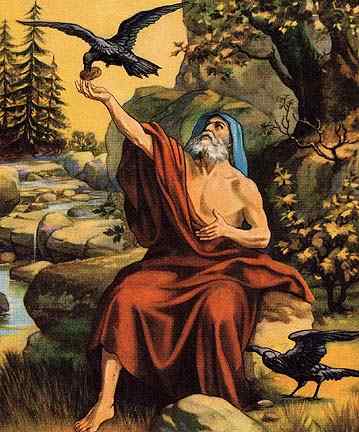
Elijah fed by ravens
http://apostolicmessenger.files.wordpress.com/2007/10/elijah.jpg

Background: The nation of Israel has gone from bad to worse. Israel’s first king, Jeroboam, introduced an unauthorized El worship by setting up two calves in the nation. Now, King Ahab would not only bring heresy into Israel, but apostasy. Ahab married Jezebel, a princess of Phoenicia. Phoenician nation were a group of Sea People that came from the Greek Islands. Jezebel brought with her the god Baal, a powerful Canaanite/Phoenician storm god, who would be Jehovah’s arch-nemesis throughout the period of the Divided Kingdoms of Judah and Israel. Both gods were gods of power, fertility, and strength. According to tradition, both were divine sons of El from before the Creation. Both claimed the same territory. Canaanites worshiped Baal long before Moses brought Israel to the Promised Land. Yet Abraham had worshiped Jehovah centuries before in the land of Canaan and was promised the land by Jehovah. Both gods had a consort/wife. Baal’s wife was Astarte, though in the Hebrew Bible is named Asherah (who is Jehovah’s consort), the goddess of wisdom and fertility, represented by the Tree of Life and the sacred grove.

In this period, Jezebel sought to forever make Baal the god of the land. She supported the priests of Baal, hundreds eating at her table in Jezreel. She also sought out and murdered all the prophets of Jehovah. That is, she killed all but one: Elijah. He alone was Jehovah’s prophet and representative in the land of Israel. He would spend much of his life in hiding, and the rest of the time in direct confrontation with Ahab, Jezebel, and Baal’s priests.

Elijah Seals the Heavens
1 Kings 17


Why would a prophet of God seal the heavens so they do not rain for three years? Wasn’t he aware of the sufferings it would cause the people of Israel? While Ahab and Jezebel were Elijah’s key enemies, the people were the ones that would go without. Droughts first cause the crops to die and the waters to dry up. With no crops nor water, eventually the animals that depend upon grass/hay/fodder would also die. Famine first brings about the death of all animals that eat only vegetation. With dead and dying animals bloating in the Sun, pestilence would be the next great disaster to hit mankind. Flies and maggots would become common place, spreading illness and disease. The poor would be hit hardest, and would usually die first in such circumstances, while the king and queen would find ways to keep comfortable and well fed.

Why would God allow Elijah to bring about drought, famine and pestilence? The Book of Mormon suggests that such actions cause people to humble themselves and turn to God in humility. Nephi, son of Helaman, saw the people in open warfare and heading towards a complete destruction. Only drastic actions could save them:
“3 And it came to pass that in this year Nephi did cry unto the Lord, saying:
4 O Lord, do not suffer that this people shall be destroyed by the sword; but O Lord, rather let there be a famine in the land, to stir them up in remembrance of the Lord their God, and perhaps they will repent and turn unto thee.
5 And so it was done, according to the words of Nephi. And there was a great famine upon the land, among all the people of Nephi....
7 And it came to pass that the people saw that they were about to perish by famine, and they began to remember the Lord their God; and they began to remember the words of Nephi.
8 And the people began to plead with their chief judges and their leaders, that they would say unto Nephi: Behold, we know that thou art a man of God, and therefore cry unto the Lord our God that he turn away from us this famine, lest all the words which thou hast spoken concerning our destruction be fulfilled.
9 And it came to pass that the judges did say unto Nephi, according to the words which had been desired. And it came to pass that when Nephi saw that the people had repented and did humble themselves in sackcloth, he cried again unto the Lord” (Helaman 11:3-9).

In Nephi’s instance, the people were about to destroy themselves with the sword. In Elijah’s case, the people were spiritually destroying themselves with the worship of Baal. In creating a three year famine, Elijah was softening their hearts for them to return back to Jehovah.


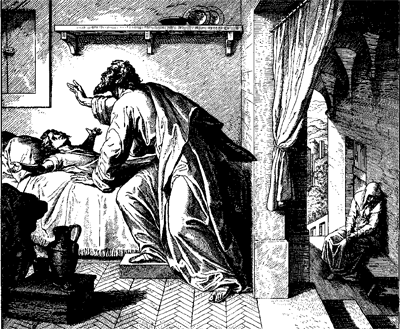
Elijah raises widow’s son
http://www.sermonsfromseattle.com/images/elijah_02.gif

Still, Elijah was mindful of the suffering. In staying with the poor widow and her son, he ensured their survival during the famine. When the widow’s son was hit with pestilence, it provided Elijah with an opportunity to display Jehovah’s power. In raising the child from the dead, he ensured not only survival from the famine, but brought about conversion to Jehovah:

“And the woman said to Elijah, Now by this I know that thou art a man of God, and that the word of the Lord in thy mouth is truth” (1 Kings 17:24).

Elijah versus the Priests of Baal
1 Kings 18


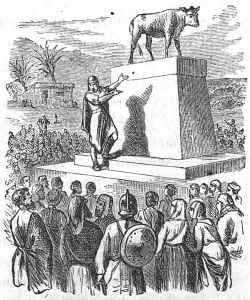
Elijah’s Sacrifice
http://www.tali-virtualmidrash.org.il/userfiles/Eli28-Elijahs-sacrifice---.jpg

The famine continued for three years. Those surviving the famines and plagues are duly humbled and ripened for conversion. They seek an answer to their starvation, which King Ahab has not been able to provide for them. Before turning on the spigots of heaven, Elijah’s opportunity to show Jehovah’s power and that Jehovah would end the drought was at hand.

“17 And it came to pass, when Ahab saw Elijah, that Ahab said unto him, Art thou he that troubleth Israel?
18 And he answered, I have not troubled Israel; but thou, and thy father’s house, in that ye have forsaken the commandments of the Lord, and thou hast followed Baalim.
19 Now therefore send, and gather to me all Israel unto mount Carmel, and the prophets of Baal four hundred and fifty, and the prophets of the groves four hundred, which eat at Jezebel’s table.”

Note that many blamed Jehovah and Elijah for the drought, including Ahab. But Elijah explained that the drought occurred not because people were following Jehovah, but because they had rejected Jehovah and ran after Baalim (plural of Baal). Elijah called forth all the priests of Baal and Asherah. Hundreds of priests against just Elijah in a literal dual to the death. The sacrifice would show just which God had real power in Israel.

“24 And call ye on the name of your gods, and I will call on the name of the Lord: and the God that answereth by fire, let him be God. And all the people answered and said, It is well spoken. “

This is the ancient trial or test of fire. A testimony that is sealed by fire was a true one. We see the trial of fire in the Book of Mormon with Abinadi:

“9 Now Abinadi said unto him: I say unto you, I will not recall the words which I have spoken unto you concerning this people, for they are true; and that ye may know of their surety I have suffered myself that I have fallen into your hands.
10 Yea, and I will suffer even until death, and I will not recall my words, and they shall stand as a testimony against you. And if ye slay me ye will shed innocent blood, and this shall also stand as a testimony against you at the last day.
11 And now king Noah was about to release him, for he feared his word; for he feared that the judgments of God would come upon him.
12 But the priests lifted up their voices against him, and began to accuse him, saying: He has reviled the king. Therefore the king was stirred up in anger against him, and he delivered him up that he might be slain.
13 And it came to pass that they took him and bound him, and scourged his skin with faggots, yea, even unto death.
14 And now when the flames began to scorch him, he cried unto them, saying:
15 Behold, even as ye have done unto me, so shall it come to pass that thy seed shall cause that many shall suffer the pains that I do suffer, even the pains of death by fire; and this because they believe in the salvation of the Lord their God” (Mosiah 17:9-15).

King Noah almost released Abinadi, because he feared the trial of fire. Later, King Noah would also be slain by fire for his sins, even as Abinadi prophesied.

Meanwhile, in 1 Kings 18, we read that Baal’s priests built their altar and spent the entire day praying, shouting and cutting themselves in an attempt to have Baal light their sacrifice. But it was to no avail. Even Elijah’s mocking that they needed to dance harder and shout louder, for perhaps Baal was asleep or deaf, did not cause the altar to light with flame.

Then it was Elijah’s turn:

“30 Elijah said unto all the people, Come near unto me. And all the people came near unto him. And he repaired the altar of the Lord that was broken down.
31 And Elijah took twelve stones, according to the number of the tribes of the sons of Jacob, unto whom the word of the Lord came, saying, Israel shall be thy name:
32 And with the stones he built an altar in the name of the Lord: and he made a trench about the altar, as great as would contain two measures of seed.
33 And he put the wood in order, and cut the bullock in pieces, and laid him on the wood, and said, Fill four barrels with water, and pour it on the burnt sacrifice, and on the wood.
34 And he said, Do it the second time. And they did it the second time. And he said, Do it the third time. And they did it the third time.
35 And the water ran round about the altar; and he filled the trench also with water.
36 And it came to pass at the time of the offering of the evening sacrifice, that Elijah the prophet came near, and said, Lord God of Abraham, Isaac, and of Israel, let it be known this day that thou art God in Israel, and that I am thy servant, and that I have done all these things at thy word.
37 Hear me, O Lord, hear me, that this people may know that thou art the Lord God, and that thou hast turned their heart back again.
38 Then the fire of the Lord fell, and consumed the burnt sacrifice, and the wood, and the stones, and the dust, and licked up the water that was in the trench.
39 And when all the people saw it, they fell on their faces: and they said, The Lord, he is the God; the Lord, he is the God” (1 Kings 18:30-39).

Elijah rebuilt the sacred altar at Carmel that was broken down due to neglect or perhaps vandalism by Jezebel’s priests. The bullock or bull was a symbol of Baal’s strength, fertility and power. The wood symbolized Asherah, goddess of wisdom, fertility and the grove. He soaked the offering and the altar until there would be no doubt that it was God that consumed the sacrifice, and not just a parlor trick. God’s power was shown in that fire came down from heaven consuming not only the bullock and wood, but the stones, dust, and even the water in the trench.

There was no doubt about it. The people saw with their own eyes that Baal was unable to light his sacrifice on fire, while Jehovah consumed everything. Israel fell on their faces and proclaimed Jehovah as their God. Only now that they had been humbled by three years of famine and drought were they ready to repent and truly embrace Jehovah as God. This same action, if done at the beginning of the drought, would not have impressed them for long and the people would have continued to worship Baal. But now it mattered. If Jehovah had power to consume even rocks with fire, he had power to end the drought.

Elijah called upon the people to slay the 450 priests of Baal, and they gladly did. Interestingly, the Bible does not say that the priests of Asherah were harmed at all. Some, such as David Larsen at the Heavenly Ascents blog, believe it is because the Asherah and her priests were a later addition by the Deuteronomists to justify their destruction of Asherah’s groves and to remove the Tree of Life out of the temple worship. However, I believe it is possible that Elijah did not slay them because Asherah was part of the worship of Jehovah, even as his consort/wife. Jehovah took back his consort from Baal, his arch-nemesis, and restored her in the proper worship of Jehovah. Not only did Elijah’s challenge restore Jehovah as God of Israel and defeat Baal, but it also restored Asherah as Jehovah’s wife.

With Israel now returned to the worship of their true God, Elijah turned to Ahab and told him to stop fasting, go eat and prepare for rain. The drought was over.

Still, Small Voice
1 Kings 19


While Ahab may now have started down the road to repentance and believing in Jehovah again, Jezebel was beside herself. She had slain almost all the prophets of Jehovah in Israel. Now, Elijah had slain all the priests of Baal. This became a major setback in Baal worship, as the temples and sacred high places to Baal had no priests to sacrifice to the god. Jezebel sought revenge and demanded Elijah’s head. Elijah fled into the land of Judah for safety. He was fed by an angel, then wandered to Mount Horeb, fasting 40 days and nights. Mount Horeb is another name for Mount Sinai, the mountain where God gave the Ten Commandments to Moses. This was the place where Moses had his theophany, or grand vision of God, and Elijah also went there in hopes of having his own grand experience.

On the Mount, Elijah awaited on God in a cave:
“11 And he said, Go forth, and stand upon the mount before the Lord. And, behold, the Lord passed by, and a great and strong wind rent the mountains, and brake in pieces the rocks before the Lord; but the Lord was not in the wind: and after the wind an earthquake; but the Lord was not in the earthquake:
12 And after the earthquake a fire; but the Lord was not in the fire: and after the fire a still small voice.
13 And it was so, when Elijah heard it, that he wrapped his face in his mantle, and went out, and stood in the entering in of the cave. And, behold, there came a voice unto him, and said, What doest thou here, Elijah?”

Note that even with Moses, Elijah was able to see the Lord pass by him. But Elijah noted that God was not in the wind (probably a whirlwind), the earthquake, or the fire. Remember, Jehovah recently used fire to consume the altar. While these are great powers, they are not God. Some Canaanites saw in these powers the gods they worshiped. However, Jehovah was to be found in the still, small voice. Elijah recognized that and only went out of the cave when he heard the voice.

How often are we distracted or absorbed by the loud noises of society around us? How often do we seek answers or even God in the powers of the earth? How often do we sit quietly enough that we can even hear the still, small voice of the Spirit?

“ 14 And he (Elijah) said, I have been very jealous for the Lord God of hosts: because the children of Israel have forsaken thy covenant, thrown down thine altars, and slain thy prophets with the sword; and I, even I only, am left; and they seek my life, to take it away.”

Elijah was tired. He spent three years enduring a famine, hiding out from Jezebel and Ahab, and watching the sons of the prophets of Jehovah slain by Jezebel. He was ready for his mission to be over, and God agreed. The Lord commanded him to anoint new kings for Syria and Israel, and to anoint his own replacement.

“And the Lord said unto him, Go, return on thy way to the wilderness of Damascus: and when thou comest, anoint Hazael to be king over Syria:
16 And Jehu the son of Nimshi shalt thou anoint to be king over Israel: and Elisha the son of Shaphat of Abel-meholah shalt thou anoint to be prophet in thy room.
17 And it shall come to pass, that him that escapeth the sword of Hazael shall Jehu slay: and him that escapeth from the sword of Jehu shall Elisha slay.”

The reign of Baal’s terror would soon end in Israel. Between Hazael of Syria, Jehu of Israel, and Elisha the prophet, the worship of Baal would be ended, at least for a time. And Elijah was reminded that his works had made a big difference, even though it may not have seemed that way:

“18 Yet I have left me seven thousand in Israel, all the knees which have not bowed unto Baal, and every mouth which hath not kissed him.”

Elijah’s efforts had converted thousands. The worship of Jehovah in Israel was not dead, but was still very much alive. And in the following generation of kings and prophets, Jehovah would have greater power in Israel.

Bibliography

David Larsen’s Heavenly Ascents on Elijah and Lesson 28: http://www.heavenlyascents.com/2010/07/27/the-great-elijah-stories-ot-lesson-28/?utm_source=feedburner&utm_medium=feed&utm_campaign=Feed%3A+HeavenlyAscents+%28Heavenly+Ascents%29&utm_content=Google+Reader

William G. Dever, Does God have a Wife? http://www.amazon.com/Did-God-Have-Wife-Archaeology/dp/0802863949/ref=sr_1_1?ie=UTF8&s=books&qid=1280257633&sr=8-1

Margaret Barker website: http://www.margaretbarker.com/

Daniel Peterson, Nephi and His Asherah: http://maxwellinstitute.byu.edu/publications/jbms/?vol=9&num=2&id=223

Johanna H. Stuckey, Asherah and the God of the Early Israelites: http://www.matrifocus.com/LAM04/spotlight.htm

Wikipedia, Asherah: http://en.wikipedia.org/wiki/Asherah

Tuesday, July 20, 2010

OT Gospel Doctrine Lesson #27 - The Influence of Righteous & Wicked Leaders

OT Gospel Doctrine Lesson #27 - The Influence of Righteous & Wicked Leaders
1 Kings 12-14; 2 Chronicles 17, 20


High Place of Jeroboam
(Nearly all archaeologists agree that this excavated podium was the one that Jeroboam constructed to house the golden calf at Dan. Archaeologists now think the platform was roofed. Evidence of a four-horned altar has been found as well as religious objects such as three iron shovels, a small horned altar, and an iron incense holder.)
http://www.bibleplaces.com/dan.htm


Background: While we often focus on Solomon's wisdom, giving the one example of dividing a living child to two women in a maternity suit; we often neglect the degree to which his decrees and decisions harmed not only himself, but Israel.

While he built a temple to Jehovah, he built even larger palaces for himself. While his father David sinned, he repented and still remained faithful to the Lord. Solomon drifted to worshiping other gods & marrying outside of Israel. It became an issue of David breaking the portion of the 10 Commandments related to mankind, while Solomon blasphemed against the God that made him king. Alma taught that only denying the Holy Ghost was worse than murder or adultery (Alma 39:11-13), and it seems that Solomon’s evil works came close to this gravest of all sins, as he continued sinning even after being rebuked by prophets.

David reached out to all the tribes of Israel, accepting political, military and religious leaders from both Judah and Israel. On the other hand, Solomon favored Judah. He began by rejecting leaders that favored Israel, including his brother and one of David's two high priests. He taxed the Ten Tribes heavier, including requiring more soldiers and laborers to build his palaces and edifices, than he required from Judah.

Instead of expecting Israel to worship only Jehovah as David did, Solomon built temples to the gods of his foreign wives.

Because of Solomon's betrayal of Jehovah, Jeroboam was anointed and ordained as the future King of Israel. And because he ruled Israel so harshly, he left Israel and his son Rehoboam little room to negotiate and maneuver.

Dear Abby's Advice to New Royalty - Listen to the Old Guys!
1 Kings 12-14


Israel's unity as a kingdom was fragile. Rehoboam inherited his father's penchant to annoy and punish the 10 Tribes. And they knew it.

Jeroboam, previously anointed King of Israel, returned from Egyptian exile. Surely, many in Israel were wary of making such a drastic dynastic change, and so Jeroboam decided to present an immediate challenge to Rehoboam, packaged neatly as a populist demand for basic rights. Israel would gladly accept Rehoboam as king if he would lessen the hardships imposed by his father, Solomon. The young prince sent Israel away for three days while he sought council.

We learn from Rehoboam that if you don't like the first answer you are given, keep looking around and eventually someone will tell you what you want to hear. And as Voltaire once said, "common sense is not that common."

Rejecting the council of the elders to accept Israel's common sense demands, Rehoboam instead followed the guidance from his peers. They insisted the people only understood brute force. If he gave in to Israel now, what would they demand next? His kingdom would immediately be diminished, never being as great as David or Solomon. The young men's Machiavellian counsel of "whipping them with scorpions" and having a pinkie finger thicker than Solomon's loins, was clearly meant to tell Israel they were no longer Tribes of the God of Israel, but subjects and servants of the king.

Rehoboam fell head first into Jeroboam's political trap. He was forced to choose between being a weakened ruler or a tyrant. For him, following sharply in his father's stead seemed to be the proper choice. Solomon slew or exiled many at the beginning of his reign and succeeded in holding the nation together by force. Rehoboam believed he could do the same.

Israel rebelled, proclaiming Jeroboam their king. The short-lived United Kingdom would never reunite again in history.

Jeroboam's Ancient Bull Cult


Jeroboam worships the golden calf
http://static.newworldencyclopedia.org/thumb/0/08/Golden-calf.jpg/250px-Golden-calf.jpg

Although anointed by a prophet to rule the Ten Tribes, Jeroboam still had a fierce competitor: Solomon's Temple. In fact, this was Jehovah's (Yahweh) temple. This was the God of Abraham, Isaac, Jacob and Moses.

As mentioned in previous lessons, Jehovah was one of the divine sons of Elohim or El Elyon. When El divided the nations in the days of Peleg, he assigned a nation to each of his divine sons. Jehovah received the future kingdom of Israel, which he nurtured from Abraham on, until Israel fully came into its own.

Jeroboam knew that Jehovah chose the Levites, and particularly the sons of Aaron to serve him in the temple. Most of the Levitical authority was in Jerusalem and attached to the temple. By the time he could build his own temple to Jehovah, Israel may have defected back to Jerusalem for religious reasons.

Jeroboam needed to provide an option acceptable to his people. He made two calves (young bulls), which anciently symbolized both Elohim and Baal. He did not embrace the local Canaanite god Baal. Instead, I believe he reached back into Israel's past and resurrected the worship of El Elyon for Israel to follow.

Elohim or El Elyon, being the father of all the gods/divine sons, would have been very familiar to Israelites, Canaanites, and other Semitic tribes in the region. Unlike Jehovah, the invisible mountain God that sat on the mercy seat between the two cherubim in the Jerusalem Temple, Elohim was often represented by bull or calf images that symbolized his power and fertility. He was not assigned to a particular nation, but was father of the gods. And he was often worshiped at wilderness shrines or "high places."

Jeroboam created not one, but two shrines to El. These were placed in the northern (Dan) and southern border (Beth-el) regions. It seems the king did this for two reasons: first to prevent Israel from leaving to worship elsewhere, and second to encompass the entire land. Jehovah's temple was confined sacred space. The sacred bulls on the far borders of the land made all of Israel a holy place. There were other reasons to build a high place in Beth-el. First, its name means "House/Temple of El." It was named anciently by Jacob, when he saw in vision El Elyon on his throne above Jacob's ladder/staircase (Genesis 28:11-19). Jeroboam adopted and adapted the ancient worship of El to fit his needs.

There was just one problem with Jeroboam's plan: he had not been authorized by either Elohim nor Jehovah to take such a radical departure. No prophet of God approved his plan, nor anointed the priests, as was done in the cases of the Tabernacle and the Temple. Still, his sin was not as wicked as Baal worship which would come under future kings (2 Kings 3:1-2). Jeroboam’s sin was not of worshiping a god from the Canaanites, but of wrongly worshiping El without God’s permission.

The Curse of Jeroboam

In 1 Kings 13, we find a prophet of God (Jehovah) went to the high place in Beth-El and condemned Jeroboam for his apostate twisted form of worship. The prophet foresaw the future destruction of Jeroboam’s family and the bull idol. Amazingly, Jeroboam did what Solomon and Rehoboam did, continued worshiping false gods. It wasn’t in his interest to repent. As with most people of the day, Jeroboam believed there were many living gods, and Jehovah was just one of many. When Jeroboam’s hand withers as he touches the altar, he asks the prophet of Jehovah to heal his hand. He knows Jehovah has the power to heal, and his hand is healed. Yet, he continues in his apostate worship, because for him, Solomon, and many future kings of Israel and Judah, Jehovah is just one of many.

Because of rebellion, we will see kingdoms ripped from many kings of Israel and Judah over the course of several centuries. Few kings will be considered faithful and true to Jehovah God. However, some soon appear in Judah, such as Asa and Jehoshaphat. Still, it would not be long before Israel is taken from Jeroboam.

Jeroboam’s only son is found on his deathbed. The king sends his wife in disguise to the prophet Ahijah, who originally anointed him king. Ahijah is now old and blind, yet the Lord reveals to him the Jeroboam’s wife and her purpose. The prophet tells her that the child would die and the kingdom soon would be torn from the house of Jeroboam (1 Kings 14:1-20).

Rehoboam’s sins

The account turns to the king of Judah, Rehoboam. Not only did Solomon’s wives lead him to worshiping other gods, but Rehoboam is also affected by his mother’s foreign influence. She was an Ammonite, and brought with her the worship of her land.

This strange religion included, “they also built them high places, and images, and groves, on every high hill, and under every green tree. And thee were also sodomites in the land: and they did according to all the abominations of the nations which the Lord cast out before the children of Israel” (1 Kings 14:23-24).

High places were hills (natural or man made) where ancient people worshiped. High places included Jehovah worship for centuries, and included Jacob’s sacred site at Beth-El (see above). However these high places were tied to the goddess Asherah. Asherah was known as the goddess of wisdom and fertility. Anciently, she was viewed (or differing versions of her were viewed) as the consort or wife of Elohim, Jehovah, and/or Baal. Asherah was represented by the tree, and often groves were grown in her honor. The version that Rehoboam introduced was probably as a wife of Baal, for it also included “sodomites” or homosexual prostitutes involved in the worship rites.

Asherah was also connected tightly to Jehovah and his temple. She represented the Tree of Life, the mother of God (Jesus). However, direct worship of her was less common among those who worshiped Jehovah. In Nephi’s Vision of the Tree of Life, the Tree is directly connected to the Mother of God, with Jesus as her fruit. Nephi understood this temple symbolism as representing Asherah, the wife of the true God (1 Nephi 8-15).


“7 And behold this thing shall be given unto thee for a sign, that after thou hast beheld the tree which bore the fruit which thy father tasted, thou shalt also behold a man descending out of heaven, and him shall ye witness; and after ye have witnessed him ye shall bear record that it is the Son of God.
8 And it came to pass that the Spirit said unto me: Look! And I looked and beheld a tree; and it was like unto the tree which my father had seen; and the beauty thereof was far beyond, yea, exceeding of all beauty; and the whiteness thereof did exceed the whiteness of the driven snow.
9 And it came to pass after I had seen the tree, I said unto the Spirit: I behold thou hast shown unto me the tree which is precious above all.
10 And he said unto me: What desirest thou?
11 And I said unto him: To know the interpretation thereof—for I spake unto him as a man speaketh; for I beheld that he was in the form of a man; yet nevertheless, I knew that it was the Spirit of the Lord; and he spake unto me as a man speaketh with another.
12 And it came to pass that he said unto me: Look! And I looked as if to look upon him, and I saw him not; for he had gone from before my presence.
13 And it came to pass that I looked and beheld the great city of Jerusalem, and also other cities. And I beheld the city of Nazareth; and in the city of Nazareth I beheld a virgin, and she was exceedingly fair and white.
14 And it came to pass that I saw the heavens open; and an angel came down and stood before me; and he said unto me: Nephi, what beholdest thou?
15 And I said unto him: A virgin, most beautiful and fair above all other virgins.
16 And he said unto me: Knowest thou the condescension of God?
17 And I said unto him: I know that he loveth his children; nevertheless, I do not know the meaning of all things.
18 And he said unto me: Behold, the virgin whom thou seest is the mother of the Son of God, after the manner of the flesh.
19 And it came to pass that I beheld that she was carried away in the Spirit; and after she had been carried away in the Spirit for the space of a time the angel spake unto me, saying: Look!
20 And I looked and beheld the virgin again, bearing a child in her arms.
21 And the angel said unto me: Behold the Lamb of God, yea, even the Son of the Eternal Father! Knowest thou the meaning of the tree which thy father saw?
22 And I answered him, saying: Yea, it is the love of God, which sheddeth itself abroad in the hearts of the children of men; wherefore, it is the most desirable above all things.
23 And he spake unto me, saying: Yea, and the most joyous to the soul” (1 Ne 11:7-23).

In these verses we find that Nephi recognizes the Tree of Life as representing the Mother of God. It is the Love/Wife of God that sheds itself through her son (the fruit of the tree) to all mankind.

But this is not the Asherah that Rehoboam builds high places to. This is an apostate wife of Baal, encouraging sexual sin and perversion. The sacred things of God have again been distorted and twisted into an apostate form.

To punish Judah, the Lord sent in the Egyptians to punish them. The royal and spiritual treasures of Judah were carried off as the prize for Egypt’s entrance into the land. Rehoboam’s sins have not only cost him half the kingdom, but all the kingdom’s riches. He has no choice but to replace the gold implements (such as shields) of his army with items made of bronze. Jehovah’s temple probably received no implements of any kind, since the Bible is silent on the topic (1 Kings 14:25-28), In less than a generation, David’s dream of a temple for the Lord had become an afterthought. Solomon built it, then neglected it in his pursuit of riches and other gods. Rehoboam also neglected the Lord’s House in his perverse sexual desires and worship of the apostate goddess.

Asa, the Righteous King of Judah
2 Chronicles 14-16


Judah was occasionally blessed with righteous kings. Among these was Asa. In his days, he

“took away the altars of the strange gods, and the high places, and brake down the images, and cut down the groves: and commanded Judah to seek the Lord God of their fathers, and to do the law and the commandment” (2 Chron 14:2-5).
He built up Judah and had no war in his days, “because the Lord had given him rest” (vs 6).

In chapter 15, the prophet Azariah tells the king and people they shall prosper if they would only follow Jehovah and keep his commandments:

“Hear ye me, Asa, and all Judah and Benjamin; The Lord is with you, while ye be with him; and if ye seek him, he will be found of you; but if ye forsake him, he will forsake you” (2 Chron 15:2).

So upright was Asa’s kingdom in his early years, that not only did Judah and Benjamin repent and follow God, but many faithful people out of “Ephraim and Manasseh, and out of Simeon” immigrated to Jerusalem to worship God and escape the evils being done in Israel (vs 9).

Asa does suffer from a lack of faith, when Syria came to war with Judah. Rather than trust in God, Asa emptied all the treasures out of the temple and his palace as a tribute, to send Syria away. Because he lacked the faith to trust in God’s deliverance, he was chastened by the seer Hanani, and smitten with illness, which he died from (2 Chron 16).

Jehoshaphat and Ahab - The Odd Couple
2 Chronicles 17-20


One of the strangest alliances in the Bible was between Jehoshaphat and Ahab.

Jehoshaphat, king of Judah, was revered as a very righteous king and follower of Jehovah:

“And the Lord was with Jehoshaphat, because he walked in the first ways of his father David, and sought not unto Baalim (plural of Baal)” (2 Chron 17:3).

The kingdom that waned under Rehoboam was again growing in glory. Jehoshaphat became rich as king, because the Lord blessed him for his devotion. He removed the groves and high places that Rehoboam and other kings set up (vs 6). He sent the Levites throughout all the land, teaching God’s law to the people (vs 9). So great was God’s glory on Jehoshaphat that other nations feared him and would not go out to war against Judah (vs 10).

On the other hand, Ahab reigned over Israel’s darkest times. His wife was Jezebel, and the worship of Baal and his consort Asherah had become the main worship in the land. Still, Jehoshaphat joined Ahab in fighting Syria.

The Premortal Divine Council
2 Chronicles 18:18-22


Ahab’s apostate prophets all predicted an easy victory for the allies. Yet, Jehoshaphat insisted on hearing from a prophet of Jehovah. Ahab was concerned, because the nearest prophet was Micaiah, who never prophesied well of him. Still, Micaiah was sent for on behalf of Jehoshaphat.

The prophet began mocking Ahab, telling him what the others had said. However, Ahab knew Micaiah spoke falsely and commanded him to tell him the truth. Interestingly, the story is reminiscent of the ancient divine council:


“18 Again he said, Therefore hear the word of the Lord; I saw the Lord sitting upon his throne, and all the host of heaven standing on his right hand and on his left.
19 And the Lord said, Who shall entice Ahab king of Israel, that he may go up and fall at Ramoth-gilead? And one spake saying after this manner, and another saying after that manner.
20 Then there came out a spirit, and stood before the Lord, and said, I will entice him. And the Lord said unto him, Wherewith?
21 And he said, I will go out, and be a lying spirit in the mouth of all his prophets. And the Lord said, Thou shalt entice him, and thou shalt also prevail: go out, and do even so.
22 Now therefore, behold, the Lord hath put a lying spirit in the mouth of these thy prophets, and the Lord hath spoken evil against thee” (2 Chron 18:18-22).

Here Micaiah has a theophany, a vision of God on his throne. God is surrounded by the “host of heaven” which are the ancient divine council (see Isaiah 6, Abraham 3, Job 1). In Abraham, we see the original council, where God asks “whom shall I send” to be the Savior of mankind. In Isaiah, the Lord asks “whom shall I send” to preach to the people (Isaiah volunteers as a symbol of Christ). Here, God asks who shall go to entice Ahab. A lying spirit offers to do the work. Some may find this strange, but we find that Satan (Adversary) was among those in the ancient divine councils, and Job even saw him challenge Jehovah for primacy over Israel by tempting Job himself! Here, the same spirit entered into the mouths of the prophets of Baal, leading Ahab to his death in battle.

“So Shall Ye Prosper”
2 Chronicles 19-20


The battle against Syria having gone badly, because the two kings disobeyed Jehovah’s prophet, Jehoshaphat found himself rebuked, and he repented.

His big challenge came when the Ammonites and others attacked Judah. Should he do as previous kings and give up a tribute from the treasuries of the palace and temple? The king went to the temple and prayed:

“5 And Jehoshaphat stood in the congregation of Judah and Jerusalem, in the house of the Lord, before the new court,
6 And said, O Lord God of our fathers, art not thou God in heaven? and rulest not thou over all the kingdoms of the heathen? and in thine hand is there not power and might, so that none is able to withstand thee?
7 Art not thou our God, who didst drive out the inhabitants of this land before thy people Israel, and gavest it to the seed of Abraham thy friend for ever?
8 And they dwelt therein, and have built thee a sanctuary therein for thy name, saying,
9 If, when evil cometh upon us, as the sword, judgment, or pestilence, or famine, we stand before this house, and in thy presence, (for thy name is in this house,) and cry unto thee in our affliction, then thou wilt hear and help.
10 And now, behold, the children of Ammon and Moab and mount Seir, whom thou wouldest not let Israel invade, when they came out of the land of Egypt, but they turned from them, and destroyed them not;
11 Behold, I say, how they reward us, to come to cast us out of thy possession, which thou hast given us to inherit.
12 O our God, wilt thou not judge them? for we have no might against this great company that cometh against us; neither know we what to do: but our eyes are upon thee.
13 And all Judah stood before the Lord, with their little ones, their wives, and their children.
14 Then upon Jahaziel the son of Zechariah, the son of Benaiah, the son of Jeiel, the son of Mattaniah, a Levite of the sons of Asaph, came the Spirit of the Lord in the midst of the congregation;
15 And he said, Hearken ye, all Judah, and ye inhabitants of Jerusalem, and thou king Jehoshaphat, Thus saith the Lord unto you, Be not afraid nor dismayed by reason of this great multitude; for the battle is not yours, but God’s” (2 Chron 20:5-15).

The Lord delivered Judah and their king, because of their faith. Because of that faith, “came the Spirit of the Lord in the midst of the congregation” (vs 14). The priest Jahaziel told them, “stand ye still, and see the salvation of the Lord...fear not, nor be dismayed” (vs 17).

The next morning, Jehoshaphat cried to his people, “Believe in the Lord your God, so shall ye be established; believe his prophets, so shall ye prosper” (vs 20).

Judah found that day that the Ammonites and Moabites had slaughtered themselves, leaving great treasures for the people to spoil. Once again, the “fear of God was on all the kingdoms of those countries, when they had heard that the Lord fought against the enemies of Israel. So the realm of Jehoshaphat was quiet; for his God gave him rest round about” (vs 29-30).

Final Comments

Even as a righteous king can create an environment of peace and protection from God, so can we do in our families, our churches, and in our lives. However, it requires us to reject the false gods that continually are about us. Many offer sordid pleasures, while others justify our sinful lifestyles. However, only God can create order from the chaos that surrounds us, and bring peace and safety to us.

Bibliography

Daniel Peterson, Nephi and His Asherah: http://maxwellinstitute.byu.edu/publications/jbms/?vol=9&num=2&id=223

The Ancient Divine Council: http://www.thedivinecouncil.com

Order out of Chaos: http://joelsmonastery.blogspot.com/2010/07/gospel-scholarship-order-out-of-chaos.html

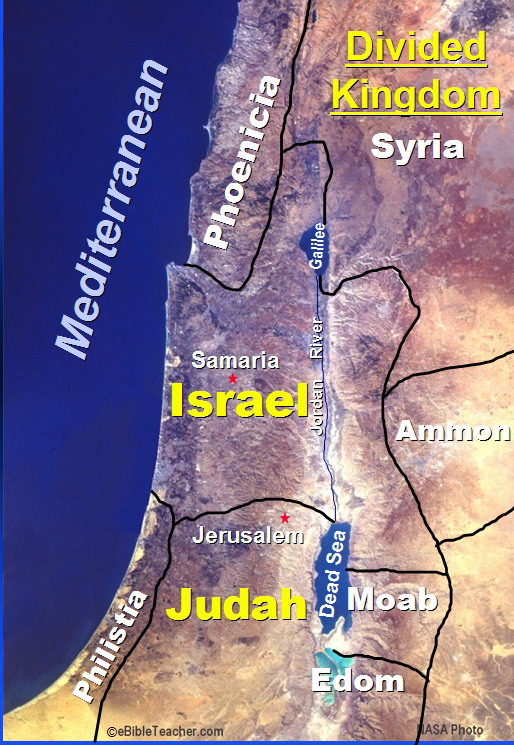
Map of Divided Israel/Judah:
http://britam.org/pics/Divided.jpg

Saturday, July 17, 2010

Gospel Scholarship: Order out of Chaos

Gospel Scholarship: Order out of Chaos

"Awake, awake, put on strength, O arm of the Lord; awake, as in the ancient days, in the generations of old. Art thou not it that hath cut Rahab, and wounded the dragon?" Art thou not it which hath dried the sea, the waters of the great deep; that hath made the depths of the sea a way for the ransomed to pass over?" (Isaiah 51:9-10).

This verse discusses, among other things, the Creation of the world and how God brought order out of chaos. We will see how the ancient Middle East believed the earth was formed. This article will also show how this Creation motif is re-lived and renewed in the story of the Exodus, the atonement of Christ, and the ordinances we receive.

Isaiah's words reflect the ancient belief that God formed the world out of Chaos:
"And the earth was without form and void; and darkness was upon the face of the deep. And the Spirit of God moved upon the face of the waters" (Genesis 1:2).

Here we see that there IS an earth already available for him to work with. There is no ex nihilo creation, or creation from nothing. However, this earth is "without form, and void" or is not organized yet. The earth is steeped in darkness and covered in water.
For the ancients, nothing was more chaotic than darkness and water. Before creating life, God must eliminate chaos by bringing forth light. This light is not the sun, moon and stars, for those are brought forth on the fourth day (vs 14-19).
Instead, on the first day, light was called forth, ordered, and divided from the darkness. The chaos of darkness is not destroyed nor eliminated, but is diminished and held at bay (vs 3-5).

Next, the waters had to be tamed. On the second day, waters on earth were separated from those in the skies. And on the third day land masses jutted up into the air, forcing the waters into the oceans, seas, and rivers (vs 6-10).

As with the darkness, the waters were not destroyed, but controlled. Isaiah's above quote mentions a dragon, or sea serpent, which in the ancient beliefs was slain or defeated by God, in order to bring order and create the earth.

In some traditions there were two dragons, male and female. The Lord defeated one in the Creation, and will defeat the second one in the last days. Isaiah also foresaw this event:

"In that day the Lord with his sore and great and strong sword shall punish Leviathan the piercing serpent, even Leviathan that crooked serpent; and he shall slay the dragon that is in the sea" (Isaiah 27:1).

Leviathan and Rahab are sea serpents. They caused the waters to be chaotic. In forming the earth, the Lord was able to control, but not totally defeat the monster(s) until the end.

Confusing? Puzzling? Let's let the scriptures explain:
"And there was war in heaven; Michael and his angels fought against the dragon; and the dragon fought and his angels, and prevailed not; neither was there place found anymore in heaven. And the great dragon was cast out, that old serpent, called the Devil, and Satan, which deceiveth the whole world: he was cast out into the earth, and his angels were cast out with him" (Revelation 12:7-9).

As with the ancient tradition, the serpent, or Satan was not completely defeated until the end:
"And he laid hold on the dragon, that old serpent, which is the Devil and Satan, and bound him a thousand years" (Rev 20:2).

In LDS theology, Lucifer sought to replace both Christ and God, recommending a replacement plan that did not require a Suffering Savior nor agency, but would force a chaotic salvation on all (Moses 1:1-4, Abraham 3:23-28, Isaiah 14:12-20).

So, in the beginning, God had to defeat Satan (Adversary) and his chaos in order to form the earth. But he did not totally destroy the chaos, as it was necessary for earth life. Half of the earth is bathed in life and the other in darkness. Water still covers most of the earth.

While a group of elders traveled down the Missouri River, Wilford Woodruff spotted Satan raging upon the waters. The party pulled to the bank, and Joseph Smith asked God the meaning of the vision. The answer is found in Doctrine & Covenants 61.

The Lord preferred them to slow down and preach along the way, because the "the inhabitants on either side (of the river) were perishing in unbelief (spiritual darkness)" (61:3).

The Lord allowed them to travel by river, because he wanted to reveal to them an important concept: "there are many dangers upon the waters and many more hereafter" (61:4). The Lord "decreed in mine anger many destructions upon the waters, especially these waters" (61:5). Here we see Satan connected to the chaos of the waters of the Missouri. The Lord still allows the chaos its place. Still, "he that is faithful among you shall not perish by the waters" (61:6).

The Lord explained that the waters were blessed "in the beginning" or in the Creation as he brought order to them. However, they would be cursed in the last days, even as John the Revelator prophesied. Interestingly, the Missouri River is especially noted as cursed. Here we have the greatest curse/chaos located on the edge of Zion.

In fact, modern revelation tells us that the line between chaos and order will be very visible in the last days. "And it shall come to pass among the wicked, that every man that will not take his sword against his neighbor must need flee to Zion for safety." In fact the only people not at war, a man-made chaos, will be those in Zion (D&C 45:68-69).

Satan, the Dragon, will rule the hearts of many, filling them with rage and chaos. Those who turn fully to Christ will go to Zion, rejoicing for the peace and order it provides (D&C 45:71).

There has always been a delicate balance between order and chaos. Lehi explained to his son Jacob that "opposition in all things" is necessary for life to exist. Without it, there is no agency and free will. Nor is there a need for a Savior and atonement to save us from total chaos: Perdition and Outer Darkness, death and hell. We do experience temporary chaos in life, in order to learn, grow, and have personal choice. In the premortal existence, we experienced the chaos of Satan's rebellion, where 1/3 of the host of heaven followed the Dragon (Rev ) and were cast out of heaven. The dark womb and chaotic waters that break forth in new life, creates order from birth. In this life, we struggle with unanticipated events and entropy- the natural flowing of energy and systems from order to chaos. Things break down, requiring us to use more energy to restore order. Even the sun is expected to burn itself out in a few billion years, collapsing into a dark chaotic mass.

God brings new order to those things that accept his infusion of light, life and order. Just as Christ calmed the Sea of Galilee and ordered the waves, "Peace, be still," he can bring order out of our lives. He has formed several levels of heaven (1 Cor 12:1-4) to give each of us blessings according to the level of order and chaos we choose to live with. For those who abide a celestial law or level of order will receive a celestial glory (D&C 88:22-32).

Our sins separate us from God, because in sinning we embrace chaos and darkness. In embracing the atonement of Christ through faith and repentance, we accept order and light. Faith in Christ allows God to defeat the Dragons and Leviathans of life and bring forth in us a new Creation as saints and children of God.

Wednesday, June 30, 2010

OT Gospel Doctrine Lesson #26: King Solomon: Man of Wisdom, Man of Foolishness

OT Gospel Doctrine Lesson #26: King Solomon: Man of Wisdom, Man of Foolishness
1 King 3, 5-11


Solomon Dedicates Temple
http://upload.wikimedia.org/wikipedia/commons/0/0a/Tissot_Solomon_Dedicates_the_Temple_at_Jerusalem.jpg

Solomon Slaughters His Enemies
With David growing old, conflict arose between his many sons as to who should replace him. The eldest living son, Adonijah, presumed it should be him. David never dissuaded Adonijah from this presumption. Joab, general of David’s armies, and Abiathar, one of David’s high priests (a descendant of Moses), supported Adonijah in his quest for kingship.

Solomon was supported by David’s other chief priest, Zadok, a descendant of Aaron, several military leaders, and Nathan the Prophet. As well, Bathsheba still held the attention of King David over his other wives. She went to him and encouraged him to accept Solomon as heir to the throne. Nathan followed her in, repeating the need to select Solomon. David agreed and had Zadok and Nathan anoint him king (1 King 1).

Upon David’s death, Solomon immediately went forth to destroy his enemies and competition. Joab was put to death for his betrayal and violent life. Adonijah and many others of David’s sons were slain. For the high priest Abiathar, Solomon commanded:
“Get thee to Anathoth, unto thine own fields; for thou art worthy of death: but I will not at this time put thee to death, because thou barest the ark of the Lord God before David my father, and because thou hast been afflicted in all wherein my father was afflicted” (1 King 2:26).

In essence, Abiathar and the priests who were direct descendants of Moses were no longer allowed to serve in the Tabernacle, nor before the king. They were exiled in disgrace. Some scholars see this as the beginning of political rivalry between the sons of Aaron and of Moses. As the groups struggled for power in the Tabernacle and later the Temple, it is believed that the Old Testament’s writings were changed and even rewritten to reflect personal views. In a previous lesson, we discussed the various authors of the Old Testament (J, E, P, D, R) and how each had their personal beliefs/agenda to promote in the national history. An example of this comes in the Books of Chronicles, which are a second set of books to match the Books of Kings. However, in Chronicles, neither David nor Solomon are escoriated for their huge sins. In fact, Solomon remains praiseworthy throughout the entire Chronicles. It obviously was not written by Abiathar. Abiathar and his sons would be connected later to the northern Kingdom of Israel, who would disdain Solomon and his descendants. According to what is called the “Documentary Hypothesis”, some of their writings/beliefs would come forth later in the writings of “E”, which would honor Moses while excoriating David and Solomon. Some LDS scholars have suggested that the E source is none other than the Brass Plates of Laban, which praises Moses, while condemning David and Solomon for their promiscuity.

“And the king put Benaiah the son of Jehoiada in his room over the host: and Zadok the priest did the king put in the room of Abiathar” (1 Kings 2:35).

Solomon’s Plural Marriages

We find incongruencies in 1 King regarding Solomon’s actions. After defeating his internal enemies, he establishes peaceful ties with surrounding nations. One of his first acts is to develop a connection with Pharaoh by marrying his daughter (1 Kings 3:1). While this made enormous sense politically, it was discouraged by the Mosaic Law (only marriage to Canaanite women was actually prohibited). Still, he ended up with 700 wives and 300 concubines (slave wives). Most of these wives were considered foreign princesses, meaning he focused his relationships around political necessity. His son and heir, Rehoboam was from his Ammonite wife.

Solomon Seeks Wisdom

Still, Solomon in his early years loved the Lord. He and the people sacrificed frequently to Jehovah in the high places - the only places available at the time to worship. Why? Because while there were two Tabernacles, the one in Jerusalem was probably meant mostly to contain the ark of the covenant, but not perform sacrifice. Meanwhile, the high places (Hebrew: Bamah) were temples in the wilderness. So sacrificed Adam, Abraham, Isaac, Jacob, and Moses.

It is during one of his trips to Gibeon to sacrifice, where the Lord appeared to Solomon in a dream. Solomon is offered anything he could desire: wealth, power, etc. Solomon chose wisdom to lead the nation.

“Give therefore thy servant an understanding heart to judge thy people, that I may discern between good and bad: for who is able to judge this thy so great a people?
“And the speech pleased the Lord, that Solomon had asked this thing” (1 Kings 3:9-10).

Solomon’s wisdom became renowned in Israel and abroad. Many came to hear the wisdom he espoused. This included the Queen of Sheba. Sheba or Saba was a nation that spanned a large area, including modern Eritrea, Somalia, Ethiopia, and Yemen. This would have included a large portion of the spice trade route through the Arabian Peninsula, providing her with means to bring many riches with her to Solomon on her trip. The Bible tells little of her sojourn in Israel, but there are ancient stories that expand upon it. Ethiopian tradition (Kebra Nagast), says that Sheba became his wife, and they bore a son. This son became Menelik I, first ruler of what would become the 2900 year reign of Ethiopia. This reign went almost continuous, with just a couple disruptions, until the royal line was overthrown in 1974. According to the tradition, Solomon made a copy of the ark of the covenant, which he placed in the Tabernacle, and gave the original to Sheba. Supposedly, the ark is still maintained in the land of Ethiopia to this day.

The Temple
1 Kings 5-9


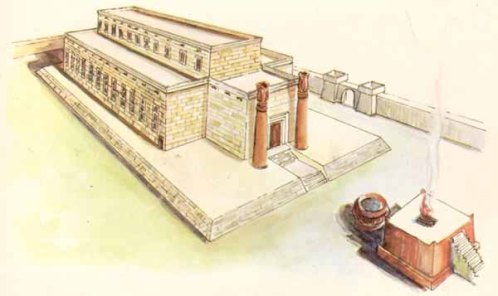
Rendition of Solomon’s Temple
http://www.freemasoninformation.com/wp-content/uploads/2009/05/king-solomon-temple.jpg

To fulfill his father David’s desire to build a house to the Lord, Solomon began plans to build the temple. He did this in conjunction with building his own palace, which many scholars believed was larger than the temple to Jehovah. The temple would begin in his fourth year as king, and would take seven years to accomplish, while his palace required thirteen years to build. These projects were accomplished in a short time because Solomon used slave labor from the Hittites, Amorites, Perizzites, Hivites and Jebusites.

Solomon contracted to King Hyram of Tyre for the wood and many other things to build the temple. Masons have a tradition of Hiram Abiff, a widow’s son (1 Kings 7:13-14), being killed for refusing to give up the secret passwords known by Masons, related to the temple of Solomon and the original Hiram of Tyre (also a widow’s son). The last name, Abiff, while not found in the Bible, could possibly be from the Hebrew word for “father” or “abi”. In the Nauvoo period, many Latter-day Saints became Masons. Some noted that Joseph Smith was also a temple builder, and (by that time) a widow’s son, perhaps a new Hiram Abiff for the last days.

Solomon’s temple was 40 cubits long, or about 60 feet. Cherubim (angel warriors) were placed in the Holy of Holies standing 15 feet tall and with 15 foot wingspans that touched the walls and each other in the middle. Under them would sit the Ark of the Covenant and the Mercy Seat. This was God’s special room and throne. It would represent his throne in heaven, which was surrounded by concourses of angels worshiping him. It would also represent the ancient Divine Council, where archangels (governing angels) including the warrior angel Michael, would stand in council with God (see Isaiah 6).

Two giant pillars were built to set in front of the temple. These pillars were 18 cubits (27 feet) high. Their names were Boaz (Strength) and Jachin (Jah/Yahweh establishes). John the Revelator made a significant mention of these pillars and how they relate to the righteous:

“Him that overcometh will I make a pillar in the temple of my God, and he shall go no more out: and I will write upon him the name of my God, and the name of the city of my God, which is new Jerusalem, which cometh down out of heaven from my God: and I will write upon him my new name” (Revelation 3:12).

A large brass basin of brass was also built and set upon twelve oxen representing the tribes of Israel. This basin would be used for cleansing rituals according to the Mosaic Law. The priests would wash in the basin in order to be clean prior to entering the temple, just as they did in the Tabernacle of Moses. Today, LDS also have a basin upon 12 oxen in their temples. These are used for proxy baptisms for ancestors who have died without the opportunity to receive baptism (1 Corinthians 15:29).

Upon finishing the temple, the ark of the covenant was placed under the cherubim.

“The priests brought in the ark of the covenant of the Lord unto his place, into the oracle of the house, to the most holy place, even under the wings of the cherubims.
“For the cherubims spread forth their two wings over the place of the ark, and the cherubims covered the ark and the staves thereof above” (1 Kings 8:6-7).

Solomon dedicated the temple in prayer and with innumerable sacrifices. In a dream, the Lord told Solomon that he accepted the temple and that Israel would be blessed as long as they were faithful to God.

Solomon Falls From Grace
1 Kings 11


Sadly, Solomon’s many wives took a toll on him. Not only did he marry Egyptian princesses, but also many Canaanite princesses, as well.

“1 But king Solomon loved many strange women, together with the daughter of Pharaoh, women of the Moabites, Ammonites, Edomites, Zidonians, and Hittites;
“2 Of the nations concerning which the Lord said unto the children of Israel, Ye shall not go in to them, neither shall they come in unto you: for surely they will turn away your heart after their gods: Solomon clave unto these in love” (1 Kings 11:1-2).

Not only did he cleave unto the women in love, but to keep them happy, he built temples for their gods, rather than convert them to worship Jehovah, which was expected of all those Israel married from outside the faith. In giving into them, he first gave other gods equal time, and ignored the injunction to “have no other gods before me.” Finally, he began giving much time to worshiping other gods, creating graven images of the many gods. Jehovah was competing for equal time in Jerusalem and the surrounding area.

Solomon began to worship other gods, including Chemosh, Ashteroth (goddess), Milcom and even Molech. Molech was an exceptionally wicked god, who required that the children pass through/in fire. Those that did not die were considered blessed by the followers of Molech. Those children who died were a sacrifice to the god, who demanded a high price for his blessings. Why one would worship Molech rather than Jehovah really makes one wonder. Yet Solomon did.

The Curse

David’s throne was to last forever, according to some sections of the Old Testament. God could not take away that promise easily. So, he told Solomon that half the kingdom would be ripped from his hands and given to his servant. Because of God’s promise to David, it would not happen in Solomon’s lifetime, but in his son’s life. Doesn’t seem like much of a punishment to Solomon, does it? However, in addition to the curse, the Lord also stirred up enemies around Solomon. He had decades of peace while faithful to the Lord. Now the Lord would punish him and Israel for allowing such abominations to enter into the Promised Land.

We get a taste in Solomon’s day of how David’s line will lose Israel. Jeroboam, whom Solomon made ruler/chief captain over the tribe of Joseph, was ordained by the prophet Ahijah, to be king over 10 of the tribes. Upon learning of it, Solomon went the direction of Saul, seeking to slay Jeroboam through the rest of Solomon’s days.

Solomon would sleep with his father, David. But in the end, he left the kingdom divided because of his greed, hatred of internal enemies, and becoming more friendly with foreigners than with his own people.

Bibliography

“Who Wrote the Bible?”, Richard E. Friedman http://www.amazon.com/Wrote-Bible-Richard-Elliott-Friedman/dp/0060630353

Kevin Barney on the Documentary Hypothesis: http://www.members.shaw.ca/mschindler/B/doc_hyp.htm

Links to previous lessons that discussed the Documentary Hypothesis:
Lesson 17: http://joelsmonastery.blogspot.com/2010/04/lesson-17-beware-lest-thou-forget.html

Lesson 15 : http://joelsmonastery.blogspot.com/2010/04/gospel-doctrine-ot-lesson-15-look-to.html

Lesson 6: http://joelsmonastery.blogspot.com/2010/02/lds-gospel-doctrine-class-old-testament.html

Lesson 3: http://joelsmonastery.blogspot.com/2010/01/lds-gospel-doctrine-class-old-testament_12.html

Hiram Abiff: http://en.wikipedia.org/wiki/Hiram_Abiff

Solomon’s Temple: http://en.wikipedia.org/wiki/Solomon%27s_Temple

3D walkthrough of Solomon’s Temple: http://www.biblelife.org/temple1.htm

Hi-Res depiction of Solomon’s Temple: http://deohsan.files.wordpress.com/2008/08/solomon-temple.jpg

Temple of Solomon videos at David Larsen’s blog: http://www.heavenlyascents.com/2010/06/21/temple-of-solomon-videos/

Thursday, June 24, 2010

OT Gospel Doctrine Lesson #25 - Psalms

OT Gospel Doctrine Lesson #25, Let Every Thing That Hath Breath Praise the Lord
Psalms


http://blog-en.classicalhebrew.com/wp-content/uploads/2008/01/psalms.jpg

The Psalms are composed of temple/tabernacle hymns by David and some of the priests. I will not be discussing the contents established in the lesson plan for Sunday School, as it is available here in the teacher’s manual: http://lds.org/ldsorg/v/index.jsp?hideNav=1&locale=0&sourceId=b1a4c106dac20110VgnVCM100000176f620a____&vgnextoid=5158f4b13819d110VgnVCM1000003a94610aRCRD

The Psalms covers so many concepts that not all can be easily done in one lesson. Sadly, when we try to cover the entire Old Testament in a single year, we miss out on some of the best poetry and teachings in the scriptures. And that is what we find in Psalms.

In Hebrew, Psalms is: Th'hilliym or Tehillim‎, תְהִלִּים. It simply means, “Praises.” When reading Psalms, it is important to focus on the location where these were anciently sung: in front of the Tabernacle and in holy settings. There are 150 songs or hymns in Psalms. Some are long, and often may be combined chants. The Psalms were meant to be sung or chanted, and some even have instrumentation and note the tune to be played. However, since none come with musical annotation, we do not know what the original music was like.

Muslims believe David received the Psalms in the same way that Moses received the Torah, or Mohammad received the Quran.


Poetry in Psalms

Ancient Hebrew poetry is very different than what we consider poetry today. They did not rhyme lines, nor did they begin with someone from Nantucket....

There are different ancient forms of poetry used in Psalms. One form is to use the holy language within itself. For example, in Psalms 145, we find an alphabetic acrostic. Every line begins with a letter of the Hebrew alphabet, the first starting with “aleph” (the first letter of the Hebrew alphabet) and so on.

Parallelism is another form of poetry in Psalms: “Your word is a lamp to my feet and a light for my path” (Ps 119:105). In this line, we find parallel concepts: “lamp to my feet” and “light for my path.” It emphasizes the concept the Psalmist wishes to impress upon us. Given in a song for worshipers to hear, it impresses the concept twice upon their minds and hearts.

In Psalms 15, we read:

1 Lord, who shall abide in thy tabernacle? who shall dwell in thy holy hill?
2 He that walketh uprightly, and worketh righteousness, and speaketh the truth in his heart.
3 He that backbiteth not with his tongue, nor doeth evil to his neighbour, nor taketh up a reproach against his neighbour.

Here we find parallels between those dwelling in the tabernacle and holy hill (Zion); walking uprightly, doing righteousness and speaking truth; and then the evil acts of backbiting with his tongue, doeth evil to his neighbour, taketh a reproach against his neighbor. Sung to a congregation, it would be hard for them to miss the concepts being impressed upon their minds through repetition.

Chiasmus also is a form of poetry found in Psalms. In this form of parallelism, we find nested levels of sameness or opposites. Some can be very intricate, while others more basic.

The form for a basic chiasmus structure is:
aa
bb
cc
cc
bb
aa

The aa lines match, bb lines match themselves, etc.

Here we find a chiasmus in Psalms 29 to consider. I have placed in parentheses marks to show which lines line up:

Psalm 29
(aa)1 Give unto the Lord, O ye mighty, give unto the Lord glory and strength. 2 Give unto the Lord the glory due unto his name; worship the Lord in the beauty of holiness.

(bb)3 The voice of the Lord is upon the waters: the God of glory thundereth: the Lord is upon many waters.

(cc) 4 The voice of the Lord is powerful; the voice of the Lord is full of majesty.

(dd)5 The voice of the Lord breaketh the cedars; yea, the Lord breaketh the cedars of Lebanon. 6 He maketh them also to skip like a calf; Lebanon and Sirion like a young unicorn.
(ee)7 The voice of the Lord divideth the flames of fire.

(dd)8 The voice of the Lord shaketh the wilderness; the Lord shaketh the wilderness of Kadesh. 9 The voice of the Lord maketh the hinds to calve, and discovereth the forests:
(cc)and in his temple doth every one speak of his glory.

(bb)10 The Lord sitteth upon the flood; yea, the Lord sitteth King for ever.

(aa) 11 The Lord will give strength unto his people; the Lord will bless his people with peace.
Here we see parallels in the lines, working from both ends into the center. There are about 30 chiasmus in the various chapters of Psalms that I’m aware of.


The Psalms Scroll (11QPs)


Psalms Scroll from the Dead Sea Scrolls
http://thebeattitude.files.wordpress.com/2009/03/psalms-scroll.jpg

Among the findings at Qumran in Israel are the Dead Sea Scrolls. These were initially discovered in 1947 and have exploded onto the scene of Hebrew scholarship since then. The Psalms Scroll was discovered in Cave 11 (so we get the scientific label: 11QPs - Cave 11, Qumran, Psalms).

In the Psalms Scroll there is actually an additional Psalm (151). This is also found in the Greek Septuagint, but was thought to be a later addition until it was also found at Qumran in Hebrew.
1. I was the smallest among my brothers,
and the youngest in my father’s household.
I used to take care of my father’s sheep.

2 My hands constructed a musical instrument;
my fingers tuned a harp.

3 Who will announce this to my Lord?
The Lord himself—he is listening.

4 He himself sent his messenger
and took me from my father’s sheep,
and anointed me with his anointing oil.

5 My brothers were handsome and big,
but the Lord did not approve of them.

6 I went out to meet the foreigner (Goliath);
he called down curses on me by his idols.

7 But I pulled out his own sword;
I beheaded him and thereby removed reproach from the Israelites.

Such a hymn may seem gruesome to sing in the Tabernacle, but the Psalms often denoted victory over one’s enemies. So important was this event in Israelite history that Goliath’s sword and armor were placed in the Tabernacle as part of the national treasures. The adult David would retrieve the sword later to use as he was being chased by Saul.

Modern Use

Modern Jews integrate Psalms into many of their feasts and festivals. Portions of Psalms are recited at virtually every Sabbath service. Many Jews will make it a point to read the entire Psalms weekly or monthly. Orthodox Jews will often plan on reading all of Psalms on the Sabbath prior to services each week. When a Jewish person dies, it is traditional for someone to continuously read Psalms over the body until burial occurs.

Early Christians used Psalms. Over 60 Psalms are referenced in the New Testament. Some Churches, such as the Reformed and Westminster Presbyterian Churches only sing the Psalms in their services.

Imagine introducing such poetry and imagery into our children’s lives, and making it a frequent event. Perhaps a section can be read as a family each Sunday, helping them to see the blessings of God, the proper form of Praise that is demonstrated within the Psalms, and the beauty of song in that praise. Chant them, don’t just read them. See how a sing-song form can bring out the poetry and power in each of these hymns.

A Few Beautiful Psalms

Let me finish by sharing a few touching praises from David’s Psalms:

Psalm 8
3 When I consider thy heavens, the work of thy fingers, the moon and the stars, which thou hast ordained;
4 What is man, that thou art mindful of him? and the son of man, that thou visitest him?
5 For thou hast made him a little lower than the gods, and hast crowned him with glory and honour.
6 Thou madest him to have dominion over the works of thy hands; thou hast put all things under his feet:

Psalm 23
1 The Lord is my shepherd; I shall not want.
2 He maketh me to lie down in green pastures: he leadeth me beside the still waters.
3 He restoreth my soul: he leadeth me in the paths of righteousness for his name’s sake.
4 Yea, though I walk through the valley of the shadow of death, I will fear no evil: for thou art with me; thy rod and thy staff they comfort me.
5 Thou preparest a table before me in the presence of mine enemies: thou anointest my head with oil; my cup runneth over.
6 Surely goodness and mercy shall follow me all the days of my life: and I will dwell in the house of the Lord for ever.


Bibliography

Psalms in Wikipedia: http://en.wikipedia.org/wiki/Psalms

Psalms 151: http://bible.org/netbible/index.htm?adp1.htm

Examples of Poetic Parallelism: http://www.ancient-hebrew.org/23_parallel.html

List of Chiasmus in Psalms and the Bible: http://www.inthebeginning.org/chiasmus/xfiles/lund/lundbook.htm

Psalms Scroll from Dead Sea Scrolls: http://www.loc.gov/exhibits/scrolls/scr1.html

Psalms quoted in New Testament: http://www.jesuswalk.com/psalms/psalms-NT-quotations.htm

Saturday, June 19, 2010

OT Gospel Doctrine lesson #24, Create in Me a Clean Heart

OT Gospel Doctrine lesson #24, Create in Me a Clean Heart
2 Samuel 11-12, Psalm 51


The Coronation of David
http://www.htmlbible.com/kjv30/images/2sam2-4.jpg


Background: Saul and Jonathan are killed in battle against the Philistines. Their bodies, decapitated and desecrated by their enemies, are recovered and given a proper burial.
For the first time in decades, Israel is without a king. The heir apparent, Jonathan, is dead. There is a leadership vacuum, one Israel never experienced when Jehovah was their king.

Civil War

With Saul and Jonathan dead, David's loyalty oaths to the royal lineage of Benjamin is ended. While Saul's one remaining son, Ishbosheth, is made king of most of Israel, the powerful tribe of Judah anointed David as king.

Civil war broke out between the two feudal lands and lasted for many years. Still, David and Judah continually gained ground, territory and power, while Ishbosheth's kingdom shrank.

Joab and Abner

Two powerful generals figure into the long and drawn out Civil War. Joab was chief captain of David's armies. He was a genius at strategy, but in personal matters often let his passions take precedence over his obedience to the king.

Abner was Ishbosheth's pragmatic, yet less strategic, general. During one intense battle, Israel was forced to flee from the battlefield. While Abner was in retreat, he was chased by Asahel, Joab's younger brother. Abner begged Asahel to chase someone else, but the young man envisioned the glory of killing Israel's general. Abner proved to be the better soldier and slew Asahel. Joab would not forget his brother's death.

Ishbosheth vs Abner

After years of several major defeats, King Ishbosheth insulted Abner by claiming he was distracted from the war by sleeping with one of his father's concubines. Incensed that an incompetent runt of a king would treat him so, Abner decided that a unified kingdom under David would be better for all of Israel.

David was ecstatic to have Abner's support. Preparations were made to have the tribal elders all give allegiance to David, abandoning Ishbosheth. However, Joab was incensed that David would embrace the ancient Robert E. Lee, whose efforts caused the war to last years. He also would not forget his brother's death by Abner's hand.

Joab's strategy was simple. Lure Abner back for a peace meeting, then kill him by stabbing him through the fifth rib, as Abner did to Asahel.

David Saves the Peace

With Abner dead by Joab's sword, the likelihood of winning the peace and tribal allegiance suddenly dimmed. David knew he only had one chance to win over the hearts of Israel's elders. He condemned Joab's action, though acknowledging his right of retribution under Mosaic Law. Still, David told Israel that the curse would be on Joab. Judah's king gave Abner a royal funeral, renting or tearing his clothing and fasting until sunset out of grief.

Israel was impressed with how David treated their war hero and favorite son. Israel gave its loyalty to David.

Assassination of Ishbosheth
2 Samuel 4


At this same time, two of Saul's former soldiers sneaked into Ishbosheth's room and assassinated him. Stabbing a person "under the fifth rib" was a choice strike zone for causing instant death. This is the same spot used by Abner to slay Asahel, and Joab to kill Abner. The soldiers brought Ishbosheth's head to David expecting a reward.

Instead, David reminded them of his response to Saul's murder, noting that Ishbosheth wasn't on the battlefield, but defenseless and asleep on his bed. The men were slain, while Ishbosheth's head was buried in Abner's sepulchre.

David, King of Judah & Israel
2 Samuel 5


With Ishbosheth dead and Abner buried with full honors, Israel knew its choices were limited. David showed them respect and they needed a king. Israel's elders came to David proclaiming, "we are thy bone and thy flesh" (2 Sam 5:1). They were ready to make David king of Israel.

It's important to note that David was king over two nations, not one. While David reached out to both Judah and Israel, their united front would remain fragile, virtually held together by charisma and duct tape. They were a united kingdom only as long as they had a worthy and righteous king that dealt fairly with everyone.

Jerusalem, City of David

To establish his kingdom further, David sought to move his chief city from the southern Judaean city of Hebron, to a city that did not belong to any tribe: Jerusalem. Jerusalem, then named Jebus, remained in the hands of the Jebusites, It was a fortress-city with high, thick stone walls that seemed impenetrable.
So impenetrable that when David invited them to join his kingdom, they scoffed at him.
David, however, found a way in. "Whoever getteth up to the gutter and smiteth the Jebusites" would be David's chief captain and main counsel (2 Sam 5:8). Archaeologists now believe the gutter to be a vertical water tunnel, now named Warren's Shaft after the explorer who discovered and climbed it in modern times.

Shall I Go Up to Battle?

The Philistines did not like the idea of Israel again having a king, so they invaded Israel's borders twice. Each time, David inquired of the Lord, "shall I go up?" The Lord gave David strategic counsel in sending him to war, guaranteeing the victory (2 Sam 5:22-25).

The Ark comes to Jerusalem
2 Samuel 6


With victories and security established, it was time for David to establish the Lord as Israel's God. He fetched the ark of the covenant to Jerusalem, for it is the throne or mercy seat where God "sitteth between the cherubim" (6:2).

As the ark lumbered along the bumpy trail on a new cart, Uzzah set forth his hand to steady it. While his intentions were good, he was not authorized to touch the ark, or throne of God, and was smitten dead. David feared to move the ark to Jerusalem, thinking it could curse him as well. So he left it in the home and care of Obed-edom. For 3 months the ark rested there, blessing the home.

David returned to bring it to his city. This time it would be different. After the priests carried it 6 paces, David offered sacrifice. He danced before the ark the entire journey. Finally it arrived, where David placed it in a Tabernacle he had constructed for it. It was finally home.

A Temple for Jehovah?
2 Samuel 7


After years of war, David and Israel finally had peace. David desired to honor God by giving him and the ark of the covenant a permanent home. The Lord revealed to the prophet Nathan that the time was not right, nor was David the correct person to build it, as his life had been too violent. Instead, his son would build the temple during a period of peace.

In the meantime, Israel would have several locations for worshiping Jehovah: the original Tabernacle at Shiloh, the new Tabernacle with the ark of the covenant in Jerusalem, and a myriad of high places (Hebrew: bamoth) or altars established by Samuel and other judges and priests over the years as local outdoor temple/tabernacles to God.


David Obtains the Land of Promise
2 Samuel 8-10


The next few chapters focus on David’s military forays into the lands of the Philistines, Moabites, Ammonites, Amalekites, Edomites (children of Ishmael), and others. Each became subjected to Israel, paying tribute to David and caused to pledge their loyalty to him and Israel. David built fortresses in many of these areas to ensure the people did not revolt. Still, we find that “David executed judgment and justice unto all his people” (2 Sam 8:15).

David discovered that Jonathan’s invalid son Mephibosheth still lived. He brought the young man into his own castle and cared for him. He also restored all of Saul’s personal lands to Mephibosheth.

King Nahash of Ammon had shown David much kindness in the years that David was on the run. Upon his death, David sent messengers to the funeral. However, David’s conquests were reknowned, and Nahash’s son Hanun suspected the messengers to be spies. He cut their beards half off, as well as their clothing, then sending them away in disgrace, especially since the Mosaic Law required the men to wear their beards and be modestly clothed.

David sent Joab and Abishai with their “mighty men” of war to fight Ammon. The Ammonites paid the Syrians to assist them, but David defeated both. The Syrians ended up paying tribute to David, and never assisted the Ammonites again.

David and Israel ruled the Promised Land.

David and Bathsheba
2 Samuel 11-12


http://www.tbn.org/watch/images/programs/David&Bathsheba1.jpg

(This is where the lesson in the Gospel Doctrine manual actually begins.)

David sent Joab out to war with his mighty men and they thrashed the Ammonites. But David neglected one thing. The king was expected to go out to war with the military. In previous times, when Israel was righteous, their king Jehovah went out with them to battle. The priests would carry the Ark of the Covenant into battle, showing that the true King of Israel was with the Israelites. Once human kings were set in place over Israel, it was expected that the mortal king wage the wars for Jehovah. Saul always went out to war as was expected of the king.

But David neglected his duty, and sent his mighty men of war out without him. Instead, he remained in Jerusalem and enjoyed his leisure. With his idle time came idle thoughts. He encountered Bathsheba bathing upon the roof of her house, which would easily be visible from the palace roof, which looked down one of the valleys of Jerusalem’s old city. This probably was not a one time glance, but he may likely have seen her atop her roof day after day, evening after evening. Regardless of the fact he had dozens of wives by this time, he allowed his mind to wander into dangerous territory.

He called for Bathsheba to see him. She obviously was aware of his watching her, because we do not see her put up any struggle when he called for her. They both thought they could have a quick fling and then go on their way, except for one problem: she became pregnant.

Uriah was a Hittite, a foreigner who had converted to Judaism. He was one of David’s “mighty men” of war, one of a select few out of the thousands of soldiers who was renowned for heroic efforts. He was like Hercules was to the Greeks, one who could do great things for the nation. Uriah, like David, was extremely devoted to God, Israel, and David. Uriah was also Bathsheba’s husband. During war time, the soldiers were expected to stay away from all women. To sleep with a woman would make the man unclean for a week, and unable to serve in war.

Uriah had not slept with Bathsheba due to being in battle. David sought to hide the adultery by inviting Uriah back from the war, where he could sleep with Bathsheba and would then think the child was his own. But Uriah would not make himself unclean, nor would he eat nor drink, while his soldiers were still in the field.

“The ark, and Israel, and Judah, abide in tents; and my lord Joab, and the servants of my lord, are encamped in the open fields; shall I then go into mine house, to eat and to drink, and to lie with my wife? as thou livest, and as thy soul liveth, I will not do this thing” (11:11).

Note that the ark of the covenant left Jerusalem to go out to battle, but David remained behind. Uriah swore by both David and his own life that he would not party while the army was in danger. David should have had such an attitude as well.

David sent Uriah back to the war. He gave Joab instructions to place Uriah in the most dangerous spot in the war, so that he would die in battle. David got his wish. Uriah died serving the king and Israel. After her period of mourning, Bathsheba was brought into David’s house and became his wife, bearing him a son.

David thought his actions were secret and would not be found out. Yet, the Lord sees in secret. Nathan the Prophet went to David to explain to him about a rich man who stole a poor man’s only and precious ewe.

David “said to Nathan, As the Lord liveth, the man that hath done this thing shall surely die:
“And he shall restore the lamb fourfold, because he did this thing, and because he had no pity.
“And Nathan said to David, Thou art the man. Thus saith the Lord God of Israel, I anointed thee king over Israel, and I delivered thee out of the hand of Saul;
“And I gave thee thy master’s house, and thy master’s wives into thy bosom, and gave thee the house of Israel and of Judah; and if that had been too little, I would moreover have given unto thee such and such things.
“Wherefore hast thou despised the commandment of the Lord, to do evil in his sight? thou hast killed Uriah the Hittite with the sword, and hast taken his wife to be thy wife, and hast slain him with the sword of the children of Ammon.
“Now therefore the sword shall never depart from thine house; because thou hast despised me, and hast taken the wife of Uriah the Hittite to be thy wife” (12:5-10).

Nathan said that David was guilty of breaking several of the 10 Commandments, including killing, adultery, coveting, and bearing false witness (lying). God was willing to do many things for David, if he were just to ask. Instead, David took without permission. David would live, but his life would be filled with violence and trials, brought on by his own family. The trial began with Bathsheba’s newborn son dying.

Why Reject Saul but Accept David?

Why did God reject Saul, but only chastised David severely? Isn’t adultery and murder worse than Saul’s making sacrifice to Jehovah?

The Ten Commandments are set up in a specific order. The first 4 commandments are laws regarding man’s relationship with God. The last 6 regard man’s relationship with one another. Saul rebelled against God, while David rebelled against his fellow man. Saul was rejected because his sacrifices and other choices went against Saul’s relationship with God. If Saul sacrificed in disobedience to God, what else would he do in disobedience and open rebellion against the Lord?

David’s sins were crimes of passion against his fellow men. While today we consider murder and sexual sins to be the worst sins besides denying the Holy Ghost (Alma 39:5), we need to consider a few things. First, Alma 39:5 warns us about the “shedding of innocent blood” which can be construed in many ways from simple murder to only the killing of the most innocent (children or Christ). Next, in ancient Israel the rebellion against God was a greater sin than anything against other people. The Mosaic Law included stoning people to death for breaking the Sabbath Day. In modern times, we can understand the death penalty for murder, but for going out for food on the Sabbath Day? We can see that we view things very differently now than they did then.

Bathsheba would bear another son, Solomon. He would be one of many of David’s sons. These sons would fight among each other, and Absalom would later war against David for a time, before Joab would slay him (2 Samuel 13-18).

Create In Me a Clean Heart
Psalms 51


The Psalms are songs that were prepared and sung primarily for holy worship in the Tabernacle/Temple. Many are believed to have been written by David, including this one, while others were written by priests in the Tabernacle, often under David’s direction.

David understood he was unclean. He was unable to enter the Tabernacle and offer sacrifice of any kind: including a sin or trespass offering. First, he had to become clean before the Lord. The Psalm goes as follows:
1 Have mercy upon me, O God, according to thy lovingkindness: according unto the multitude of thy tender mercies blot out my transgressions.
2 Wash me throughly from mine iniquity, and cleanse me from my sin.
3 For I acknowledge my transgressions: and my sin is ever before me.
4 Against thee, thee only, have I sinned, and done this evil in thy sight: that thou mightest be justified when thou speakest, and be clear when thou judgest.
5 Behold, I was shapen in iniquity; and in sin did my mother conceive me.
6 Behold, thou desirest truth in the inward parts: and in the hidden part thou shalt make me to know wisdom.
7 Purge me with hyssop, and I shall be clean: wash me, and I shall be whiter than snow.
8 Make me to hear joy and gladness; that the bones which thou hast broken may rejoice.
9 Hide thy face from my sins, and blot out all mine iniquities.
10 Create in me a clean heart, O God; and renew a right spirit within me.
11 Cast me not away from thy presence; and take not thy holy spirit from me.
12 Restore unto me the joy of thy salvation; and uphold me with thy free spirit.
13 Then will I teach transgressors thy ways; and sinners shall be converted unto thee.
14 Deliver me from bloodguiltiness, O God, thou God of my salvation: and my tongue shall sing aloud of thy righteousness.
15 O Lord, open thou my lips; and my mouth shall shew forth thy praise.
16 For thou desirest not sacrifice; else would I give it: thou delightest not in burnt offering.
17 The sacrifices of God are a broken spirit: a broken and a contrite heart, O God, thou wilt not despise.
18 Do good in thy good pleasure unto Zion: build thou the walls of Jerusalem.
19 Then shalt thou be pleased with the sacrifices of righteousness, with burnt offering and whole burnt offering: then shall they offer bullocks upon thine altar.

Will David Burn in Hell Forever?

Thoughts on this and related Psalms. Some past LDS leaders and others have felt that David can never obtain more than the Telestial Kingdom because of his sins. However, I would note that he lived under the Mosaic Law, not the Celestial Law of Christ. He was chastised and punished severely for years for his sins, as God promised. But God also promised to accept David in the end. Verse 7 shows that David believed he could be purified of his sins, even through the trials and tribulations God placed him in, as long as he repented with a broken spirit and contrite heart (vs 17). David begs to not be cast away from God’s presence, meaning both his Tabernacle and His true glory.

What good is such a Psalm, if there is no hope for the sinner? Does Christ’s atonement atone for all those who truly repent, or just some? I cannot judge which kingdom David will end up in, but I truly hope that God and Christ’s power and grace is sufficient to save and exalt any and all of mankind on condition of repentance and obedience. David walked very circumspectly and obedient before God for the rest of his long life. He not only rent his clothes and laid in ashes, but he rent his heart and laid bare his soul to the Lord. I would hope that after all the chastising and great trials he went through, there is a better kingdom for David.

This is especially true since David is a symbol of the future and eternal King of Israel, Jesus Christ. That David could be Israel’s greatest mortal king and sin, only to be raised up and cleansed by the Eternal King of Israel will be a sight to see. For if David can be forgiven and saved after repenting of his sins, there is hope for all mankind if they but repent, and sacrifice a “broken spirit, a broken and contrite heart.”

“For thou wilt not leave my soul in hell; neither wilt thou suffer thine Holy One to see corruption.”(Psalms 16:10)


“For great is thy mercy toward me: and thou hast delivered my soul from the lowest hell.” (Psalms 86:13)

These leave open to speculation just where David will end up. Personally, I believe we should leave such judgment to a Just and Merciful God who has power to save all as He chooses.

Thursday, June 10, 2010

OT Gospel Doctrine Lesson #23 - The Lord Be Between Me and Thee Forever

OT Gospel Doctrine Lesson #23 - The Lord Be Between Me and Thee Forever
1 Samuel 18-24


David and Jonathan
http://www.jim3dlong.com/1510_Cima_da_Conegliano_David_and_Jonathan-wl400.jpg


Background: David has made a name for himself in Israel. As a youth, he defeated the giant Goliath. His skill with the lyre was equal to none, as his music often calmed the mentally disturbed King Saul.

But over a period of years, Saul’s anger over being rejected by Jehovah and the prophet Samuel, brought insanity to the monarch. No longer was he God’s chosen ruler upon the earth, a divine son of royalty, but he was a rejected scoundrel just abiding the time until God’s harsh judgment destroyed his entire family and replaced him on the throne.

As Saul’s glory diminished and David’s rose, it was obvious to Saul that David was the heir apparent of God. In his mind, his only recourse was to slay David, so that his own son Jonathan could rise to the throne. Once again, we will see how a man’s pride and lust for continual power can lead to madness and the belief that one can overcome a prophesy of God by attempting to thwart it.


David’s relationship with Saul’s family
1 Samuel 18


David had a varied relationship with Saul and his family. At one time, Saul thought highly of David: “And Saul took him that day, and would let him go no more home to his father’s house” (18:2). David would go on to marry Michal, one of Saul’s daughters, making him a part of the household. Saul could have adopted him as his royal son, and kept his sanity, but would choose his own blood and pride over losing the throne to a shepherd boy.

But the young man became too popular. “Saul hath slain his thousands, and David his ten thousands” (18:7). How could Saul remain the popular and powerful king, when David was taking all the headlines? He could see his power base being drained, while David rose higher. It wasn’t long before his insanity could not even be restrained by David’s smooth notes, rather it would incense Saul even more, and the king began throwing javelins at those who angered him, including David.

Saul would seek to destroy David by sending him off on dangerous missions, just as David would later send Uriah the Hittite to his death so David could obtain Bathsheba as wife. Power in the hands of a proud person can cause great terror for the righteous followers.

“14 And David behaved himself wisely in all his ways; and the Lord was with him.
15 Wherefore when Saul saw that he behaved himself very wisely, he was afraid of him.
16 But all Israel and Judah loved David, because he went out and came in before them.”

Saul first desired to give his oldest daughter Merab to David, in order to cause him to serve in a way to die. When David refused her, but showed interest in the younger daughter Michal, Saul was quick to encourage the relationship. Still, David understood his place and would not marry her without some appropriate dowry for the king. This was exactly what Saul wished for, and asked for the foreskins of 100 Philistines, figuring that David would die in battle. Why foreskins? Because the Philistines were uncircumcised, and Saul would be able to see that David had slain Philistines rather than Hebrews or their circumcised allies.

David returned with 200 foreskins. This did not please Saul, but drove him even further insane. “And Saul was yet the more afraid of David; and Saul became David’s enemy continually” (18:29).

Jonathan

Even greater was the relationship David had with Jonathan, Saul’s son. Jonathan was specially raised and prepared by Saul to be his successor. Yet Jonathan had found something more important than the divine kingship: loyalty to friends.

“1....the soul of Jonathan was knit with the soul of David, and Jonathan loved him as his own soul....
3 Then Jonathan and David made a covenant, because he loved him as his own soul.
4 And Jonathan stripped himself of the robe that was upon him, and gave it to David, and his garments, even to his sword, and to his bow, and to his girdle.”

For Jonathan, his loving friendship with his spiritual brother David was more important than anything. Did Jonathan foresee David’s rise to the throne? Undoubtedly. Here Jonathan takes off his own robe and accouterments of divine royalty and placed them upon David. The covenant of friendship and brotherhood established between them would be found to be stronger than Jonathan’s blood relationship with Saul or any desire for kingship and power.


Saul Attempts to Slay David
http://upload.wikimedia.org/wikipedia/commons/4/4b/Saul_Tries_to_Kill_David_by_Julius_Schnorr_von_Carolsfeld.png


A Short Reprieve and an Oath
1 Samuel 19


Saul conspired with his men to slay David. However, Jonathan again stood firm in his covenant with David and reasoned with Saul. David had saved Israel from the Philistines and had been circumspect in obeying the king’s commands. He had done nothing worthy of death.

Saul’s heart was temporarily softened, and he agreed with Jonathan. In fact, Saul made a very profound oath: “Saul sware, As the Lord liveth, he shall not be slain. And Jonathan called David, and Jonathan shewed him all those things. And Jonathan brought David to Saul, and he was in his presence, as in times past” (19:6-7). When Jonathan explained it to David, everything was quickly resolved and relationships were restored. But why would it seem so easy for David to be convinced that he was safe?

In the story of Book of Mormon we find such an oath. Nephi and his brethren returned to Jerusalem to obtain the Brass Plates of Laban. Disguised as Laban, Nephi has Zoram, the servant of Laban, carry the plates for him outside the gates of the city. Dr Hugh Nibley wrote what occurred upon returning to Nephi’s brothers:

“When Zoram, the servant, discovered that it was not his master with whom he had been discussing the highly secret doings of the elders as they walked to the outskirts of the city, he was seized with terror, as well he might be. In such a situation there was only one thing Nephi could possibly have done, both to spare Zoram and to avoid giving alarm—and no westerner could have guessed what it was. Nephi, a powerful fellow, held the terrified Zoram in a vice-like grip long enough to swear a solemn oath in his ear, "as the Lord liveth, and as I live" (1 Nephi 4:32), that he would not harm him if he would listen. Zoram immediately relaxed, and Nephi swore another oath to him that he would be a free man if he would join the party: "Therefore, if thou wilt go down into the wilderness to my father thou shalt have place with us" (1 Nephi 4:34). “ (Nibley, Lehi in the Desert, http://www.boap.org/LDS/Hugh-Nibley/Lehi_in_the_Desert_part_IV.html).

Why? Because oaths in the ancient Middle East were taken very seriously, especially when based upon one’s life or on the life of God. Nephi and Saul both were swearing upon God’s life, meaning that if they lied, God could do whatsoever He would with the liar. Both Zoram and David could relax, because of the oath given.

Still David’s return to the royal palace was temporary. It wasn’t long until the evil spirit of insanity returned to Saul, and the king was again throwing javelins at David. David had no choice but to again flee. But Saul’s breaking of the oath would come back upon him later, as his life would be taken as he would now begin to seek David’s.


Samuel and David
1 Samuel 19:18-24


David fled to Samuel, who took him into hiding at Ramah. Upon finding out where David was hiding, Saul sent troops out three times to slay him. However, each time troops approached the town, they were filled with the Spirit and prophesied, no longer desiring to harm David. In this instance, prophesying may have more to do with intense praise and worship, rather than foretelling the future.

Finally, Saul went to Ramah. But upon approaching the place was also filled with the Spirit, and began to prophesy with the sons of the prophets. He was incapable of anything else, but to sit naked day and night in such manner. Sadly, even with such an intense experience, Saul’s madness would return quickly to him.


Jonathan bids farewell to David
http://upload.wikimedia.org/wikipedia/en/3/37/Jonathan_Lovingly_Taketh_His_Leave_of_David_by_Julius_Schnorr_von_Carolsfeld.jpg


Behold the Arrows are Far Beyond Thee
1 Samuel 20


Jonathan could not believe it when David told him he was again in hiding because of Saul. After all, Jonathan had received Saul’s oath on God’s name that he would not harm David. Yet a 3 day test of Saul’s patience with David gone was all it took.

Saul figured that David did not come to dinner the first evening because he had become unclean, perhaps by touching a dead person. Yet, on the second night when David did not appear, he was agitated. Jonathan explained that David had gone to Bethlehem for a family religious ceremony.

“Then Saul’s anger was kindled against Jonathan, and he said unto him, Thou son of the perverse rebellious woman, do not I know that thou hast chosen the son of Jesse to thine own confusion, and unto the confusion of thy mother’s nakedness?
“For as long as the son of Jesse liveth upon the ground, thou shalt not be established, nor thy kingdom. Wherefore now send and fetch him unto me, for he shall surely die.
“And Jonathan answered Saul his father, and said unto him, Wherefore shall he be slain? what hath he done?
“And Saul cast a javelin at him to smite him: whereby Jonathan knew that it was determined of his father to slay David” (1 Sam 20:30-33).

Saul tried to explain to his son Jonathan that David was the enemy. As long as David lived, Jonathan would not rise to the throne. Still, Jonathan defended his friend, insisting that David should not die without a just cause. Saul, angry that his son would choose David over him, cast a javelin at him, proving to Jonathan that Saul was incensed upon slaying David.

Jonathan went out to the field the next day and shot arrows into the field. As the young lad with him set to fetch the arrows, Jonathan told him that the arrow had gone beyond him and to let it go. As the boy returned, Jonathan sent him off with his gear back to the palace. At this point, David came forth, the two wept, and David went into hiding.

David eats the Tabernacle’s Shewbread
1 Samuel 21


David and his men went into hiding. As they traveled, they approached the Tabernacle, seeking food. It was common for militias to offer protection to a town or a group in exchange for food and clothing.

However, Ahimelech the priest has nothing “common” to offer. Clearly this is a period when worship of Jehovah is at a low ebb, otherwise there should have been plenty of meat and food available from the priests of the Tabernacle. However, on this day, the only food available is the bread on the sacred table.

There were sacred religious and national treasures in the Tabernacle, as discussed previously when Moses created them. The table of shewbread was symbolized the manna that the Israelites ate in the wilderness for 40 years. The bread was replaced daily to ensure fresh, hot bread was available for God to enjoy its smell at his pleasure. The shewbread later would also represent the Bread of Life, Jesus Christ.

In this instance, David explained to the priest that he and his men were clean or holy. They had not done anything, such as be intimate with their wives, in many days. David also explained:
“the young men are holy, and the bread is in a manner common, yea, though it were sanctified this day in the vessel.
“So the priest gave him hallowed bread: for there was no bread there but the shewbread, that was taken from before the Lord, to put hot bread in the day when it was taken away” (1 Sam 21:5-6).

How can holy bread also be common? Because at the end of the day, the shewbread was replaced with new bread, and the high priest and his family would eat the old bread. Since David and his men were clean or holy, Ahimelech was able to provide it to them. Also, since they were now holy/clean, they became worthy vessels to hold the shewbread, even as the table was the worthy vessel earlier in the day.

David was also able to obtain the sword of Goliath from Ahimelech, who had kept the sword as a national treasure in the Tabernacle. Then, fleeing to Gath, a city of the Philistines, David found that the Philistines were concerned to have amongst them a man who had slain many of their own. As with Hamlet, David pretended to be insane, but was not allowed to remain as a harmless buffoon within the royal Philistine household.

David’s Years of Hiding
1 Samuel 22


David went forth from place to place, hiding in caves in the hills of Israel. Many of the people gathered to him, as they saw him as the true protector of the land. Saul had proved himself rash, no longer a servant of the people.

Saul went on a hunt for David and any that helped him. David was seen at the Tabernacle with Ahimelech, so Saul went to see him. Ahimelech denied being against Saul, insisting that while he fed David, he did not pray God to reveal to David how to defeat Saul. Saul’s madness would not allow him to believe Ahimelech was innocent. When none of his men would slay the priests of the Tabernacle, Saul turned to a non-Israelite servant, Doeg the Edomite. Doeg quickly complied, slaying the priests in the Tabernacle.

“And Doeg the Edomite turned, and he fell upon the priests, and slew on that day fourscore and five persons that did wear a linen ephod. And Nob, the city of the priests, smote he with the edge of the sword, both men and women, children and sucklings, and oxen, and asses, and sheep, with the edge of the sword.” (22:18-19).

Only Abiathar, one of Ahimelech’s sons escaped to David.

The Lord Judge Between Me and Thee
1 Samuel 23-24


Through chapter 23, Saul hunts David and nearly captures him, but is called away to fight an invading Philistine army.

On his return from the fight, Saul continues to seek David. At one point, Saul goes to sleep within a cave, where David is hiding. David’s servants encourage him to slay Saul, but David responds:

“The Lord forbid that I should do this thing unto my master, the Lord’s anointed, to stretch forth mine hand against him, seeing he is the anointed of the Lord” (1 Sam 24:6).

King Saul was still the anointed divine king of Israel. It was not David’s place to slay Saul, but only to replace him upon his death.

Instead, David cuts the skirting off of Saul’s robe as he slept. This would have included the fringe of the robe, which was commanded to be on the robes of all Israelites under Mosaic Law. As Saul departed a distance from the cave, David appeared and showed that while he could have slain Saul, he had not harmed the anointed king.

“The Lord judge between me and thee, and the Lord avenge me of thee: but mine hand shall not be upon thee” (1 Sam 24:12).

What was David's concept behind this? Saul had continually sought his life, throwing javelins at him, heading armies against him throughout the land, etc. Yet David was able to forgive. Today, the Lord teaches us:

“Wherefore, I say unto you, that ye ought to forgive one another; for he that forgiveth not his brother his trespasses standeth condemned before the Lord; for there remaineth in him the greater sin.
“I, the Lord, will forgive whom I will forgive, but of you it is required to forgive all men.
“And ye ought to say in your hearts—let God judge between me and thee, and reward thee according to thy deeds” (D&C 64:9-11).

Had David not forgiven Saul, the greater sin would have been with David. In fact, it would have caused David to be the murderer that Saul was in his heart. Since David acted justly, while Saul did not, the Lord later would judge between them. Saul would end up dying in battle against the Philistines, and David would ascend to the throne of Israel.

While Jonathan’s heart was forever knit with David’s, so that their covenant bound them with the Lord ("The Lord be between me and thee"), Saul’s hatred caused God to judge between the two, and Saul was found wanting.

The End Of the Judges and First King of Israel
1 Samuel 25-31


Samuel died and all Israel mourned him (25:1). From this time forth, prophets, not judges, would guide the kings and priests of Israel.

Nabal was a powerful and wealthy man, who was not a believer in Jehovah. Nor was he fond of David. David’s men had protected Nabal’s shepherds and flocks for months, not taking anything from them during their sojourn in the same area. However, the time of shearing was now upon them, and David thought it a good time to ask Nabal for some assistance. Nabal, however, railed on David’s messengers and insulted the entire group as a bunch of crooked vagabonds.

David was incensed, and prepared his men for war against Nabal. But Nabal’s wife, Abigail, heard of the event. She knew that Nabal owed his success to the protection David’s men gave him. She quickly prepared large amounts of food and sent them to David, not telling Nabal. She fell at David’s feet, begging forgiveness for her husband, who followed Belial (one of the 4 sons of the devil), and whose name literally meant ‘fool.”

As we’ve seen before, she begs David to covenant with her “as the Lord liveth, and as thy soul liveth” (25:26), or on God’s and David’s lives, to spare them. She tells David that she hopes she can spare him from shedding the innocent blood of those who work for the fool, Nabal. David lifts her up, and covenants to withdraw with the gift she has offered, praising her for her wisdom and insight.

The next morning when Abigail told Nabal what she had done, his heart “turned to stone” and he died. Whether it was from too much partying the night before, he was poisoned, or the Lord smote him alone, we do not know. David communed with her and took Abigail the wise as his wife.

Over the next few chapters, David will again come close enough to the sleeping Saul to slay him, but will again spare his life. David then fled to dwell among the Philistines for 16 months. While his presence benefited Agash in the Philistine province where he dwelt, David’s forays against the other Philistines were kept secret from Agash. David would tell him he had successfully defeated a Hebrew town, when in fact he had smashed a Philistine outpost or town, instead.

Meanwhile, the Philistines gained great strength against Saul. Samuel was dead, and none of the prophets would speak with Saul. “when Saul enquired of the Lord, the Lord answered him not, neither by dreams, nor by Urim, nor by prophets” (1 Sam 28:6). He went to a fortune teller and had her dredge up the ghost of Samuel, who told Saul what he feared most:
“Then said Samuel, Wherefore then dost thou ask of me, seeing the Lord is departed from thee, and is become thine enemy?
“And the Lord hath done to him, as he spake by me: for the Lord hath rent the kingdom out of thine hand, and given it to thy neighbour, even to David:
“Because thou obeyedst not the voice of the Lord, nor executedst his fierce wrath upon Amalek, therefore hath the Lord done this thing unto thee this day.
“Moreover the Lord will also deliver Israel with thee into the hand of the Philistines: and to morrow shalt thou and thy sons be with me: the Lord also shall deliver the host of Israel into the hand of the Philistines” (1 Sam 28:16-19).

.The Philistines go on to defeating Israel in battle. Saul and his sons, including Jonathan, are slain in battle.

“And it came to pass on the morrow, when the Philistines came to strip the slain, that they found Saul and his three sons fallen in mount Gilboa.
“And they cut off his head, and stripped off his armour, and sent into the land of the Philistines round about, to publish it in the house of their idols, and among the people.
“And they put his armour in the house of Ashtaroth: and they fastened his body to the wall of Beth-shan” (1 Sam 31:8-10).

Israel retrieved the bodies, burned them, and gave the bones a proper burial under a tree in Jabesh. With this ended the reign of Saul and his sons, and the First Book of Samuel.

Conclusion

Saul’s actions caused the beginning of his rejection of the Lord. In being rejected as king, Saul had a choice. He could have chosen to gracefully accept it, even as Jonathan did, or go insane fighting God. Step by step, Saul went from small sins to murdering the priests of the Tabernacle, and seeking David’s death.

David struggled even at this time with temptation, but overcame it. His soldiers twice encouraged him to slay the sleeping and vulnerable Saul, but he rejected it. His anger sought to slay Nabal and all his people, but Abigail’s wisdom and haste prevented him from shedding so much blood on account of one foolish man.

In all of this, Jonathan was constant and pure. He knew David would one day be king of Israel, yet covenanted with David to always be there for him. He sought not power for himself, but only to serve Israel and God. He was fearless in battle, tender in his relationships, and true to those around him and to himself. Even though Jonathan often seems like a footnote in Biblical history, perhaps his story is the one we should study most as an example of one to follow.