Thursday, April 29, 2010

Lesson # 17 - Beware Lest Thou Forget

Lesson #17 - Beware Lest Thou Forget
Deuteronomy 6; 8; 11; 32
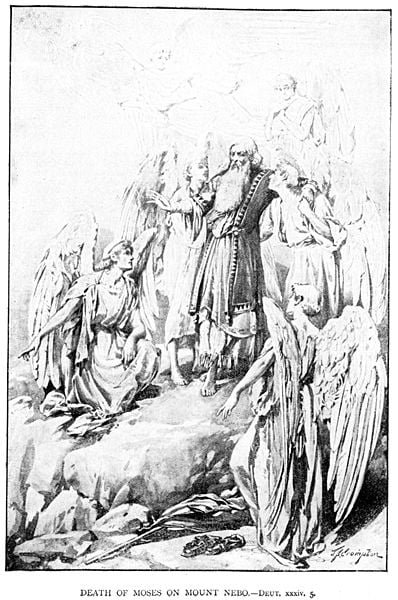


Death of Moses


Background: Israel has spent its forty years in the wilderness. The old rebellious slaves from Egypt have died, leaving the young Israelite people to enter into the Promised Land with Eleazar the high priest, Joshua the prophet, and the faithful Caleb. Israel has destroyed the enemies east of the Jordan River, including some Canaanites, Moabites, and Amalekites. They are now ready to enter into the Promised Land, but first will be given final counsel by Moses, whose mission is now complete.

The Book of Deuteronomy

The Book of Deuteronomy contains the final words of Moses to Israel. While many believe that Moses wrote the Book of Deuteronomy, there is evidence that at least some of it comes to us second hand. For instance, chapter 34 tells us that God buried Moses in the mountain, and Joshua led Israel from that time forth. Clearly, Moses did not write such a line before his death.

The Documentary Hypothesis, discussed in previous lessons, suggests that the current book of Deuteronomy was not written by Moses, but by the Deuteronomists (known as "D"). These were the temple priests in the days of King Josiah, who found the "book of the law" in the temple as the temple was being restored ( http://scriptures.lds.org/en/2_kgs/22 ). It is believed by many scholars that fragments of Deuteronomy were found, and that Hilkiah the priest and Shaphan the scribe rewrote it, based upon the current beliefs of the temple priests. This was the foundation for the Josian reforms, the reforms that occurred during King Josiah's reign. These included destroying all the altars and high places, not only to idols, but also those for Jehovah. All worship was then centered solely in the temple.

According to Old Testament scholar Margaret Barker, the Deuteronomists changed the temple ceremony. The First Temple originally had a Tree of Life, the belief in angels, prophesy, and miracles. These were discarded by the Deuteronomists, who sought to forcibly bring all worship to the temple in Jerusalem. This required enforcing the idea of strict monotheism. As we've seen in previous lessons, the early Hebrews and patriarchs did believe in many gods, but worshiped only Elohim and Jehovah. The Deuteronomists combined the two Gods into one, removed the ability of people to worship him outside the temple, and established their power base.

This reformation would later go against prophetic teachings of Jeremiah and Lehi, who would both praise the worship of God in the wilderness, the belief in miracles, current prophesy, and ideas like the Tree of Life. Jeremiah would bring in the Bedouin-like Rechabites as a perfect example of righteousness for Israel to follow ( http://scriptures.lds.org/en/jer/35 ). Lehi would build altars in the wilderness and offer sacrifice to God on them, contrary to the Deuteronomist insistence that sacrifices and worship only occur at the Temple.

Suffice it to say, Deuteronomy is highly focused upon the concepts of the Deuteronomists, but while they rejected many teachings, those included in the Book of Deuteronomy are valid and important to us today.

Moses recites Israel's short history
Deuteronomy 1-2


In these two chapters, Moses recites for Israel their 40 year history. It includes their successes and failures. Moses proclaims a partial fulfillment of the promises God made to Abraham, Isaac and Jacob. "The Lord your God hath multiplied you, and, behold, ye are this day as the stars of heaven for multitude" (Deut 1:10). By this time, the tribes of Israel spread out for miles across the desert sands. From the view from Sinai's summit, they would definitely seem like a nation of ants, or as the stars of heaven.

Moses explained that because they were so numerous, he called Judges to help him manage the people. The Judges were chosen by the people themselves. The requirement of the job was, "Take you wise men, and understanding, and known among your tribes, and I will make them rulers over you" (1:13). Wouldn't it be wonderful if we chose rulers today who were men/women of wisdom and understanding?

Stephen Covey remarked in his book, Seven Habits of Highly Effective People, that today we tend to focus more on personality than character in the people we elect and choose to focus on. We live in a nation where the person who looks best on television gets elected. Issues are not discussed, at least not in detail anymore. And an individual's character and past mean nothing to us as we consider who to elect. The Gadianton Robbers and other evil people among the Nephites gained power by flattery and deceiving the people (Jacob 7, Alma 30). They created personality cults for people to follow. In days past in America, these personality cults tended to be among small groups of people, but now spread across all parts of the nation through the Internet and media. Small town kids used to not worry about wearing the fancy styles of New York and Los Angeles. Now, those fashions and celebrity heroes are beamed into homes daily. We do not care anymore if our "heroes" are violent or unfaithful. We do not care if our sport stars are on drugs. We do not care if our politicians are in the pockets of groups we approve of, or pass laws on issues they do not comprehend, because they are men of flair and power, not wisdom.

Moses continues to share the history of Israel in the desert. He reminds them on how they sent spies into the land, who returned and said that they would be unable to overcome the inhabitants. Such disbelief after all the miracles given made them unworthy servants to enter into the land. Only a righteous people could cast the inhabitants of the land out of their strongholds. It would take the new generation of Israel, those not raised with the fleshpots of Egypt nor the mindset of slaves, to enter into the new land.

After conquering the nations east of the Jordan River, the Israelites were prepared to enter into the Land of Promise. Moses asked to go over and see the land before his death, but is denied by God. Instead, he is allowed to climb up Mount Pisgah, east of the Jordan River, and look upon the land from a distance.

With this only look, Moses is now ready to give guidance and direction to Joshua and Israel.

In Deuteronomy 4, Moses lays out the law to the people. He explains that it is because of the statutes and commandments that God has given them, Israel is now choice above all nations. However, this will remain true only so long as they keep the commandments given them by God.

"1 Now therefore hearken, O Israel, unto the statutes and unto the judgments, which I teach you, for to do them, that ye may live, and go in and possess the land which the Lord God of your fathers giveth you.
2 Ye shall not add unto the word which I command you, neither shall ye diminish ought from it, that ye may keep the commandments of the Lord your God which I command you.
3 Your eyes have seen what the Lord did because of Baal-peor: for all the men that followed Baal-peor, the Lord thy God hath destroyed them from among you.
4 But ye that did cleave unto the Lord your God are alive every one of you this day.
5 Behold, I have taught you statutes and judgments, even as the Lord my God commanded me, that ye should do so in the land whither ye go to possess it.
6 Keep therefore and do them; for this is your wisdom and your understanding in the sight of the nations, which shall hear all these statutes, and say, Surely this great nation is a wise and understanding people.
7 For what nation is there so great, who hath God so nigh unto them, as the Lord our God is in all things that we call upon him for?
8 And what nation is there so great, that hath statutes and judgments so righteous as all this law, which I set before you this day?
9 Only take heed to thyself, and keep thy soul diligently, lest thou forget the things which thine eyes have seen, and lest they depart from thy heart all the days of thy life: but teach them thy sons, and thy sons’ sons."

Moses explained that the law which was given made them a "nation of priests" or a "city on a hill" for all other nations to see. These laws, especially the Ten Commandments, set Israel apart from all other nations. Other nations dwelt under the fear of a capricious local god, whose commands and whims could change at any time. Jehovah, on the other hand, was consistent. If the children of Israel kept the basic commandments, they would be greatly blessed in the land, and other nations would look up to them.

However, those that disobeyed did not have God's promise of blessing and protection. The Israelites who ran off to worship Baal-Peor and mingle with the harlots at the god's temple were all destroyed for their sinfulness. Yet, those Israelites who were faithful to Jehovah during that temptation were blessed, remained alive, and were then able to go forth and destroy King Balak's wicked nation.

Perhaps Moses' primary theme began here and throughout all of Deuteronomy is "Remember". This is a theme that we also see reoccur in the Book of Mormon. Nephi retrieved the plates of brass in order to keep his descendants from forgetting the commandments and promises of God (1 Nephi 3-4). Alma and other prophets frequently reviewed Nephite history to remind the people of the promises and blessings for the obedient, and the trials and destructions that fell upon the wicked (Alma 5).

"
23 Take heed unto yourselves, lest ye forget the covenant of the Lord your God, which he made with you, and make you a graven image, or the likeness of any thing, which the Lord thy God hath forbidden thee.
24 For the Lord thy God is a consuming fire, even a jealous God" (Deut 4).

The Danger of Disobedience
Deut 4:25-40


Moses foresaw the day when Israel would ostensibly forget Jehovah and begin to go after other gods.

"25 When thou shalt beget children, and children’s children, and ye shall have remained long in the land, and shall corrupt yourselves, and make a graven image, or the likeness of any thing, and shall do evil in the sight of the Lord thy God, to provoke him to anger:
26 I call heaven and earth to witness against you this day, that ye shall soon utterly perish from off the land whereunto ye go over Jordan to possess it; ye shall not prolong your days upon it, but shall utterly be destroyed.
27 And the Lord shall scatter you among the nations, and ye shall be left few in number among the heathen, whither the Lord shall lead you.
28 And there ye shall serve gods, the work of men’s hands, wood and stone, which neither see, nor hear, nor eat, nor smell."

In other words, if Israel goes after other gods and corrupt themselves as some of them did with the god Baal-Peor, they would lose the blessing placed upon them by Jehovah. They would become weak and undefended by miracles. They would become fodder for other nations to overrun and to enslave. In effect, they would return to the conditions they experienced in Egypt.

Interestingly, Moses makes a distinction between Jehovah and the gods of other nations. These other gods are unable to see, hear, eat, nor smell. This is strong evidence that Jehovah is anthropomorphic: man-like. Many believers in the Bible have lost the understanding that man is literally made in God's image (Genesis 1:25-26). They do not understand what it means when the Bible says that Noah walked with God, Jacob saw God's face, or Moses spoke with God face to face. Some Christians today believe that God is without "body, parts or passions" as described in the Westminster Confession, chapter II, verse1 ( http://www.reformed.org/documents/wcf_with_proofs/ ). Clearly it would seem hard to explain how they could believe God is anything like the gods described by Moses, who cannot see, hear, eat, nor smell, because he has no body parts and is "immutable." Immutable means that he is "unable to be changed without exception" ( http://en.wiktionary.org/wiki/immutable ). Such a being would be unable to truly eat, because eating would cause a necessary change. So would seeing, hearing, or smelling.

The Promise of Repentance/Obedience
Deut 4:29-40


On the other hand, God is quick to bless if we do our part:

"29 But if from thence thou shalt seek the Lord thy God, thou shalt find him, if thou seek him with all thy heart and with all thy soul.
30 When thou art in tribulation, and all these things are come upon thee, even in the latter days, if thou turn to the Lord thy God, and shalt be obedient unto his voice;
31 (For the Lord thy God is a merciful God;) he will not forsake thee, neither destroy thee, nor forget the covenant of thy fathers which he sware unto them"

It does not matter if we wallow in the fleshpots of Egypt as slaves, or as the Prodigal Son eat the feed tossed to the unclean swine, if we turn fully back to God with all our heart and soul, we will be accepted and restored. As the Savior's voice resounded from the heavens to the stricken Nephites:

"15 Behold, I am Jesus Christ the Son of God. I created the heavens and the earth, and all things that in them are. I was with the Father from the beginning. I am in the Father, and the Father in me; and in me hath the Father glorified his name.
16 I came unto my own, and my own received me not. And the scriptures concerning my coming are fulfilled.
17 And as many as have received me, to them have I given to become the sons of God; and even so will I to as many as shall believe on my name, for behold, by me redemption cometh, and in me is the law of Moses fulfilled.
18 I am the light and the life of the world. I am Alpha and Omega, the beginning and the end.
19 And ye shall offer up unto me no more the shedding of blood; yea, your sacrifices and your burnt offerings shall be done away, for I will accept none of your sacrifices and your burnt offerings.
20 And ye shall offer for a sacrifice unto me a broken heart and a contrite spirit. And whoso cometh unto me with a broken heart and a contrite spirit, him will I baptize with fire and with the Holy Ghost, even as the Lamanites, because of their faith in me at the time of their conversion, were baptized with fire and with the Holy Ghost, and they knew it not.
21 Behold, I have come unto the world to bring redemption unto the world, to save the world from sin.
22 Therefore, whoso repenteth and cometh unto me as a little child, him will I receive, for of such is the kingdom of God. Behold, for such I have laid down my life, and have taken it up again; therefore repent, and come unto me ye ends of the earth, and be saved (3 Nephi 9)."

The story had not changed from the time of Moses. While the lower laws given to Israel under the Law of Moses were now fulfilled by the resurrected Christ, yet they still had to bring forth an appropriate sacrifice: a broken heart and a contrite spirit. These are the same requirements given by Moses to Israel for them to be truly redeemed from their enemies. These enemies can be both physical and spiritual. Either can enslave us and keep us from reaping the true blessings and promises given to the children of God. Moses promised Israel physical liberation from the neighboring kingdoms. Jesus promised spiritual rewards that would liberate mankind from the enslaving sins that held them bound in chains.

Cities of Redemption
Deut 4:41-43


"41 Then Moses severed three cities on this side Jordan toward the sunrising;
42 That the slayer might flee thither, which should kill his neighbour unawares, and hated him not in times past; and that fleeing unto one of these cities he might live"

The conquered lands east of Jordan had been given to the tribes of Reuben, Gad, and part of the tribe of Manasseh. Among these tribal states would be established 3 cities of protection. Others would later be established west of the Jordan. If a person were to commit manslaughter, he could flee to one of these cities. While he remained in that city, he would be safe from any recourse taken against him. It was a safe place for those who accidentally caused grievous sins. Those found guilty of murder would be dragged out of the city and given to the harmed person's family for proper judgment. However, we see again that God provided a way for handling major issues without requiring the life of every person who did wrong.

For those of us who do sin, either out of ignorance or purposely, there is a place we can go for spiritual safety. Christ can heal all pains and sins through the atonement. While we may have to face the music in front of judges for any crimes to society, Jesus offers us redemption still. These sins do not have to remain upon our souls throughout eternity. We can latch onto his mercy seat, and he will lift us up, protecting us from eternal hell and damnation.

The Deuteronomist's Ten Commandments
Deuteronomy 5


Here, Moses reviews the Ten Commandments originally given on Mount Sinai. While the commandments are essentially the same, there are some differences. For example, here Moses is reviewing the commandments, and so reminds Israel "remember that thou wast a servant in the land of Egypt, and that the Lord thy God brought thee out thence through a mighty hand and by a stretched out arm: therefore the Lord thy God commanded thee to keep the sabbath day" (5:15). Again, one of Moses' main goals in Deuteronomy is to teach the people to remember Jehovah and his commandments.

The Lord Our God is One Lord
Deuteronomy 6:1-15


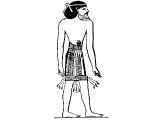
Frontlet or phylactery on forehead

What does it mean when Moses proclaims that God is "one Lord" (6:4)? Many take this verse and others and presume it means that Israel believed in strict monotheism. However, their history shows that they believed in several gods, including Elohim and Jehovah. Yet, Israel only worshiped Jehovah. Jesus is the one Lord and God over Israel. Unlike the nations they were about to conquer that worshiped many gods and idols, Israel was to worship only one. God commanded in chapter 5, "thou shalt have no other gods before me." This tells us that there were other gods, perhaps some that were recognized by Jehovah as valid and worthy gods. Yet he was to be preeminent.

"5 And thou shalt love the Lord thy God with all thine heart, and with all thy soul, and with all thy might.
6 And these words, which I command thee this day, shall be in thine heart:
7 And thou shalt teach them diligently unto thy children, and shalt talk of them when thou sittest in thine house, and when thou walkest by the way, and when thou liest down, and when thou risest up.
8 And thou shalt bind them for a sign upon thine hand, and they shall be as frontlets between thine eyes.
9 And thou shalt write them upon the posts of thy house, and on thy gates."

Israel was not only to love God, but to love him more than anything else. The word "all" means we cannot have room to worship or love any other. Not only was Israel to keep the Ten Commandments and love God completely, they were expected to teach it to their children. And they were expected to teach their children frequently, not just once a week at Family Home Evening. Parenting is a full time requirement, and teaching the children faith in the Lord and obedience to his word requires constant and consistent reminding.

Reminders are also part of the program. Frontlets, or miniature scrolls with scripture on them were actually placed as a bracelet on the wrist, or as a covering for the forehead. Scripture was also placed on the door posts and on the gates leading to their homes. In other words, there were reminders of God and obedience to his word everywhere you looked. You saw your friend's face, and you saw his frontlet. You looked at your hand, and saw the binding on the wrist. You went to any home or building and saw scripture displayed on the doors.

Today, our prophets encourage us to have similar reminders. Pictures of the Savior, the temple, scripture scenes, or the prophets are often found in LDS and Christian homes. Scriptures should be set out in a prominent place, a reminder to read them frequently. Some people use a "prayer stone" as a reminder to pray in the mornings and evenings. In the morning, the stone is placed on the pillow to remind one to pray at night, and in the evening is placed next to the bed in a slipper to remind one to pray in the morning. Each of these mnemonic devices can be remarkable in helping us to develop and maintain a good habit of prayer, scripture study, meditation, worship.

Do Not Forget Nor Tempt God
Deut 6:16-25


"16 Ye shall not tempt the Lord your God, as ye tempted him in Massah."

Clearly the Lord God is a jealous God, as he often repeats this concept to Israel. He does not stand by while the chosen people choose something else. God understands that true happiness and orderly society come about by obedience to certain laws and expectations. One cannot fly like an eagle while dwelling among turkeys. This meant that Israel could not accommodate their enemies, but must "cast out all thine enemies" from the land. At Massah, Israel went worshiping other gods, tempted by the harlots of Baal-Peor. They could not give all their heart, mind and strength to Jehovah, if they were carousing elsewhere. They could not create a righteous nation, if they did not remain righteous.

All of the symbols given, on doorposts, frontlets, etc., became a constant reminder to not forget and turn away from the Lord. "20 And when thy son asketh thee in time to come, saying, What mean the testimonies, and the statutes, and the judgments, which the Lord our God hath commanded you?

"21 Then thou shalt say unto thy son, We were Pharaoh’s bondmen in Egypt; and the Lord brought us out of Egypt with a mighty hand:
22 And the Lord shewed signs and wonders, great and sore, upon Egypt, upon Pharaoh, and upon all his household, before our eyes:
23 And he brought us out from thence, that he might bring us in, to give us the land which he sware unto our fathers.
24 And the Lord commanded us to do all these statutes, to fear the Lord our God, for our good always, that he might preserve us alive, as it is at this day.
25 And it shall be our righteousness, if we observe to do all these commandments before the Lord our God, as he hath commanded us."

Teaching our children to understand the purpose for the commandments is important. We should not teach them obedience, "because I said so." Rather, we should spend the time to help them see the wisdom in each commandment, and the blessings promised for obedience to each one. We should also explain that as we are disobedient, God's blessing is withdrawn, leaving us vulnerable to temptation and destruction.

As a man chasteneth his son, so the Lord thy God chasteneth thee
Deut 8


The Lord continues to remind Israel of the importance of obedience, keeping themselves separate from the apostate nations they are to destroy, and to remember that God took care of Israel in the wilderness for 40 years. God will continue taking care of Israel, as long as they are obedient. However, if they forget and turn from Jehovah, God would straighten them out with tough love.

" 11 Beware that thou forget not the Lord thy God, in not keeping his commandments, and his judgments, and his statutes, which I command thee this day:
12 Lest when thou hast eaten and art full, and hast built goodly houses, and dwelt therein;
13 And when thy herds and thy flocks multiply, and thy silver and thy gold is multiplied, and all that thou hast is multiplied;
14 Then thine heart be lifted up, and thou forget the Lord thy God, which brought thee forth out of the land of Egypt, from the house of bondage."

Moses reminds Israel of all the dangers God protected them from. He fed them with manna, saved them from fiery serpents, and provided water in the desert. God can bring them great blessings and prosperity, if they will just continually remember Him.

"18 But thou shalt remember the Lord thy God: for it is he that giveth thee power to get wealth, that he may establish his covenant which he sware unto thy fathers, as it is this day.
19 And it shall be, if thou do at all forget the Lord thy God, and walk after other gods, and serve them, and worship them, I testify against you this day that ye shall surely perish.
20 As the nations which the Lord destroyeth before your face, so shall ye perish; because ye would not be obedient unto the voice of the Lord your God."

God does not offer a middle ground to his covenant with Israel. You are either ripe to receive all God's blessings, or ripe to receive destruction. Anytime Israel founders in the middle of these two, God will chasten them. Once they ripen in iniquity, they will be destroyed, just like the nations that preceded them in the land.

More Reminders Why Israel Should Be Obedient
Deut 9-10


Moses continues to share the history of Israel with the people, explaining to them why God blessed or cursed them and other nations. It all came down to obedience to basic laws.

The stone tablets containing the Ten Commandments are placed inside the Ark of the Covenant, which becomes the place where the holiest national treasures are stored.

Why did Jehovah give Israel so many commandments? "Keep the commandments of the Lord, and his statutes, which I command thee this day for thy good?" (10:13).

While the other gods were local gods, we are reminded, "Behold, the heaven and the heaven of heavens is the Lord’s thy God, the earth also, with all that therein is" (10:14).

Abraham was the first to perform circumcision of all males. This was a covenantal reminder that his people would set themselves apart from other nations. Now, the Lord adds a new twist: "Circumcise therefore the foreskin of your heart, and be no more stiffnecked" (10:15). Now they not only needed to physically be circumcised, but had to soften their hearts before God.

"17 For the Lord your God is God of gods, and Lord of lords, a great God, a mighty, and a terrible, which regardeth not persons, nor taketh reward." There is more than one god and one lord. Both Jehovah and Moses recognize this. However, of all the gods, Jehovah is the mightiest upon the face of the earth, and the only one worthy of worship."

I Set Before you this day a Blessing and a Cursing
Deut 11


Moses continues to tell Israel why they should be obedient. He reminds the older survivors that they have had the blessing of seeing the miracles in Egypt. They could remember what it was like to be slaves in Egypt. In the deserts of Egypt, one planted and then had to water each plant by hand. However, in the Promised Land, as they were obedient to God, he would bring rain to water the plants.

"
13 And it shall come to pass, if ye shall hearken diligently unto my commandments which I command you this day, to love the Lord your God, and to serve him with all your heart and with all your soul,
14 That I will give you the rain of your land in his due season, the first rain and the latter rain, that thou mayest gather in thy corn, and thy wine, and thine oil.
15 And I will send grass in thy fields for thy cattle, that thou mayest eat and be full.
16 Take heed to yourselves, that your heart be not deceived, and ye turn aside, and serve other gods, and worship them;
17 And then the Lord’s wrath be kindled against you, and he shut up the heaven, that there be no rain, and that the land yield not her fruit; and lest ye perish quickly from off the good land which the Lord giveth you."

We will later see that as Israel falls into apostasy, drought and famine often follow. We can learn from this that as we are extremely obedient to God, he is quick to bless us with many of the things we need and desire. However, when we disobey, God withdraws his blessing, and suddenly we find ourselves at the mercy of the elements. The rains do not come as they would, because God does not command them to come. Nature settles back down into its regular form, which in the dry areas of the land means drought and suffering. Only with repentance and a full return to Jehovah are his blessings restored, and the land becomes a blessing unto Israel again.

"26 Behold, I set before you this day a blessing and a curse;
27 A blessing, if ye obey the commandments of the Lord your God, which I command you this day:
28 And a curse, if ye will not obey the commandments of the Lord your God, but turn aside out of the way which I command you this day, to go after other gods, which ye have not known."

It is entirely up to us whether we are blessed or cursed. As a church, a nation, a family, and individuals, we are free to decide whether to follow God or not. However, when we pick up one end of the stick, we of necessity pick up the other end. We cannot choose nor avoid the repercussions of our choices. We obey, or suffer the exact same curse that falls upon all the wicked around us.

False prophets, preachers and friends
Deut 13


We are told that there will come people into our lives, who will entice us to follow other paths. They will try logic, appeal to our natural senses, and even claim that it is the will of God! There is a standard that has been put into place. And that standard requires us to follow it always. Why are many LDS and Christians miserable? Often it is because they struggle between two masters, wanting to follow God, but also enticed by the world and other gods.

It isn't easy to attend Church when the Super Bowl, or Indy 500, or some other championship game is going on at the same time. Shouldn't it be okay to do a family outing on Sundays? Should we stay out of debt as the living prophets have told us to do, or go ahead and spend a "little" extra on a home, car, or vacation? Violence and sexual sin pervade our society, and many worship at the altars of pornography and violent video games.

It is easy to worship Christ one day a week. It is more difficult to choose to worship him daily, and to put God first in our hearts in everything. And the humanist and materialist prophets of today make it so difficult and distracting for us.

"
1 If there arise among you a prophet, or a dreamer of dreams, and giveth thee a sign or a wonder,
2 And the sign or the wonder come to pass, whereof he spake unto thee, saying, Let us go after other gods, which thou hast not known, and let us serve them;
3 Thou shalt not hearken unto the words of that prophet, or that dreamer of dreams: for the Lord your God proveth you, to know whether ye love the Lord your God with all your heart and with all your soul."

Even if a proclaimed prophet, a movie star, politician, or sports star, performs what seems to be a miracle, we are not to follow them to the depths of hell. Don't be like the teenager who came up to me decades ago stating, "Ozzy Osbourne worships the devil, and so I do too!" We also shouldn't be like today's teenagers who think it is okay to date or have sex at a young age, because that is what everyone else does. We are to be a holy nation.

Moses commands the people to stone to death any family member or friend who tempts them to go after other gods. And if a city follows after Belial:
"15 Thou shalt surely smite the inhabitants of that city with the edge of the sword, destroying it utterly, and all that is therein, and the cattle thereof, with the edge of the sword.
16 And thou shalt gather all the spoil of it into the midst of the street thereof, and shalt burn with fire the city, and all the spoil thereof every whit, for the Lord thy God: and it shall be an heap for ever; it shall not be built again."

Belial literally means "that which is without worth, worthless." So, if we follow after that which is of no worth, we set ourselves up for destruction. In order to prevent the cancer of apostasy from spreading, ancient Israel was commanded to destroy everything within the city. Only in this manner could they not only appease God, but ensure his blessing remained on the rest of them.

A Peculiar People
Deut 14-15


In Deuteronomy 14, we receive special instruction on the dietary law and other commandments. These laws are to keep Israel separate from everyone else, as well as seen as peculiar or different.

"1 Ye are the children of the Lord your God: ye shall not cut yourselves, nor make any baldness between your eyes for the dead.
2 For thou art an holy people unto the Lord thy God, and the Lord hath chosen thee to be a peculiar people unto himself, above all the nations that are upon the earth" (14:1-2).

He has chosen Israel as his children. They are not to harm themselves when mourning for the dead. They are to set themselves apart. In so doing, the Lord explains his dietary law to them. Some animals, birds and fishes are "clean" or acceptable to God for Israel to eat. Other animals are considered "unclean." These are not evil animals. They just are not set apart as holy and special, as is Israel.

Israel is commanded to tithe all their increase. This is to ensure the tabernacle (later the temple) and the poor are provided for. It also helps Israel to remember that God has given them everything, and only requires a tenth back.

Deuteronomy 15 teaches us the concept of debt forgiveness. Every seventh year, all debts and contracts end, and the debtor must release the person who owes. If an Israelite has contracted himself to serve a person in exchange for anything, the contract ends in the seventh year. This seventh year, or "year of release" is set. If one man sets a debt in year one, then he is released in the seventh year. And the person who sets up a contract in the sixth year, must also set the person free in the seventh year.

Imagine such a concept today. People would not be forced to forever be held under a debt, or forced to declare bankruptcy, voiding their credit, and causing the lender to lose all his investment. Instead, if a person is heavily under many debts, he would only be expected to work hard for no more than seven years, before the rest would be released. No bankruptcy necessary.

The firstling born of the flocks belongs to the Lord. They could not be sold, eaten, nor worked. Instead, they were to be given to the priests of the sanctuary. The best we have should always be given to God for his work.

Holy Days
Deut 16


There were three key festivals for the Israelites: Passover (Pesach)/Feast of Unleavened Bread, Festival of Weeks/Pentecost (Shavuot), and the Feast of Tabernacles (Sukkot). Let's look at each one of these. For these three festivals, all Israel was expected to make the pilgrimage to the Tabernacle or holy sanctuary, in order to celebrate.

Passover
Passover celebrated the release of Israel from Egypt's bondage. It is a 7-8 day festival, celebrated on the fifteenth day of Nisan, which is usually in March or April, and changes its exact date annually, based on the full moon's appearance. Among the things done in the celebration were to sacrifice a first born lamb, and eat it with bitter herbs and unleavened bread.

In the story of the Exodus, as Egypt suffered through the Ten Plagues, the final plague was the destroying angel of God passing through, slaying the first born. The only homes saved were those who performed the Passover requirements, which included painting some of the lamb's blood on the doorposts of the home. In this manner, these homes were "passed over", hence Passover.

The Feast of Unleavened Bread usually began immediately after the Passover festival, and continued the celebration for another week. It was often considered part of the Passover celebration. The ancient Jewish historian Josephus however tells us:
"The feast of unleavened bread succeeds that of the passover, and falls on the fifteenth day of the month, and continues seven days, wherein they feed on unleavened bread; But on the second day of unleavened bread, which is the sixteenth day of the month, they first "partake of the fruits of the earth, for before that day they do not touch them, (Antiquities of the Jews Book 3, Chapter 10, Section 5)." ( http://en.wikipedia.org/wiki/Passover)

Today's Jews leave a place at the Passover dinner for Elijah the Prophet, who the prophet Malachi foresaw would be a forerunner for the Messiah's coming. It was during the Passover that Jesus Christ, Moses, Elias and Elijah appeared one by one to Joseph Smith and Oliver Cowdery in the Kirtland Temple, giving necessary priesthood keys to prepare the world for the Second Coming (D&C 110 - http://scriptures.lds.org/en/dc/110).

Pentecost
Shavuot celebrates the day when God gave Moses the Ten Commandments. It is celebrated in late May/early June. It is directly linked to the Passover, in that it is required to begin seven weeks after the second day of Passover, or a total of 50 days. This is why it is also called, Pentecost. They count down the days, showing anticipation of receiving the Law or Torah from God. This was the solemn assembly (Atzeret) that ended the holy days beginning with Passover.

Wikipedia states: "On Passover, the Jewish people were freed from their enslavement to Pharaoh; on Shavuot they were given the Torah and became a nation committed to serving God." ( http://en.wikipedia.org/wiki/Shavuot )

It was on the day of Pentecost in the Book of Acts, when all the people were filled with the Spirit of the Lord and heard the apostles speaking in everyone's own language. ( http://scriptures.lds.org/en/acts/2)

In modern times, the LDS experienced their own Pentecost during the March 1836 dedication of the Kirtland Temple. Hundreds witnessed angels, spoke in tongues, and prophesied. Even people outside of the temple noted seeing beings in white walking on the roof of the temple, and some thought the temple was on fire.

Festival of Booths
Sukkot is the Feast of Booths/Tabernacles/Tents/Huts. It is also known as the Festival of Ingathering, a harvest festival. This celebration occurs in September or October.

The booths represented the fragile tents used by Israel through the forty years in the wilderness. Through the seven day festival, all Israel lives in the booths and eat their meals inside of them. It is believed by many Jews, and suggested in the book of Zechariah that the final Festival of Booths will usher in the Messiah's reign. ( http://en.wikipedia.org/wiki/Sukkot )

The Festival of Ingathering foresaw the day when all Israel would be gathered together again, prior to receiving the coming Messiah. Interestingly, the angel Moroni appeared to Joseph Smith during the Festival of Booths, symbolizing that the ushering in of the Lord's coming has begun in these last days.

More Rules for Israel
Deut 17-31


Deuteronomy 17 contains concepts that suggest at least part of this was written in the days of King Josiah, by Hilkiah the priest. We find rules for the future kings of Israel. Yet, from Moses down to Samuel, we find that the Lord did not allow kings, thinking it was a great evil, for Jehovah was their king! King Josiah was very young when he became king. His father was wicked, and sought after other gods. This was the chance for the temple priests to train up a king in righteousness. Josiah was trained by those seeking to follow God and worship in the temple. They were zealous to put away anything and everything that seemed to distract from that worship. It only made sense to provide a book to the king that included instructions especially for the king to study daily in the holy writings (Torah), and to remember that Jehovah is his king. The king is ordered not to "multiply wives" to himself, which in Josiah's day would have made a lot of sense, after the tragedies of David and Solomon regarding their harems.

In chapter 18, we read:

" 18 I will raise them up a Prophet from among their brethren, like unto thee, and will put my words in his mouth; and he shall speak unto them all that I shall command him.
19 And it shall come to pass, that whosoever will not hearken unto my words which he shall speak in my name, I will require it of him."

The prophet Moses did know about the coming Messiah. While many ignored or rejected Moses' words, anyone who rejected the words of the Messiah would have to stand before God and be judged. Why? Because we can be saved without the Mosaic Law, but we cannot be saved without faith and obedience to Christ.

In the following chapters, more rules and regulations are established. These included how to manage war and the armies, murder and manslaughter, rebellious children (put to death), marriage/divorce, clean/unclean, vows/covenants, leprosy, business, and property laws.

The Lord then tells them when they cross the Jordan River to build an altar for remembrance of their covenants with God as they entered into the Promised Land. Again, Moses explains that if they are obedient they will prosper, and if they rebel against God, they will be cursed. They are to be of good courage, and to read the Law (Book of Deuteronomy) in its entirety every seven years.

Jehovah's Inheritance
In Deuteronomy 32, we are told that Jehovah is the Rock. He is a solid foundation upon which Israel may build their kingdom.

" 7 Remember the days of old, consider the years of many generations: ask thy father, and he will shew thee; thy elders, and they will tell thee.
8 When the most High divided to the nations their inheritance, when he separated the sons of Adam, he set the bounds of the people according to the number of the children of Israel.
9 For the Lord’s portion is his people; Jacob is the lot of his inheritance."

The King James Version of this text has an error in it. This error was made long ago, and other ancient copies of Deuteronomy show the original: instead of the most High separating the "sons of Adam", it states the "sons of God". The "Most High" is El Elyon or Elohim. Elohim divided the ancient nations, giving each of his sons an inheritance. The Lord Jehovah's portion is Israel. This has been discussed previously in the lessons, but shows again the Divine Council in Heaven, led by Elohim. Israel is the greatest of all nations, and given Jehovah, the greatest of God's sons, as its king and God.

In both the Septuagint (Greek Old Testament), and the Dead Seas Scrolls Deuteronomy, we read this verse as follows:
"When the Most High [El Elyon] gave to the nations their inheritance, when he separated the sons of men, he fixed the bounds of the peoples according to the number of the sons of God. For the LORD's [Jehovah's] portion is his people, Jacob his allotted inheritance."
http://mormanity.blogspot.com/2005/10/deuteronomy-328-9-many-implications.html

Israel was very special. It was given specifically to Jehovah to be king and Lord over. In ancient Jewish tradition, Jehovah would eventually conquer the other nations of the earth, overcoming the inept sons of God who were assigned as kings of the other nations. Still, Israel still was the first inheritance for Jehovah, and the closest to his heart.

Moses Blesses the Tribes
Deut 33


In this chapter, Moses gives each tribe a special blessing. It is reminiscent of the blessing Jacob gave to each of his sons centuries earlier.

For Judah we read:
"7 And this is the blessing of Judah: and he said, Hear, Lord, the voice of Judah, and bring him unto his people: let his hands be sufficient for him; and be thou an help to him from his enemies." While this is a blessing to the entire nation, it also foresees the coming Messiah. The Lord would be the "voice of Judah."
He would be brought to his people, and sadly, crucified by them. He would need strength to endure what he would suffer under his own tribe's cruelty, and would need God's help to overcome his enemies throughout the eternities.

For Levi, Moses focuses on his responsibility in the priesthood, and especially in using the Urim and Thummim properly. It guided them before at Massah and Meribah (finding water), and it would be needed in the future. The Urim and Thummim was the high priest's oracle to God. Through it, he received revelation.

For Joseph, we read:
"13 ¶ And of Joseph he said, Blessed of the Lord be his land, for the precious things of heaven, for the dew, and for the deep that coucheth beneath,
14 And for the precious fruits brought forth by the sun, and for the precious things put forth by the moon,
15 And for the chief things of the ancient mountains, and for the precious things of the lasting hills,
16 And for the precious things of the earth and fulness thereof, and for the good will of him that dwelt in the bush: let the blessing come upon the head of Joseph, and upon the top of the head of him that was separated from his brethren.
17 His glory is like the firstling of his bullock, and his horns are like the horns of unicorns: with them he shall push the people together to the ends of the earth: and they are the ten thousands of Ephraim, and they are the thousands of Manasseh."

Joseph is tied to the "everlasting hills" and the "ancient mountains." For Mormons, this is a prophesy fulfilled in that a few descendants of Joseph fled the destructions of Jerusalem in 600 BC, and were led to the Americas, where the hills and mountains of the Rockies/Andes are impressive and definitely appear to be everlasting.


"Death" of Moses
Deut 34


Moses goes to the top of Mount Horeb, where he sees the Promised Land. He then dies, and Joshua takes over the work for Israel. Latter day revelation suggests that Moses was translated, or his body was renewed so that he did not taste of death, and then was taken into heaven in this fashion.

"10 And there arose not a prophet since in Israel like unto Moses, whom the Lord knew face to face" is evidence again, that the Book of Deuteronomy, or at least portions of it were written long after Moses. Otherwise, how would anyone know that no other prophet had seen the Lord face to face? We do know that prophets can see the Lord "face to face" according to the will of God. However, while many saw God in vision, few actually ever saw the Lord "face to face" as did Moses. Part of the reason is the "mystery of godliness" or knowing God is the key to the Melchizedek Priesthood (D&C 84:19-24). Only when the higher priesthood is present and the person is as righteous as Moses can man see God face to face and live.


Bibliography

Links to previous lessons that discussed the Documentary Hypothesis:
Lesson 15 : http://joelsmonastery.blogspot.com/2010/04/gospel-doctrine-ot-lesson-15-look-to.html

Lesson 6: http://joelsmonastery.blogspot.com/2010/02/lds-gospel-doctrine-class-old-testament.html

Lesson 3: http://joelsmonastery.blogspot.com/2010/01/lds-gospel-doctrine-class-old-testament_12.html


Deuteronomists and the Temple Reform:
Margaret Barker on the Temple Reformation: http://www.thinlyveiled.com/barker/josiahsreform.htm

Kevin Christensen's review of Margaret Barker's Temple Reform: http://maxwellinstitute.byu.edu/publications/insights/?vol=23&num=2&id=344

Books by Margaret Barker on Amazon.com: http://www.amazon.com/Margaret-Barker/e/B001IQWG34/ref=sr_tc_2_0?qid=1272316370&sr=1-2-ent

Margaret Barker's web page: http://www.margaretbarker.com/

Other discussions on Deuteronomists and the Temple Reform:
http://depts.drew.edu/jhc/rpbarker.html
http://otagosh.tripod.com/deut.pdf
http://home.earthlink.net/~paulrack/id55.html

Stephen Covey, Seven Habits of Highly Effective People, pg 19: http://www.amazon.com/Habits-Highly-Effective-People/dp/0743269519/ref=sr_1_1?ie=UTF8&s=books&qid=1272398936&sr=8-1

Belial: http://en.wikipedia.org/wiki/Belial

Jim F's discussion on Lesson #17: http://timesandseasons.org/index.php/2010/04/ot-lesson-17-study-notes-deuteronomy-6-8-11-321-4-15-18-30-40-45-47/

Saturday, April 24, 2010

Lesson #16 - I Cannot Go Beyond the Word of the Lord

Lesson 16 - I Cannot Go Beyond the Word of the Lord
Numbers 22-24, 31


Background -

The Israelites have moved beyond Mt Sinai. Because of rebellion and fear they do not advance directly into the Promised Land.

Instead, God determines the adults who refused to come into His presence at Sinai, and later feared the inhabitants
in the land of Canaan, would not enter the Promised Land. Israel would instead wander in the wilderness for forty years.

From Map 3 in the LDS Bible, we find that Israel took a very long route to the land of Canaan. Mt Sinai is traditionally believed to be near the southern tip of the Sinai Peninsula. A quicker and easier route would have been to follow the coast line of the Mediterranean Sea on the ancient highway, the Way of the Sea.


http://lds.org/scriptures/bc/scriptures/content/english/bible-maps/images/03990_000_bible-map-2.jpg
Map of the Exile

This journey to Sinai and back took Israel through the lands of other peoples and vast desert wastelands, such as the Wilderness of Paran.

Israel first moved through that desert to the southern borders of the Promised Land at Kadesh-Barnea in the Wilderness of Zin. However, when Israel's twelve spies returned with most insisting they couldn't win, God cursed them for 40 years, as mentioned above. Israel returned into the Wilderness of Paran to wander for years until most of the rebellious had died there. Eventually they made their way back to Ezion-Geber and the boundary of the Sinai Peninsula.

That said, we see that Israel still moved forward, conquering many of the nations they came across, slowly learning obedience as the new generation of free Israelites replaced the old slave/victim mentality of the first generation of the Exodus.

Edom
Numbers 20


As they left the Sinai Peninsula, one of the first nations Israel came across was Edom (Numbers 20:14-21). The King's Highway passed through the land, offering an easier path to the lands east of the Dead (Salt) Sea and the Jordan River. Israel requested to peacefully pass through the area, offering to pay for water used and any damage caused. But Edom refused. Israel turned to go another way.

Why didn't Israel just invade and destroy Edom as they did previously? Unlike the people in Sinai, this was family. Edom is another name for Esau, Jacob's brother. This was their family. The nation of Israel calls itself "thy brother" to Esau. This was Esau's inheritance, granted by God and Isaac. When Edom sent an army to defend its border, Israel turned away to seek another longer and more difficult route.

Aaron's Death
Numbers 20:22-29


As stated by God when Moses and Aaron disobeyed at Meribah (see vs 7-12), they would not enter into the land of promise.

Moses, Aaron and Eleazar ascend Mount Hor, where the chief priest's garments are removed from Aaron and placed upon hls son, Eleazar.

In previous lessons we've discussed the ancient tradition of the holy garment of Adam being passed down from father to son in the legitimate passing of priesthood power. Here the tradition starts anew as Aaron symbolizes Adam passing his own garment and authority on to his son, Seth.

This also symbolizes Christ receiving the Melchizedek Priesthood from his Father. Paul wrote:
"For every high priest taken from among men is ordained for men in things pertaining to God, that he may offer both gifts and sacrifices for sins...
"And no man taketh this honour unto himself, but he that is called of God, as was Aaron.
"So also Christ glorified not himself to be made an high priest; but he that said unto him, Thou art my Son, to day I have begotten thee.
"As he saith also in another place, Thou art a priest for ever after the order of Melchizedec" (Hebrews 5:1-6).

In this quote, Jesus receives his priesthood authority from his Father, just as Eleazar would receive it from Aaron.

Moses and Eleazar descend from the mountain top, the new generation high priest ready to faithfully perform his duties.

Israel Destroys the Nations
Numbers 21


Unlike the Edomites, the other peoples in the region are not considered family. When other nations came against them, Israel destroyed their armies first and then the cities were destroyed.

King Arad, who ruled Canaanites in the south, first came to battle. The Israelites turned to God, promising to destroy their cities if God would deliver them. God agreed, and the cities were destroyed.

Israel passed by Edom, but still sought to use the King's Highway as an easier path to travel. This time, Israel asked for safe passage through the Amorite nation, just north of Edom and to the east of the Dead Sea. The Amorites had recently conquered the Moabites, driving many of them from the land. They were not interested in allowing a nation with 600,000 men to pass through the center of their territory.

The Amorite king, Sihon, sent an army to stop Israel. However "Israel smote him with the edge of the sword, and possessed his land" (21:24). While not originally a part of the Promised Land, Israel finally had a place to dwell, refresh themselves, and prepare to enter the land of promise.

Israel also gained control of a portion of the King's Highway, a major trade route. Israel could obtain much needed funds by charging trade caravans for using their road and to pass through the land.

One by one, the Israelites conquered cities and nations until they came upon the Moabites.

Balaam, Magician and Advisor of Pharaoh
Numbers 22


We first mentioned Balaam in lesson #13 on the Exodus. According to the Book of Jasher, Baalam was a a chief advisor to Pharaoh, king of Egypt. He originally fled his home land, when the king of Chittim was slain, and went into Egypt. "And Pharaoh received him with great honor, for he had heard of his wisdom, and he gave him presents and made him for a counsellor, and aggrandized him. And Balaam dwelt in Egypt, in honor with all the nobles of the king, and the nobles exalted him, because they all coveted to learn his wisdom" (Jasher 67:8-10).

Pharaoh dreams a terrible and foreboding dream. Balaam suggests he calls forth his two main counselors to advise him on the dream:
"18 And Balaam the son of Beor answered the king and said unto him, This means nothing else but a great evil that will spring up against Egypt in the latter days.

19 For a son will be born to Israel who will destroy all Egypt and its inhabitants, and bring forth the Israelites from Egypt with a mighty hand.

20 Now therefore, O king, take counsel upon this matter, that you may destroy the hope of the children of Israel and their expectation, before this evil arise against Egypt.

21 And the king said unto Balaam, And what shall we do unto Israel? surely after a certain manner did we at first counsel against them and could not prevail over them.

22 Now therefore give you also advice against them by which we may prevail over them.

23 And Balaam answered the king, saying, Send now and call thy two counsellors, and we will see what their advice is upon this matter and afterward thy servant will speak.

24 And the king sent and called his two counsellors Reuel the Midianite and Job the Uzite, and they came and sat before the king.

25 And the king said to them, Behold you have both heard the dream which I have dreamed, and the interpretation thereof; now therefore give counsel and know and see what is to be done to the children of Israel, whereby we may prevail over them, before their evil shall spring up against us.

26 And Reuel the Midianite answered the king and said, May the king live, may the king live forever.

27 If it seem good to the king, let him desist from the Hebrews and leave them, and let him not stretch forth his hand against them."

Reuel is Jethro, the man who later would be Moses' father-in-law. He was a priest after the order of Melchizedek and would one day ordain Moses to the priesthood (D&C 84:6). He went into a long history of Abraham and his descendants, how Jehovah had protected them from Pharaohs and other kings in the past. It would be best to leave the Hebrews alone, and not go against them and their God.


When asked, Job the Uzite deferred to the king's best judgment. Then Pharaoh asked Balaam his advice.

"42 And the king said to Job the Uzite, What sayest thou Job, and what is thy advice respecting the Hebrews?

43 So Job said to the king, Behold all the inhabitants of the land are in thy power, let the king do as it seems good in his eyes.

44 And the king said unto Balaam, What dost thou say, Balaam, speak thy word that we may hear it.

45 And Balaam said to the king, Of all that the king has counselled against the Hebrews will they be delivered, and the king will not be able to prevail over them with any counsel.

46 For if thou thinkest to lessen them by the flaming fire, thou canst not prevail over them, for surely their God delivered Abraham their father from Ur of the Chaldeans; and if thou thinkest to destroy them with a sword, surely Isaac their father was delivered from it, and a ram was placed in his stead.

47 And if with hard and rigorous labor thou thinkest to lessen them, thou wilt not prevail even in this, for their father Jacob served Laban in all manner of hard work, and prospered.

48 Now therefore, O King, hear my words, for this is the counsel which is counselled against them, by which thou wilt prevail over them, and from which thou shouldst not depart.

49 If it please the king let him order all their children which shall be born from this day forward, to be thrown into the water, for by this canst thou wipe away their name, for none of them, nor of their fathers, were tried in this manner.

50 And the king heard the words of Balaam, and the thing pleased the king and the princes, and the king did according to the word of Balaam" (Jasher 68).

In other words, kings have tried to slay Abraham and his descendants with flame and sword in the past, and were unsuccessful. However, no one before had ever attempted to drown the male children. In this, perhaps, Pharaoh would find a loophole to destroy Israel and stop the dreamed prophesy from coming to pass. However, Pharaoh still could not succeed. Somehow the majority of the children were preserved, even when Pharaoh's armies attempted to seize and drown them. Jethro/Reuel was disgusted and left Egypt, returning to his home in Midian.


A few years later, as the young child Moses sat eating with the king, the boy grabbed Pharaoh's crown and placed it upon his own head. Balaam insisted this child was the one who would topple Egypt. Only an angel's intercession kept the child from being slain. As Moses grew, he later heard how Balaam was instrumental in the deaths of the Hebrew children, and attempted to have Moses killed. Moses sought his life, but Balaam was warned and fled (Jasher 70).


Here we see that Balaam and Moses have a long history. Balaam, while a man of foresight and counsel, used it to fight against God and his chosen servant. Balaam knew he had a very nice life in Egypt, and a spoiler like Moses would surely ruin it if he wasn't stopped.

Balak, King of Moab seeks Balaam's Help
Numbers 22


One thing is for certain. Balaam is famous. As Balak, King of Moab, sees that Israel has destroyed the Amalekites and other nations in front of them, he realizes that an army is insufficient to stop the Hebrews. Therefore, Balak seeks a different approach to winning against Israel. He sends for Balaam to use his magical prowess to curse Israel. The king realizes that he whom Balaam "blesses [is] blessed, and he whom thou cursest is cursed" (Numbers 22:6).

Balaam seems to be a follower of many gods. The Lord Jehovah is one of a pantheon of war-like gods that Balaam deals with. He knows Jehovah has power, yet he often acts as if he can outsmart Jehovah with magic, stealth, and the power of other gods.

Balak's messengers arrive and tell Balaam to come and curse the Hebrews for the king of Moab. The Lord commands Balaam not to go with them, for he has chosen Israel. Balaam initially refuses to go. When Balak sends princes and an offer of wealth and power to Balaam, he does not refuse them. He tells them he will go, but will speak the word of God, "I cannot go beyond the word of the Lord to do more or less" (22:18).

At this point, we find a conflict in the writing. Balaam tells the princes he will see what God tells him at night, in which the Lord tells him to go with the men, but only speak God's word. Yet, when he goes with them, "God's anger was kindled because he went: and the angel of the Lord stood in the way for an adversary against him" (22:20-22). Why would God tell him to go, and then seek to hedge up his way? Because Balaam outwardly was professing he would do as the Lord commanded him, but in his thoughts he conspired. He was hedging his bets, and keeping an open mind as to how he would handle the situation once he was with Balak. What Balaam did not understand is that the Lord could read his thoughts.

The incident with Balaam's ass helps us to understand this. The angel of the Lord stood in the path with a sword to slay Balaam. His ass feared the angel and attempted to stop and turn to the side. Balaam, caught up in his thoughts, didn't not see the angel until it was almost too late. The angel stood before him with sword drawn. He told Balaam that only his donkey had saved him from death.

Balaam knows how to play God, or so he thinks. Upon seeing the angel, he bowed to the earth. When the angel told him God was displeased, Balaam offered to return home again. Again the Lord told him to continue with the men, but repeated the command to only state what the Lord should speak to him.

Balaam goes to Balak and they prepare. They go to the high place of Baal, a holy sanctuary for a god that was very similar to Jehovah in many attributes and aspects. Balak offered sacrifice to the Lord, hoping to appease him (22:40, 23:1-2). In his mind, gods could be bribed. However, when Balaam returns from speaking with God, all he can do is bless Israel. Balak is beside himself, and suggests they do it again from a hill where they can actually see Israel approaching.

Once again, Balak offers sacrifice to God, expecting God to change his mind and accept the sacrificial bribe. But Balaam returns and tells him, "God is not a man that he should lie; neither the son of man, that he should repent...behold I have received commandment to bless: and he hath blessed; and I cannot reverse it" (23:19-20). In other words, God holds to his word. While men, such as Balak and Balaam, can be bribed or caused to change their minds, God isn't tempted by mortal entreaties.

Balaam had tried to destroy Moses and Israel before in Egypt and failed due to God's power. Now Balaam resigns himself to speak for God. "Surely there is no enchantment against jacob, neither is there any divination against Israel: according to this time it shall be said of Jacob and of Israel, What hath God wrought!" (23:23). Balak tries one more tactic. Perhaps he could convince Balaam to neither curse nor bless Israel, but just keep things as they were before. Again Balaam says he cannot, and Balak tries once again in another location.

The Star out of Jacob and a Sceptre of Israel
Numbers 24


Balaam instructed Balak to build seven altars and again offer sacrifice to the Lord. Balaam realized that God wanted to bless Israel, so he no longer sought any "enchantments" or legal wrangling to find a loophole in order to curse Israel (24:1). Instead, he tried a new approach. He looked upon the children of Israel in the wilderness, and the Spirit caused him to not only bless them, but to curse those that curse Israel (24:5-9).

Balak exploded in anger, "I called thee to curse mine enemies, and behold, thou hast altogether blessed them these three times." Balak warned Balaam to flee back to his home, evidently to avoid the king's wrath. However, Balaam reminded him that he warned the princes that he would only speak God's will. Balaam then foretells the future of Israel and the nations around it. He sees the day when the "Star out of Jacob and a Sceptre" would arise that would overpower the nations around Israel. "Out of Jacob shall come he that shall have dominion, and shall destroy him that remaineth of the city" (24:17-19).

This prophesy has a dual symbolism. King David would be the king of Israel who would conquer the surrounding nations, and establish the first true powerful kingdom and nation of Israel. Yet it would be the Son of David who would completely fulfill the prophesy. Jesus Christ would come as the "Star out of Jacob, and a Sceptre" risen from Israel. At his Second Coming, he would smite the enemies of Israel, and take the land as an eternal possession for spiritual Israel.

The word "star" can denote several things in ancient Hebrew lore. Job saw the "When the morning stars sang together, and all the sons of God shouted for joy" (Job 38:7). In this verse, God references the premortal existence and the divine council of heaven. When the plan came forth, all shouted for joy. The "Star out of Jacob" in Job's story would have been Jesus Christ in his role as Jehovah in the premortal existence.

And the star was significant in the New Testament and Book of Mormon. We read, "And it came to pass also that a new star did appear, according to the word" (3 Nephi 1:21). In the Middle East, this star was noticed by shepherds and followed by wise men. For the Nephites, it occurred during a time when the unbelievers were set to kill all believers. The people were so astonished at the sign of Christ's birth that they fell to the earth in amazement.

The Sceptre represents kingly authority. It was definitely represented in King David, who was called and anointed by God through his prophet, Samuel. David conquered the surrounding lands and established a strong monarchy. Yet his earthly reign was temporary and fell with the rebellions of his descendants. However, Christ shall come and reign as king of the earth during his Millennial reign. At that time,
"shall be the sound of his trump, saying to all people, both in heaven and in earth, and that are under the earth—for every ear shall hear it, and every knee shall bow, and every tongue shall confess, while they hear the sound of the trump, saying: Fear God, and give glory to him who sitteth upon the throne, forever and ever; for the hour of his judgment is come" (D&C 88:104).

Israel is led away by the "daughters of men"
Numbers 25


Prior to the flood, the stories are told of the righteous sons/angels of God looking upon the "daughters of men" and being tempted away from their holy responsibility and calling. In falling away, they took their knowledge of God and used it to corrupt themselves and the world they dwelt in. Only the Flood could end their vast apostasy and violence.

The pattern returns as Israel, with a several victories under their belt, and now accustomed to daily miracles bringing them bread, are enticed by the daughters of Moab. It was a very common thing in war, at least until the Geneva Convention, for conquering armies to plunder, pillage and take whatever they wanted. Israel has observed it in the past as the Egyptian and other armies around them have done the same thing.
1 And Israel abode in Shittim, and the people began to commit whoredom with the daughters of Moab.
2 And they called the people unto the sacrifices of their gods: and the people did eat, and bowed down to their gods.
3 And Israel joined himself unto Baal-peor: and the anger of the Lord was kindled against Israel.
The pattern will be seen again and again. The covenant people of God are tempted by the daughters of men or the riches of the world. They go whoring after unrighteousness, and consume themselves in their lusts. Then they leave worshiping the Lord, and seek to worship the god/idol of the land. Baal-peor was the Canaanite god who was very similar to Jehovah in many respects. Baal means "Lord", and Peor was a mountain in Moab. Here we have a local version of the god Baal. As Israel had once worshiped the Lord Jehovah on His holy Mount Sinai, the Israelites were now worshiping the local god Baal on Mount Peor. A part of the Baal-Peor worship was sensual/sexual fulfillment, therefore the two went hand in hand. The daughters of Moab were essentially priestesses to Baal-Peor, and their duty was to lure men into whoredoms and worship. ( http://www.jewishencyclopedia.com/view.jsp?artid=12&letter=B)

The Lord commanded Moses to slay all those men who followed after Baal-Peor, and it was done by the judges of Israel. A plague hits Israel, and many mourn in front of the Tabernacle, begging the Lord to forgive Israel. Phinehas, son of Eleazar the chief high priest, saw an Israelite man actually bring one of the Moabite women into camp. Phineas grabbed a javelin and thrust the man and woman through. The plague was stayed once Israel showed they would not allow such sin to enter into their camp, or near the Tabernacle of Jehovah.
10 And the Lord spake unto Moses, saying,
11 Phinehas, the son of Eleazar, the son of Aaron the priest, hath turned my wrath away from the children of Israel, while he was zealous for my sake among them, that I consumed not the children of Israel in my jealousy.
12 Wherefore say, Behold, I give unto him my covenant of peace:
13 And he shall have it, and his seed after him, even the covenant of an everlasting priesthood; because he was zealous for his God, and made an atonement for the children of Israel.
As in ancient Israel, today we see among us many who would walk away from their covenant and promise in order to worship other gods and idols. Today's idols are often material things that keep us from doing the great work God asks of us. We are too busy to proclaim his word, serve our fellow men, or study our scriptures. Busy with what? Entertainment, work, and other pleasures that aren't necessarily evil, except when they replace God in the center of our lives. Too few of us today are like Phinehas, who quickly served God and his people in his zeal to end a plague. Too many of us allow the plagues of our day to continue, because we do not speak out against them. We tolerate or even promote promiscuity, materialism, selfishness, cruelty, and lifestyles that impoverish mind, body and soul.

Israel, the Next Generation
Numbers 26

Moses and Eleazar the priest number the children of Israel. Forty years in the wilderness has passed and all of the former generation have died, except for two.
63 These are they that were numbered by Moses and Eleazar the priest, who numbered the children of Israel in the plains of Moab by Jordan near Jericho.
64 But among these there was not a man of them whom Moses and Aaron the priest numbered, when they numbered the children of Israel in the wilderness of Sinai.
65 For the Lord had said of them, They shall surely die in the wilderness. And there was not left a man of them, save Caleb the son of Jephunneh, and Joshua the son of Nun.
God retains his blessings and promises to those who are truly faithful to him. Over the many years, Israel was tried and tested to determine their loyalty to God. Even after 40 years of wandering, many still were tempted to join with the worshipers of Baal-Peor. Only after many years and several plagues, were the Israelites purified enough to enter into the Promised Land. All that remained of the original Israelites, besides Moses and Eleazar, were Caleb and Joshua. Of the four, only three would enter into the Holy Land, representing Levi, Judah, and Ephraim, the three main tribes of Israel.

A Replacement for Moses
Numbers 27


Moses was promised, due to his rebellion that he would not enter into the Promised Land. Now that Israel was across the Jordan River from that land, they were soon ready to cross over. They would need a new prophet to replace Moses. But how does one set apart a prophet?
12 And the Lord said unto Moses, Get thee up into this mount Abarim, and see the land which I have given unto the children of Israel.
13 And when thou hast seen it, thou also shalt be gathered unto thy people, as Aaron thy brother was gathered.
14 For ye rebelled against my commandment in the desert of Zin, in the strife of the congregation, to sanctify me at the water before their eyes: that is the water of Meribah in Kadesh in the wilderness of Zin.
15 And Moses spake unto the Lord, saying,
16 Let the Lord, the God of the spirits of all flesh, set a man over the congregation,
17 Which may go out before them, and which may go in before them, and which may lead them out, and which may bring them in; that the congregation of the Lord be not as sheep which have no shepherd.
18 And the Lord said unto Moses, Take thee Joshua the son of Nun, a man in whom is the spirit, and lay thine hand upon him;
19 And set him before Eleazar the priest, and before all the congregation; and give him a charge in their sight.
20 And thou shalt put some of thine honour upon him, that all the congregation of the children of Israel may be obedient.
21 And he shall stand before Eleazar the priest, who shall ask counsel for him after the judgment of Urim before the Lord: at his word shall they go out, and at his word they shall come in, both he, and all the children of Israel with him, even all the congregation.
22 And Moses did as the Lord commanded him: and he took Joshua, and set him before Eleazar the priest, and before all the congregation:
23 And he laid his hands upon him, and gave him a charge, as the Lord commanded by the hand of Moses.
Joshua was called as prophet in a process: 1. It was revealed by revelation from a prophet. 2. It was done before all the people. 3. One with authority placed his hands upon the new prophet. As Paul would later say regarding priesthood authority, "no man taketh this honour unto himself save he be called of God, as was Aaron" (Hebrews 5:4). Aaron's son, Eleazar was in the audience when Joshua was ordained and set before Eleazar and the congregation. The pattern continued through the history of prophets and Hebrew kings.

Midianites destroyed
Numbers 31

All good things and all not-so-good things must come to an end. So it is with Balak and his kingdom. 12,000 soldiers, one thousand from each tribe are sent forward. Eleazar and the other priests go with them, carrying the holy instruments, and the trumpets. Trumpets were used anciently in war for communication. It was a quick and easy way to tell the soldiers to charge, retreat, or regroup. They could also be used to encourage.

The trumpets used were probably shofars, ram's horns shaped into trumpets. They were used by Israel for religious events, musical accompaniments, and to signal the beginning of a war (http://en.wikipedia.org/wiki/Shofar). The holy instruments were the sacred instruments of the sanctuary or Tabernacle. These could have included the Ark of the Covenant, which did go into battle frequently with Israel. The Ark of the Covenant represented God's presence. Imagine having the holy presence of the Lord up on a hilltop as the soldiers ran into battle! Such would be awe inspiring, giving the soldiers courage to defeat the enemy. It also represented the concept of each nation's God pitching in battle against one another. Would Jehovah be stronger than Baal-Peor?

Israel won the battle. All of the males were slain, and the women and children taken into captivity. When they returned to the camp, Moses freaked out.
15 And Moses said unto them, Have ye saved all the women alive?
16 Behold, these caused the children of Israel, through the counsel of Balaam, to commit trespass against the Lord in the matter of Peor, and there was a plague among the congregation of the Lord.
17 Now therefore kill every male among the little ones, and kill every woman that hath known man by lying with him.
18 But all the women children, that have not known a man by lying with him, keep alive for yourselves.
Israel slew all of the adult women and boys, keeping only the young girls. Why? Because the boys would one day grow up and perhaps challenge Israel's authority, just as Israel had become numerous and challenged Egypt. The women were instructed in the worship of Baal-Peor, which included sexual rites, and these had already led many sons of Israel into apostasy. Moses did not want to take the chance of Israel falling away from Jehovah, and losing the promised covenant.

For many people, it is strange that Jehovah and Moses would teach, "Thou Shalt Not Kill", but then approve the slaughter of small children and defenseless women. In this instance we learn that the commandment could aptly be adjusted to state: "Thou shalt not kill, unless God commands otherwise." We find this same sentiment in the command the Spirit gave Nephi to slay the drunken Laban. For Nephi, it was necessary to slay him in order to obtain the Brass Plates.
12 And it came to pass that the Spirit said unto me again: Slay him, for the Lord hath delivered him into thy hands;
13 Behold the Lord slayeth the wicked to bring forth his righteous purposes. It is better that one man should perish than that a nation should dwindle and perish in unbelief.
Clearly, if the Lord has a purpose, then killing is justified. In Moses' case, it was to preserve the purity of Israel. In Nephi's case, it was to ensure the Nephites (also Israelites) remained true to the promised covenant. It shows us that God does not view things from a temporary or short term viewpoint, but from the long term, even the eternal viewpoint. Those that were slain would receive opportunity to hear the gospel, be resurrected, and receive the covenant themselves in the latter days. But God had to prepare a people that could be a light unto the world, a people where Jesus Christ, the Sceptre and Star of Judah could come forth and bless all mankind.

Bibliography


Book of Jasher: http://www.ccel.org/a/anonymous/jasher/home.html

Baal-Peor: http://www.jewishencyclopedia.com/view.jsp?artid=12&letter=B

Shofar: http://en.wikipedia.org/wiki/Shofar

Saturday, April 17, 2010

Gospel Doctrine OT Lesson #15 - Look to God and Live

Gospel Doctrine Lesson #15, Look to God and Live
Numbers 11-14, 21


Ark of the Covenant
Ark of the Covenant

Background: The Israelites have spent months at Mt Sinai, where they have received the Mosaic Law and built the Tabernacle, a mobile temple. The people refused to enter into God’s presence, and so lost the main blessings of the Melchizedek Priesthood and the key to the “mysteries of godliness.” In its place, they received the Levitical or Aaronic Priesthood to perform outward ordinances in the tabernacle, with the view that these would prepare them for the higher ordinances later on (D&C 84:19-27).

Already the Israelites have shown intent to murmur and rebel, choosing to replace Jehovah with the golden calf, complaining about God leading them into the wilderness to die of thirst and/or starvation, etc. It is only through God and Moses’ patience that the people are not destroyed and replaced.

With the Tabernacle (temple or House of God) and the Ark of the Covenant/Mercy Seat (God’s throne) to lead the way, Israel departs from Sinai and heads towards the Promised Land.

Flesh Pots of Egypt again
Numbers 11


After several months of eating manna, the people began to wish for a varied diet. They reminisce about the meat they had to eat in Egypt, and murmured. Yet, in Exodus 16 (see last week’s lesson) we read that God provided both manna and quail, supposedly as a permanent solution. Why would they long for meat now, if quail was already provided? In Numbers 11:13, Moses tells the Lord that he has no idea how to provide enough meat for the people. If God had already provided quail in the past, why would Moses now be uncertain on how to provide quail again? Also, was the quail given in Exodus 16 a temporary event, or was it to be a continual event for them? If continual, why would they need to ask for meat again and complain about the Egyptian flesh pots? If temporary, why did they complain again about Egyptian flesh pots, and instead ask God to provide quail again? And if so, why would God satisfy their need at Sinai, but deal with them angrily now?

This is an example of evidence for the Documentary Hypothesis. As discussed before, some scholars believe that the Old Testament and particularly the Books of Moses as we now have them were compiled from various oral traditions somewhere between 800-500 BC. Here we see the same story told twice, but with a different ending. The two oral traditions were brought into Old Testament text and treated as two separate incidents by later scribes, such as Ezra.

According to the Documentary Hypothesis, there were a variety of sources that combined over centuries to make the Bible as we now have it. The earliest written versions were by “J” (the Yahwist /Jehovah) and “E” (the Elohist/Elohim). Later additions and changes were made by “D” (Deuteronomist), “P” (Priest) and “R” (Redactor – usually thought to be Ezra). Little by little, these various versions were combined into the Old Testament we now have.

We see another example in the story of getting water at Meribah. We see Moses and Israel going twice to a place named Meribah. In the first example, God gladly gives them water by having an angel stand above the rock Moses is to strike (Exodus 17). In the second instance, Moses goes to the rock and angrily chastises Israel asking them if he has to get them water from a rock before they will believe him. God is angry with Moses and Aaron for not giving God credit for the miracle, and does not allow either of them to enter into the Promised Land (Numbers 20).

Here we see the conflict that early authors brought into the sacred writ. “J” wanted to ensure King David and the temple priests looked good, while “E” sought to show Moses and the patriarchs as strong and righteous individuals. “J” had God chastise Moses and Aaron at Meribah, while “E” did not such thing. “J” was written in the land of Judah, probably in King Solomon’s reign, or the reign of his son. “E” wrote his version of the sacred text after the division of Judah and Israel in King Jeroboam’s day, to support their version of the faith and to support their version of the priesthood, based upon Moses’ authority, and not on Aaron’s.

Interestingly, the Book of Mormon does mention Moses at Meribah (2 Ne 25:20). There is no mention of God chastising Moses, but rather that Moses did great miracles by God’s power. This is exactly how “E” would have written the story in the northern kingdom of Israel. Interestingly, there is a potentially stronger tie-in to the Book of Mormon. Kevin Barney notes that John Sorensen “goes on to state as his thesis that the variant Old Testament text of the brass plates corresponds to one of the "documents" from which the Pentateuch was compiled. In particular, he suggests E for this role, due to its origins in the north, the ancestral home of Lehi, and for other reasons.” In other words, Laban’s Brass Plates most likely originated in the northern kingdom of Israel, and may have been the original source for “E”!

In this version of the quail, God smites the people for their lust. They filled their stomachs with quail for a month, until they desired no more of it, slaying many with a plague for their greed and lust.

The Seventy Elders

In Exodus 24 (see previous lesson #14), we see that 70 elders went with Moses and saw God. In Numbers 11:14-17, we see where the seventy are called up and chosen. Moses sees that the work is just too much for him to manage, and so God tells him to set apart 70 elders to assist him. Yet, isn't this similar to the Exodus story of Jethro telling Moses to select judges to assist him in the work? Either Moses required both judges and 70 elders to assist him, or we again have two different versions of an event being compiled into the same book.

The Seventy go to the Tabernacle, where in front of the congregation of Israel, the Lord descends in a cloud "and took of the spirit that was upon him (Moses), and gave it unto the seventy elders" (Numbers 11:25). With the Holy Ghost upon them, they too are able to prophesy, having some of the authority given to Moses. It is possible that these elders were given the Melchizedek Priesthood, so as to see God and to perform the work given to them. Yet, while a few in Israel would possess the higher priesthood, the people primarily received the blessings of the Aaronic Priesthood and the temple work was still based on the lesser Aaronic Priesthood.

Two of the elders remained in the camp, or in the general congregation of Israel, where the Spirit also fell upon them and they also prophesied. Some were upset that they would attempt to prophesy away from the tabernacle, but Moses' response is one that still registers today: "would God that all the Lord's people were prophets, and that the Lord would put his spirit upon them!" (Numbers 11:29). In other words, Moses wished that all the people had become worthy to stand in God's presence, see him, receive the Gift of the Holy Ghost, and receive all the blessings of the Melchizedek Priesthood, which was now reserved for just a handful in Israel.

Today, many people dwell in the congregation of Israel, but refuse to receive the higher blessings of God. As discussed in a previous lesson, Moses wanted to take Israel onto the mountain of God to see God and receive a fullness of his blessings. In rejecting Moses, they rejected God's fullness, and they were given the lesser priesthood and a Terrestrial or lesser blessing (D&C 84:19-26). Yet there still were a few righteous (the Seventy) that were willing to accept the fullness of the covenant, and receive a fullness of the Melchizedek Priesthood and the key to the mystery of godliness.

Aaron and Miriam complain
Numbers 12


About this time, Aaron and Miriam see that much of the power once given to them has now been given to the Seventy. While Aaron and his sons perform the works in the tabernacle, the Seventy see God and manage the judging and affairs of Israel. Aaron and Miriam feel that they should be able to share in the power with Moses, not understanding that God works in a heavenly hierarchy. While there are many who can prophesy and be prophets within their own realms of responsibility, there is only one Prophet over the Congregation of Israel at any time. We shall see that throughout Israel's history, the Prophet is never a direct descendant of Aaron, but is almost always from one of the other Tribes of Israel. God seems to separate out the responsibilities of the Aaronic Priesthood and those of the higher Priesthood and authority.

In their complaint, God once again must use harsh actions to restore order. He makes Miriam a leper for seven days. Imagine what would have happened if God would have allowed Aaron and Miriam to continue in their objections and attacks on Moses. Many of the congregation, including the Levites, would have sided with the two, causing rebellion in Israel.

The Promised Land - so near, yet so very far away
Numbers 13-14


Moses sends out spies to survey the Promised Land. One man from each of the Tribes was selected to go, including Caleb from the tribe of Judah, and Joshua from the tribe of Ephraim. Traveling through the land, they find that it is a land of milk and honey. Yet, upon their return, 10 of the men insist that they cannot enter into the land, for the people are too powerful and numerous. Not only that, the sons of Anak were giants, "we were in our own sight as grasshoppers, and so we were in their sight" (13:33). The people of Anak did not consider the 12 men a threat, because they were smaller. Sadly, after all of the miracles they had seen, the Israelites did not believe they would be able to overthrow the inhabitants of the land.

Caleb and Joshua begged the people to trust in God and Moses and to go take the land, but they refused. Caleb insisted "we are well able to overcome it (the land)" (13:30). Yet the people mourned, wishing they remained back in Egypt, or had even died there or in the wilderness. Still, the two men went among the congregation begging them to believe. "If the Lord delight in us, then he will bring us into this land, and give it us; a land which floweth with milk and honey. Only rebel not ye against the Lord, neither fear ye the people of the land; for they are bread for us: their defence is departed from them, and the Lord is with us: fear them not" (14:7-9). But the people did fear and did not want to listen to the two men. They picked up stones to slay them.

The only thing that kept God from smiting all of Israel was Moses plea to spare them. God would raise up a people from Moses' seed, since this people had already rejected the Melchizedek Priesthood and the fullness of the gospel, and were rebelling against key commandments to enter the Promised Land. But Moses begs God to reconsider, as it would make Jehovah look bad in the sight of all nations to have rescued Israel from Egypt, only to have them all die in the wilderness. Moses actually reminds God that he is "longsuffering, and of great mercy, forgiving iniquity and transgression..." (14:13-18). The Lord agrees to spare them, but no adults in that generation would be allowed to enter into the Promised Land, except for Joshua and Caleb, who did show faith.

From this story we learn a few things. First, Faith truly is the first great principle of the gospel. People can see great miracles and still not have faith. It is faith that helps us patiently endure the trials, believing that God will save us in his own time. Meanwhile, Fear is the antithesis of faith. The fearful doubt, pushing all faith out. Those who fear do not endure patiently, but murmur quickly and constantly. The fearful seek to remove the faithful from among them, even by murder if necessary. The faithful look forward to God's promises, while the fearful look backwards, yearning for the better days (even if they lived in chains). Those who fear will never see the Promised Land, or heaven. But the faithful will endure until God brings them into the Promised Land, whether in this life or in the next.

Fringe of the Garment
Number 15


garment fringe
Fringe on the Garment

In this chapter, the people repent and are forgiven, yet still are not able to enter into the Promised Land. They accept God's will, knowing they will learn patience and faith while dwelling forty years in the wilderness. Still, there are those who insist in sinning. On the Sabbath Day, a man is found gathering firewood. He is condemned to death. Why? Because rebellion begins with small steps of disobedience. Already, Israel has questioned and rebelled against God and Moses on many occasions, and each time God has had to chastise them. It is better to stop the sinning early on with one man, than to have it spread throughout the congregation, requiring large loss of life again.

As part of the repentance process and their covenant, the people are commanded to "make them fringes in the borders of their garments throughout their generations, and that they put upon the fringe of the borders a ribband of blue. And it shall be unto you for a fringe, that ye may look upon it, and remember all the commandments of the Lord, and do them; and that ye seek not after your own heart and your own eyes, after which ye use to go a whoring" (15:37-39).

A "ribband" is a ribbon used as decoration, but also to attach the tassels onto the fringe of the garments. This fringe would be a visible reminder of what was expected of Israel. They were to learn to bend their own will to that of God's. They were to begin learning to be Celestial, even as Jesus would show them: "not my will, but thine be done." It is easy to forget our place as Christians and children of God. Placing things around us to remind us of our covenants and responsibilities is important. Filling the home with religious pictures and reminders helps everyone in the home to focus upon the things that are truly important. It reminds us to focus on Zion and the Promised Land of God, and not on the flesh pots of Egypt.

Korah's rebellion
Numbers 16


The Levites that were not descendants of Aaron had been given the responsibility to manage, care for, and transport the various parts of the Tabernacle of God. Yet this was not enough for many of them. 250 of them approached Aaron and Moses, insisting they be allowed to offer sacrifice and incense in the Tabernacle. After all, they were also children of Levi, as were Moses and Aaron.

Moses told them to fill censers (incense burners) and to stand near the Tabernacle's door. They did. The Lord told Moses to have the believers in the congregation to remove themselves from near Korah and his followers. When they were separated, the Lord caused an earthquake to occur, which opened up the earth and swallowed up Korah and his followers. This would become a major test for Israel, as they would once again see that God chose Moses over everyone else.

Still, the people became angry on the following day and stood against Moses and Aaron. Obviously Korah and his followers were some very popular people. God sends a plague among Israel to chastise them once again. Moses tells Aaron to take holy incense from the Tabernacle out into the congregation to stop the plague. "And he (Aaron) stood between the dead and the living, and the plague was stayed." Still, almost 15 thousand people died of the plague.

Aaron's Rod
Numbers 17


The people now feared God, but that isn't the same as loving or trusting God. Each tribe was told to provide a rod or wooden staff, each with the markings of their own tribe. These would be compared to the rod of Aaron. Moses laid all of them inside the Tabernacle overnight. In the morning, Aaron's rod had not only budded, but it had brought forth blossoms and almonds. Aaron's rod was shown to the people, and then placed inside the Tabernacle, possibly within the Ark of the Covenant where the national/religious treasures were stored. With this miracle, the Lord showed the people that they could trust him as a God that could do more than just kill.

Fiery Flying Serpents
Numbers 21


Israel still does not learn from previous events. In their journeys in the wilderness they go through a desert place. "And the people spake against God and against Moses, Wherefore have ye brought us up out of Egypt to die in the wilderness?" The Lord again had to chastise them. Rather than enduring in faith as children of Israel, they were again ready to return to Egypt as slaves and idol worshipers.

In this instance, God sends "fiery serpents" among the Israelites. Once bitten, they soon would die, except they learned to humble themselves and obey. God had Moses create a brass serpent and place it upon his staff. Any who looked upon the brazen serpent would be healed and survive. Interestingly, the Book of Mormon gives us interesting insights into this event. Nephi explained, "And he did straiten them in the wilderness with his rod; for they hardened their hearts, even as ye have; and the Lord straitened them because of their iniquity. He sent fiery flying serpents among them; and after they were bitten he prepared a way that they might be healed; and the labor which they had to perform was to look; and because of the simpleness of the way, or the easiness of it, there were many who perished" (1 Nephi 17:41).

Nephi notes that the serpent was not only fiery, but also "flying." In the Bible, only Isaiah uses the term "fiery flying serpents" (Isaiah 14:29, 30:6), neither verse ties directly to the story of Moses and the brazen serpent. Why would Nephi take Isaiah's term and use it for this event? Among the ancient stories of Mesoamerica is the story of Quetzalcoatl. His image on ancient temples is that of a flying serpent. He was both a ruler and a god. It is possible that Nephi used imagery in Isaiah to describe Moses' story in such a way as to relate it to ancient beliefs held by peoples already in the land. It would also allow Nephi to compare the God of Israel with one of Mesoamerica's chief gods, showing that the God he preached was equal to their own god.

There are stories of Quetzalcoatl being a bearded white god/ruler, but the stories often conflict and we cannot always distinguish the stories of the god Quetzalcoatl from the mortal ruler Quetzalcoatl. Some early LDS scholars considered the stories of Quetzalcoatl as reminiscent of the Christ in America story in the Book of Mormon. There are however several LDS Mesomerican scholars that do not see Quetzalcoatl as evidence of Christ in America.


Temple of Quetzalcoatl
Temple of Quetzalcoatl with the flying serpent

Regardless of this issue, Nephi's point is that Christ is our brazen serpent. He has been raised up upon the cross, and if we look upon him in faith, we will be healed of our sins and pains. It shows again that God used ancient actions as symbols for Israel and all people to look forward to Christ, believing that they may be healed in him.

And as we struggle through our desert of life, we can murmur and complain, show forth fear and disbelief; or we can place our faith in Christ and live.

Bibliography

For more on the Documentary Hypothesis, please see the following:

“Who Wrote the Bible?” Richard E. Friedman

LDS member Kevin Barney discusses the Documentary Hypothesis

Fiery Flying Serpents and Quetzalcoatl: Jesus Christ/Relationship to Quetzalcoatl

Tuesday, April 06, 2010

Gospel Doctrine Lesson #14 - Ye shall be a Peculiar Treasure unto me

Lesson #14 - Ye shall be a Peculiar Treasure unto me.
Exodus 15-20, 32-34


Background: From Abraham down to Jacob and his sons, the covenants and promises made by Jehovah to them were in their formative stages. During the patriarchal era, being a "father of many nations" meant being a family man with hopes of nations to be fulfilled in the distant future. According to Exodus, in Moses' day, Israel had grown to 600,000 people! The once small family was now the twelve tribes of the nation of Israel.

With the Exodus, Jehovah demonstrated he was more powerful than all the gods of Egypt. Even Pharaoh, who was considered god incarnate, sees his divine power and authority destroyed with his army in the Red Sea.

With their enemies behind them, Israel was ready to stand in the presence of the Lord.

Sing Ye To The Lord
Exodus 15


Many Bible scholars believe that the 5 books of Moses as we currently have them, were composed centuries after Moses,compiled from several main sources, which may have retained some of the oldest teachings through oral traditions passed down as
songs or hymns. History shared as songs ensured the history stayed very accurate from generation to generation.

Here we find two hymns are prepared, one by Moses and another by his sister Miriam. They were written and sung to ensure the defeat of the Egyptians by Jehovah at the Red Sea would not be forgotten. Many scholars believe that the hymns of Moses and Miriam are their original words passed down and recorded verbatim centuries later. Hymns are a musical mnemonic, a key to remembering and understanding ancient history.

Why do we sing hymns today? They remind us of holy and good truths that are important to remember. A child can long remember the words to "I am a child of God" or "Follow the prophet" easier than memorizing and remembering scripture.

Note that the term "Lord" is a place holder for the name "Jehovah." His name was considered too sacred to speak or even write down, except in holy places (Sinai, Tabernacle, Temple).

Think about what it means to proclaim: "The Lord is my strength and song." Israel has escaped slavery and has just seen their armed captors drowned in the sea. Ancient peoples sang hymns to worship and remember. Not only would they sing to Jehovah, the Lord was THE Song.

Israel forsakes all other gods: "he is my God." Moses' hymn foresees the building of a habitation, a tabernacle, a temple, a house of the Lord.
"My father's God" reminds us that this is the God of Abraham, Isaac and Jacob. Israel dwelt 400 years in Egypt, surrounded by their pantheon of gods, majestic temples, and personal house idols of these gods. With a plan to return to the promised land came a return to the worship of Jehovah.

Moses' hymn also ties these events to the Creation, as noted last week by David Larsen. There is a literal God of our fathers, who destroys his enemy. The waters represent chaos being brought into order (Exodus 15:8-10). As with the war in heaven (Abr 3, Moses 4, Rev 12:7-9), the Lord vanquishes his enemies and chaos. The people of God are "redeemed" and brought back to his presence in his "holy habitation," in "the Sanctuary" of God's mountain (Ex 15:13, 17).

Waters of Marah

Arriving atthe Marah oasis, Israel found the waters were "bitter." Waters became bitter for several reasons. Salt or other minerals could leech into the waters, rotting carcases could contaminate the water, or someone could have poisoned the waters. The Lord showed Moses a tree that could sweeten the waters, making them safe to drink. Allowing Israel to be a somewhat self-reliant, while still keeping them dependent on God, Jehovah would teach them desert survival by teaching them how to use the local plants.

With this assistance came the first part of the promise to Abraham, Isaac and Jacob. If Israel would be obedient, Jehovah would prosper them in the land, protecting them from plagues, famine and disease,

Flesh Pots of Egypt/Bread of Life
Exodus 16


Desert life is difficult at best, deadly at worst. A small group can manage a flock of animals and perhaps a little agriculture by an oasis.

However, 600,000 people cannot survive wandering in the wilderness together, especially not slaves who are accustomed to city life and the flesh pots of Egypt.

Therefore, Jehovah provides what they cannot provide for themselves. God could have just made their stomachs continuously full, or had baked loaves of bread waiting on their plates each day, but he didn't. Instead, he provided quail and manna, but Israel still had to gather and prepare the food. This ties in nicely with the LDS Church’s welfare program, where we are expected to be as self-sufficient as possible, but given liberally when we cannot help ourselves.

We find, though, that with the manna comes a specific guideline. Gather up just enough for that day’s meals, and twice as much the day before the Sabbath to cover two days. Even with such command from God, greed set in and many attempted to store more than a day’s worth. Once they found the manna would spoil and be filled with maggots, they obeyed. Again, some doubted that the manna would last two days and went out on the Sabbath to collect, only to find it was not there. Why is it that we just have to test the limits? God commands and we look for the loopholes, rather than just obey. Of course, for each of us, we have our own particular commandment(s) that we seek to find a way around.

The manna represents the Bread of Life, Jesus Christ (John 6:35). Christ, our daily bread, is life sustaining, and the only real spiritual food available in the entire desert of life. The manna is freely given, but each person must prepare and use it properly, otherwise it is of no good use. If we attempt to obtain salvation on the cheap by looking for loopholes, the atoning sacrifice of Christ will be as the rotting maggot-infested manna. When eaten/accepted with “prudence and thanksgiving” (D&C 89:11).

While today it does not seem as obvious how God brings forth physical food for us, we read:

“Yea, all things which come of the earth, in the season thereof, are made for the benefit and the use of man, both to please the eye and to gladden the heart;
“Yea, for food and for raiment, for taste and for smell, to strengthen the body and to enliven the soul.
“And it pleaseth God that he hath given all these things unto man; for unto this end were they made to be used, with judgment, not to excess, neither by extortion.
“And in nothing doth man offend God, or against none is his wrath kindled, save those who confess not his hand in all things, and obey not his commandments” (D&C 59:18-21).

Our bread of life, whether physical or spiritual, must not used in excess, and God’s hand recognized in all of it.


The First Battle
Exodus 17


The Amalekite nation worries about Israel’s approaching, and meets them on the battlefield. Moses has Joshua organize their forces, men who were trained as slaves, not warriors, to go out to battle with Amalek. Moses sat up on a hill observing the battle, representing Jehovah looking down on the affairs of mankind. Along side of Moses stood his two counselors, Aaron and Hur. As Moses raised his hands, the Israelites conquered, but as the day dragged on, his arms wearied and lowered, allowing Amalek to gain the upper hand. We see a battle not just of nations, but of the strength of their gods. I can imagine the king of the Amalekites sitting on a distant hill raising his hands and chanting incantations to his god to contradict the power of Moses’ God, Jehovah.

Aaron and Hur grasp Moses’ arms and hold them steady so that the victory goes to Israel. In this event, Moses represents Jesus/Jehovah. His arms are spread out like Jesus’ arms on the cross. During his atoning sacrifice, Jesus grew weary. In Gethsemane, he prayed that God would take away his cup. Later on the cross, Jesus would ask God, “Why hast thou forsaken me?” Yet in his weariness, he overcame the enemy for all of us. Israel conquers because their God is Jehovah, even Jesus the Christ.

Jethro the high priest
Exodus 18


Israel’s fame quickly spreads abroad, and Jethro/Reul the Midianite, hears about his son-in-law’s triumph against Egypt. Jethro comes to him, bringing Moses’ wife and children. In hearing about their successes and miracles, Jethro truly is amazed at Jehovah’s great power over Egypt’s gods and proclaims:

“And Jethro said, Blessed be the Lord, who hath delivered you out of the hand of the Egyptians, and out of the hand of Pharaoh, who hath delivered the people from under the hand of the Egyptians.
“Now I know that the Lord is greater than all gods: for in the thing wherein they dealt proudly he was above them.
“And Jethro, Moses’ father in law, took a burnt offering and sacrifices for God: and Aaron came, and all the elders of Israel, to eat bread with Moses’ father in law before God (Ex 18:10-12).

Jethro becomes a counselor to Moses as he sojourns in the area. Watching Moses spend countless hours judging menial problems, Jethro advises him to stop before he kills himself. Jethro tells Moses to select judges to rule over the people in their daily issues. Only the big matters should ever come to Moses.

The beginning of the Judges of Israel starts here. These are to be “rulers” over various numbers of people: thousands, hundreds, fifties and tens. If a decision could not be made on a certain level, it was sent up to the next level. This allowed decisions to be made at the lowest level possible, avoiding the huge top-heavy bureaucracies many ancient and modern governments struggle with. One size does not always fit all when it comes to human affairs. Should all killers be sentenced to death? How about killing in self defense? We shall see that God gives general guidelines through his head prophets and rulers, and allows for a wider level of interpretation and consideration the closer one gets to the lowest level of judges.

A Peculiar Treasure
Exodus 19

Arriving at Sinai, the Lord calls Moses forth to counsel him. As they speak, Israel can hear and see the tumult that the Lord’s glory casts upon the mountain. Jehovah tells Moses, “if ye will obey my voice indeed, and keep my covenant, then ye shall be a peculiar treasure unto me above all people: for all the earth is mine: And ye shall be unto me a kingdom of priests, and an holy nation” (Ex 18:5-6).

If they will accept Jehovah as their one and only God, they will become a special people in all the earth. They would not be like others who worshiped Jehovah as just another tribal god, but be placed above all others on earth. Jehovah was El Elyon’s chief son and given the prized possession of Israel as His inheritance. After centuries of preparation, Jehovah is now ready to accept Israel as his people, a “kingdom of priests and an holy nation.”

The people agree and pledge, “All that the Lord hath spoken we will do.” They are commanded to wash their clothes, cleanse themselves, be abstinent, and prepare to see God on the third day. On that day, the Lord’s glory caused thunder and lightning to explode around them. The angel of the Lord blew loudly on his trumpet for all Israel to hear, and it caused them to tremble. God descends to the mount, and calls forth Moses to speak with him, warning him to not allow any others except Aaron to ascend Mount Sinai at that time; otherwise they would not be able to withstand his glory. And it may even be more than that. Jehovah tells Moses, “Away, get thee down, and thou shalt come up, thou, and Aaron with thee: but let not the priests and the people break through to come up unto the Lord, lest he break forth upon them” (vs 24). Who is it that would “break forth upon” Israel? It seems that the angel of God waited on the mount as a sentinel to destroy any who were not worthy to stand in God’s presence.

The Ten Commandments
Exodus 20


Any Christian who has grown up since the early 1960s can describe Moses as looking like Charlton Heston, and that Jehovah speaks with a deep and long drawn out voice. Many can recite the Ten Commandments because they have watched the movie by that name annually during the Passover/Easter season for the last 50 years (it came out in 1956).

These were not the earliest set of written laws or commandments given to men. Hammurabi lived several centuries before Moses and put forth a set of laws that are often complimentary to the Ten Commandments.

The Ten Commandments were given to the nation. Israel is a “holy nation” and a “kingdom of priests”, not just individuals. These commandments were given to ensure the nation as a whole remained pure and holy, so that they could retain the blessings of God and be a city on the hill for other nations to see and contemplate.

The 10 Commandments are divided up into two main sections: how we are to deal with God, and how we are to deal with mankind. The first four deal with God, with six commandments dealing with our fellow beings.

Many people think the first two commandments are directly related, but they are not. One discusses actual gods, while the second discusses false/fake idols.

1. “Thou shalt have no other gods before me” means that there were other gods, real gods. However, Jehovah would be the premier and chief God, the only one Israel was to worship. We will see this later in the lessons as we find that Israel recognized other gods and goddesses, such as Asherah, who was Jehovah’s consort/wife, but were not to worship them. Ancient Israel believed in monolatry, the worship of one god, while believing there are other real gods as well.

2. As mentioned, the second commandment refers directly towards graven images or idols. We are not to make nor worship the image of anything, whether it be a god or anything else. This is especially true in our day, when humans in the modern world tend to be extremely materialistic and humanist. Yes, we believe in God, but not enough to eschew our sins and vices.

3. Taking the Lord’s name in vain means more than just using his name as a swear word. It means anything that could be considered sacrilegious or blasphemous. God is raising up a kingdom of priests, a holy nation, and therefore they must stand head and shoulders above the peoples of other nations. Since God is holy, and they are God’s children, they too are holy and must act accordingly in all things.

4. Keeping the Sabbath day holy becomes one of the major commandments for Israel. Under the Mosaic Law, not only is a person stoned to death for murder, but he is also stoned to death for breaking the law of the Sabbath Day! One is equally as important as the other. Why? Because the Sabbath day becomes the symbolic day when we lay aside the worldly things and enter into God’s holy sphere. It becomes a day of spiritual rest, when we enter into the Lord’s rest/presence by anointing all things in our lives and setting it apart for one day to holy worship. Separation from God equals spiritual death, and the person who breaks the Sabbath is separating him/herself spiritually from God. In Israel, the person has contaminated the purity and sanctity of the nation, and the contamination must be removed if the nation is to survive.

5. Honor thy father and thy mother. This commandment comes with a promise of long life. Under the Mosaic Law, a rebellious child could be taken before the elders of Israel and condemned. Such children would be stoned to death, in order to keep the nation pure and holy. We will see that rebellion against parents and the Lord’s anointed prophet will be among Israel’s biggest challenges. It also represented a long spiritual life when a person honored their parents, as the earthly representatives of their heavenly parents.

6. Thou shalt not kill. Under the Law given to Noah, this included the killing of man and the unnecessary killing of animals. Life was to be considered sacred. Only God could take life, and man could only do so under God’s command.

7. Thou shalt not commit adultery. The history Abraham’s family contains a long line of men with unrighteous sexual desires. Ishmael and Esau married outside of the covenant family. Reuben slept with his stepmother. Judah slept with his daughter-in-law. Levi and Simeon massacre the city of Shechem because a young man slept with their sister. Only a few, such as Jacob and Joseph are shown to be chaste and righteous in this history. For God, fidelity is necessary. If a man could not be faithful to his wife, how could he ever be faithful to God?

8. Thou shalt not steal, is a very simple command that covered any and all forms of theft.

9. Bearing false witness against one’s neighbor opened the door for a nation’s destruction. If lies spread about, then who can be trusted? During the French Revolution’s Reign of Terror, anyone who had a problem with his neighbor could falsely claim against that individual and have him found guilty in a kangaroo court. Lies, gossip, and false innuendo can bring chaos. And if a person will lie about their neighbors, they will lie to their God, as well.

10. Thou shalt not covet anything. This is an amazing commandment at this time and period of history. To command that people not be greedy advanced Israel’s society. It ensured that the nation worked as a group, and not be threatened with breaking up into small groups or individuals who would seek to get gain at the expense of the nation.

The People Reject God’s Presence

Moses returns to give the commandments to the people, and to bring them up the mount with him. However, the people “saw the thunderings, and the lightnings, and the noise of the trumpet, and the mountain smoking: and when the people saw it, they removed, and stood afar off. And they said unto Moses, Speak thou with us, and we will hear: but let not God speak with us, lest we die. And Moses said unto the people, Fear not: for God is come to prove you, and that his fear may be before your faces, that ye sin not. And the people stood afar off, and Moses drew near unto the thick darkness where God was” (Ex 20:18-20).
In other words, the people told Moses they were not interested in entering into God’s presence. They were happy to listen to the prophet, but were too frightened of God and his power.

In modern revelation, we come to understand this event better:
19 And this greater priesthood administereth the gospel and holdeth the key of the mysteries of the kingdom, even the key of the knowledge of God.
20 Therefore, in the ordinances thereof, the power of godliness is manifest.
21 And without the ordinances thereof, and the authority of the priesthood, the power of godliness is not manifest unto men in the flesh;
22 For without this no man can see the face of God, even the Father, and live.
23 Now this Moses plainly taught to the children of Israel in the wilderness, and sought diligently to sanctify his people that they might behold the face of God;
24 But they hardened their hearts and could not endure his presence; therefore, the Lord in his wrath, for his anger was kindled against them, swore that they should not enter into his rest while in the wilderness, which rest is the fulness of his glory.
25 Therefore, he took Moses out of their midst, and the Holy Priesthood also;
26 And the lesser priesthood continued, which priesthood holdeth the key of the ministering of angels and the preparatory gospel;
27 Which gospel is the gospel of repentance and of baptism, and the remission of sins, and the law of carnal commandments, which the Lord in his wrath caused to continue with the house of Aaron among the children of Israel until John, whom God raised up, being filled with the Holy Ghost from his mother’s womb (D&C 84:19-27).

The Melchizedek Priesthood, which Moses held, contained the keys to the knowledge of God. This is the literal knowledge of God, to see His face and behold His glory. But Israel, when given the chance, as a body, rejected God’s offer. They were not ready for a Celestial experience. And so God gave them the lesser priesthood of Aaron with its carnal commandments (the Mosaic Law) and with a preparatory set of ordinances. This set of ordinances would not exalt them, but could prepare them for the day when they would be ready for the fullness of the gospel, the fullness of the priesthood, and to receive the fullness of God’s presence.

This is the goal of every prophet, to take his people into the presence of God. This event on Mt Sinai was equivalent to the LDS endowment, as we practice in our holy mount, the temple, to cleanse ourselves and enter into the Lord’s presence. Everything in the gospel points toward Israel as a nation, ancient and modern, entering into God’s presence.

The Mosaic Law

As just mentioned, the Mosaic Law was given as a preparatory law. The Israelites were not ready nor willing to live Christ’s higher law of love and obedience, and so were given a law of carnal commandments and ordinances. They were a major step above the expectations they had as slaves in Egypt, but still less than the greatest blessings God hoped to bestow upon them. These laws are enumerated in Exodus 21-31, including an “eye for an eye, tooth for a tooth” which may seem awful today, but was much better than the previous practice of if you take my eye, I’ll kill your entire family.

Later, some of the elders of Israel DID prepare themselves to see God. In Exodus 24, we read,
“Then went up Moses, and Aaron, Nadab, and Abihu, and seventy of the elders of Israel: And they saw the God of Israel: and there was under his feet as it were a paved work of a sapphire stone, and as it were the body of heaven in his clearness. And upon the nobles of the children of Israel he laid not his hand: also they saw God, and did eat and drink” (Exodus 24:9-11).

What do we find out from this experience? First, Man CAN see God and live! The requirements are that they are clean and holy, and they are brought forth through the power and keys of the Melchizedek Priesthood to see God. Second, God is man-like. If the elders saw God’s feet, then we are describing anthropomorphic features of God.

The Tabernacle
Exodus 25-27


As Israel prepares to leave the holy mountain, God commands them to take a portable sacred space with them, the Tabernacle. Prior to this time, Jehovah’s “temples” were solitary places made holy by prophets anointing them, such as Jacob at Bethel. Israel was now a nation, and required God’s sanctuary to go with them. The Tabernacle was made of curtains and rods, making the various rooms and sections to perform various ordinances of the Aaronic Priesthood.

The innermost room was the Holy of Holies, where God’s presence dwelt. It was separated from the rest of the Tabernacle by a sacred veil. Inside the Holy of Holies would be the Ark of the Covenant. This was a golden box with the Mercy Seat of God on top. The seat was shrouded by the wings of two golden cherubim, warrior-angels of God. Unlike the Egyptian temples, there were no statues of God in the Tabernacle, as God’s likeness was not to be reproduced for worship. Instead, Israel was to worship the “invisible” God, who sat between the cherubim on the Mercy Seat.

In the room outside the Holy of Holies stood other sacred items: the table of shewbread and the candlestick or Menorah. Today, we see that the table of shewbread represents the Savior Jesus Christ, and his sacrifice. The bread represents both the Bread of Life manna that God gave to the people, and the Bread of Life Christ, who saves all mankind. We partake of the Sacrament/communion bread today in memory of Jesus’ sacrifice. The Menorah represents the light of the Holy Ghost. As we approach nearer to God, it lightens the way for us, preparing us to enter into God’s full presence.

So, the Tabernacle is representative of the Godhead members and our entrance into their presence as we prepare ourselves.

The Tabernacle/Temple Clothing
Exodus 28


The Levites, and specifically Aaron and his sons, were chosen to be the acting priests in this kingdom of priests. Their sole responsibility would be to manage the Tabernacle and the worship therein.

Holy garments are made for Aaron and his sons: “these are the garments which they shall make; a breastplate, and an ephod, and a robe, and a broidered coat, a mitre, and a girdle: and they shall make holy garments for Aaron thy brother, and his sons, that he may minister unto me in the priest’s office” (Ex 28:4). Let’s break this down.

Breastplate was an ornamental metal piece worn over the breast. Wikipedia explains:
“A breastplate is a device worn over the torso either to protect the torso from injury, or as an item of religious significance, or as an item of status. A breastplate was sometimes worn by mythological beings as a distinctive item of clothing.”

In this instance, the breastplate on Aaron’s garment held 12 stones which represented the Tribes of Israel, and together made the Urim and Thummim. Aaron and his sons would have to be in the temple and wearing their holy garment in order to receive revelation via the Urim and Thummim.
“And thou shalt put in the breastplate of judgment the Urim and the Thummim; and they shall be upon Aaron’s heart, when he goeth in before the Lord: and Aaron shall bear the judgment of the children of Israel upon his heart before the Lord continually” (Ex 28:30).

The ephod was a linen apron. While most would imagine that all of the priest’s clothing would be white, the ephod or apron was not: “ephod of gold, of blue, and of purple, of scarlet, and fine twined linen, with cunning work” (Ex 28:6). The girdle was a long rope of linen that wrapped around the waste to hold the ephod and robe in place. Linen breeches were made as an under garment, “thou shalt make them linen breeches to cover their nakedness; from the loins even unto the thighs they shall reach” (Ex 28:42).

The main outfit included the robe and a embroidered outer coat. The mitre was a hat or bonnet that represented a crown, and had Jehovah’s name written in it. Over the years, the mitre used in the Catholic Church has evolved into the one worn by the Pope today.


http://upload.wikimedia.org/wikipedia/commons/1/17/Mitre_evolution.gif


Aaron’s robes did not just represent all of Israel, but according to the Wisdom of Solomon "upon Aaron's garment was the whole universe" (Wis.18:24).

The historian, Philo taught,
"Now such was the raiment of the high priest; and both it and its parts have a meaning which must not be passed over in silence. For the whole is in fact a representation and copy of the cosmos, and the parts are representations of its several portions" (Philo, Life of Moses II.117).

Josephus explained that
"the tunic of the high priest signifies the earth since it is made of linen, and the blue color signifies the vault of heaven… And I believe that the ephod represents the nature of the universe which God thought good to make of four components; it was woven with gold signifying sunlight which beams upon all things. And he arranged the breastplate in the midst of the ephod after the manner of the earth, for it also has the most central place. And he surrounded it with a girdle, thereby signifying the ocean, for this too comprehends everything (Josephus, Jewish Antiquities, III.184). http://www.orthodoxresearchinstitute.org/articles/church_history/klitsenko_orthodoxy_england.htm


The Washing and Anointing of Aaron and his sons
Exodus 29


Aaron and his sons are washed in the large basin, built for washing/cleansing the physical body prior to entering into the Tabernacle. This was placed in the outer court, where all the people could cleanse themselves prior to entering the holy sanctuary.

Once washed, they were clothed with the garments of the Tabernacle, and then anointed with oil.

Once they were prepared, the first animal sacrifices were made. In specific order, the Prophet Moses and the priests of Aaron performed the following sacrifices: a Sin offering, a Burnt offering, a Consecration offering, a Heave offering, and a Peace offering.

The Stone Calf and the Garden of Eden
Exodus 32-33


Moses spent 40 days on Sinai receiving instruction from God. Upon receiving the stone tablets, Moses discovers that Israel has already broken all 10 of the Commandments he has already given them orally. The people feared Moses was dead. Had they not feared to go into God’s presence themselves? And now Moses was long delayed, over a month. The slaves reverted to what they knew: the gods of Egypt.

Among the gods they created was a molten calf. There were others, as they declare, “these by thy gods, O Israel, which brought thee up out of the land of Egypt” (Ex 32:4). The molten calf is singled out because it is more representative of the gods of the Canaanites, the people Israel will soon seek to throw out of the Promised Land. The Canaanites worshiped a pantheon of gods, including Baal and his father, El Elyon. Both Baal (which means “Lord”) and El Elyon were represented figuratively by the calf or bull. It represented strength and power, as well as fertility. Jehovah was also a divine son of El Elyon, but his kingdom was Israel. They were not to worship other gods. They were not to make idols of gold or silver.

Interestingly, upon making the idols, Aaron proclaims a festival. “To morrow is a feast to the Lord” (Ex 32:5). This is not a feast for the Egyptian gods that they claimed saved them from Egypt, but a feast to the Lord, with the golden calf as representative of Him! They were replacing the worship of Jehovah with the older worship of El, or perhaps the Canaanite worship of Baal, perhaps in hopes of having the head gods of the land of Canaan accept them and allow them into their Promised Land.

But Moses returns to see the rebellion. He grinds the calf to powder, tosses it into the drinking water and makes the people drink it. The Levite priests run through the population, killing people as they go. Jehovah is a jealous god, and will not tolerate rebellion. If they are to be a holy nation and kingdom of priests, they must be focused solely on Jehovah as God.

This story is symbolic of the story of Adam and Eve in Eden. God was with them for a while, and then left. While he was gone, they listened to the serpent and disobeyed God. When God returned, he had no choice but to chastise them, pronouncing spiritual death upon them. Moses is representative of Jehovah before the people. He is in many ways their god (with a little “g”). Jehovah even told Moses that Moses would be as god, and Aaron his prophet. But as with Adam, Aaron listened to the wrong voice, was deceived into thinking that God/Moses was delayed or would not come back, and tried a solution he was already warned not to do (don’t eat of the fruit/ do not make idols).

As God put the serpent and his followers in their place; Moses put the calf and its followers in their place as well. God sends a plague upon Israel, and moves his Tabernacle out from the middle of the congregation. They are spiritually dead and cast out, even as Adam was cast out of the Garden. Even Moses, who once spoke with God face to face, can now only hear his voice and see his back parts, but not see his face or glory.

Returning to God’s presence
Exodus 34


After a long period of repentance, God begins to forgive Israel for their rebellion. He commands Moses to hew a new set of stones to put the commandments on. These are different than the first. Moses makes this set, while God made the first with his own hands. Moses ascends the mount, where the Lord reappears to Moses, proclaims his holy name, and makes a new covenant with Israel. They are no longer cast out of His presence, but have been redeemed through their repentance and His forgiveness.

The Lord proclaims, “Behold, I make a covenant: before all thy people I will do marvels, such as have not been done in all the earth, nor in any nation: and all the people among which thou art shall see the work of the Lord: for it is a terrible thing that I will do with thee.
11 Observe thou that which I command thee this day: behold, I drive out before thee the Amorite, and the Canaanite, and the Hittite, and the Perizzite, and the Hivite, and the Jebusite.
12 Take heed to thyself, lest thou make a covenant with the inhabitants of the land whither thou goest, lest it be for a snare in the midst of thee:
13 But ye shall destroy their altars, break their images, and cut down their groves:
14 For thou shalt worship no other god: for the Lord, whose name is Jealous, is a jealous God:
15 Lest thou make a covenant with the inhabitants of the land, and they go a whoring after their gods, and do sacrifice unto their gods, and one call thee, and thou eat of his sacrifice;
16 And thou take of their daughters unto thy sons, and their daughters go a whoring after their gods, and make thy sons go a whoring after their gods.
17 Thou shalt make thee no molten gods (Ex 34:10-17).

The Lord restates the Ten Commandments and adds a few more requirements to prevent Israel from rebelling again. If Israel accepts the Canaanite culture, they will fall. They aren’t to accept that culture, intermarry, or allow their gods and idols to exist.

With the renewed covenant and return to God’s Presence, Israel is ready to meet their destiny in the Land of Promise.